


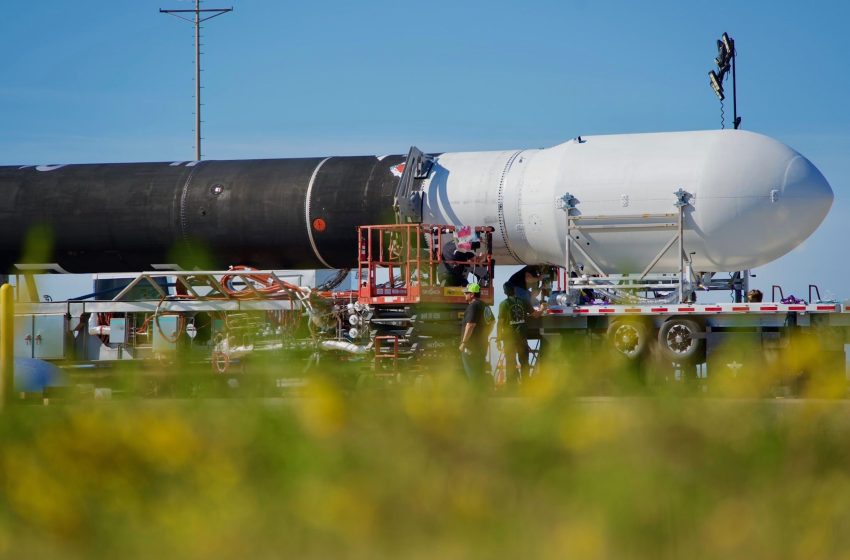
Watch Firefly Aerospace’s Alpha rocket return to flight today after 10-month grounding
Firefly Aerospace’s Alpha rocket will return to flight today (March 1) after a 10-month-long grounding, and you can watch the action live.
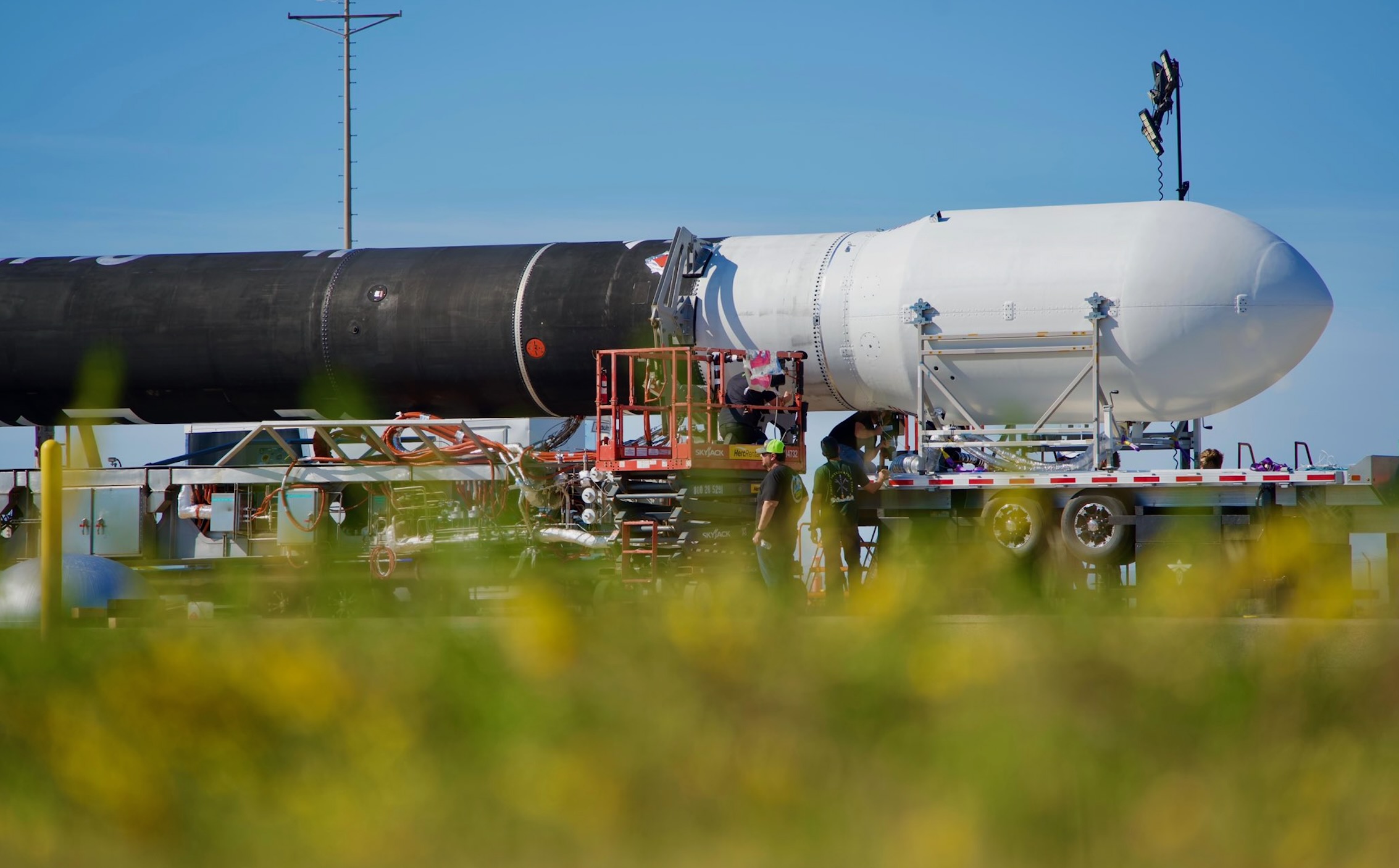
As its name suggests, “Stairway to Seven” will be the seventh liftoff to date for the two-stage, 96.7-foot-tall (29.6-meter-tall) Alpha.
The sixth, called “Message in a Booster,” launched on April 29 of last year, carrying a prototype satellite for aerospace giant Lockheed Martin. Things didn’t go according to plan, however. Alpha’s first-stage booster broke apart just after stage separation, generating a pressure wave that affected the upper stage’s thrust. As a result, the upper stage ran out of propellant shortly before reaching its target deployment orbit, and the payload was lost.
On Aug. 26, the U.S. Federal Aviation Administration cleared Alpha to return to flight. But a month later, the booster slated to fly on “Stairway to Seven” exploded during a test at Firefly’s facility in Briggs, Texas, causing further delays.
“Stairway to Seven” won’t carry any operational payloads. Rather, it will serve “as a test flight, with the primary goal to achieve nominal first and second stage performance,” Firefly wrote in a mission description.
It will also be the final flight of Alpha’s Block I configuration.
“Flight 7 will test and validate key systems ahead of Firefly’s Block II configuration upgrade on Flight 8 that’s designed to enhance reliability and manufacturability across the vehicle,” Firefly wrote in the mission description. “The Block II configuration includes a 7-foot increase to Alpha’s length, consolidated batteries and avionics built in house, an enhanced thermal protection system and stronger carbon composite structures built with automated machinery.”
“Stairway to Seven” will launch just a day before a big anniversary for Firefly: On March 2, 2025, the company’s robotic Blue Ghost lunar lander touched down on the moon. Blue Ghost operated nominally for two weeks thereafter as planned, becoming the first private spacecraft ever to complete a lunar surface mission.
First Appeared on
Source link






