


Water From a 400-Million-Year-Old Prehistoric Plant Holds a Chemical Mystery From Space
Scientists have uncovered an astonishing discovery involving the Equisetum horsetail plant, a living relic from the age of the dinosaurs. Researchers have found that water drawn through the plant’s hollow stems carries an extreme oxygen isotope signature never before observed in any terrestrial material. This finding not only stretches the boundaries of our understanding of Earth’s water chemistry but also holds the potential to reshape how we interpret ancient climate data, including the moisture conditions of past ecosystems.
Unlocking the Secrets of Horsetail’s Water
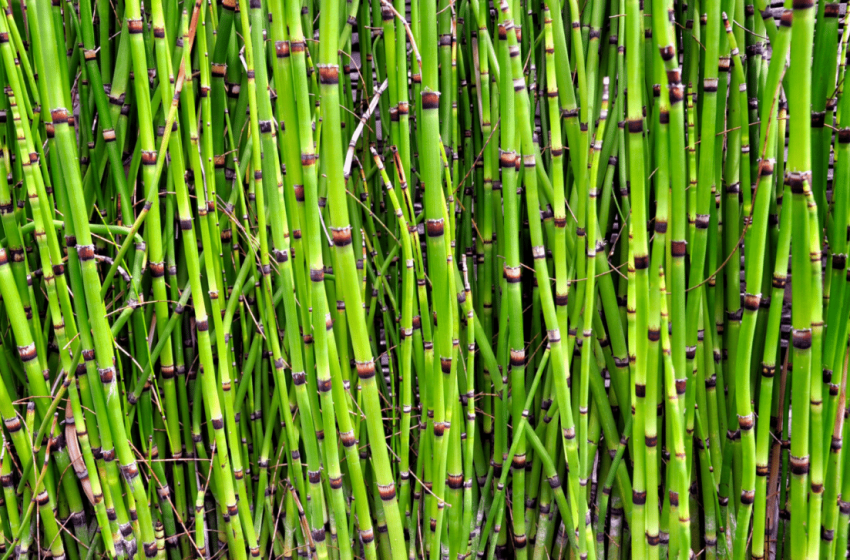
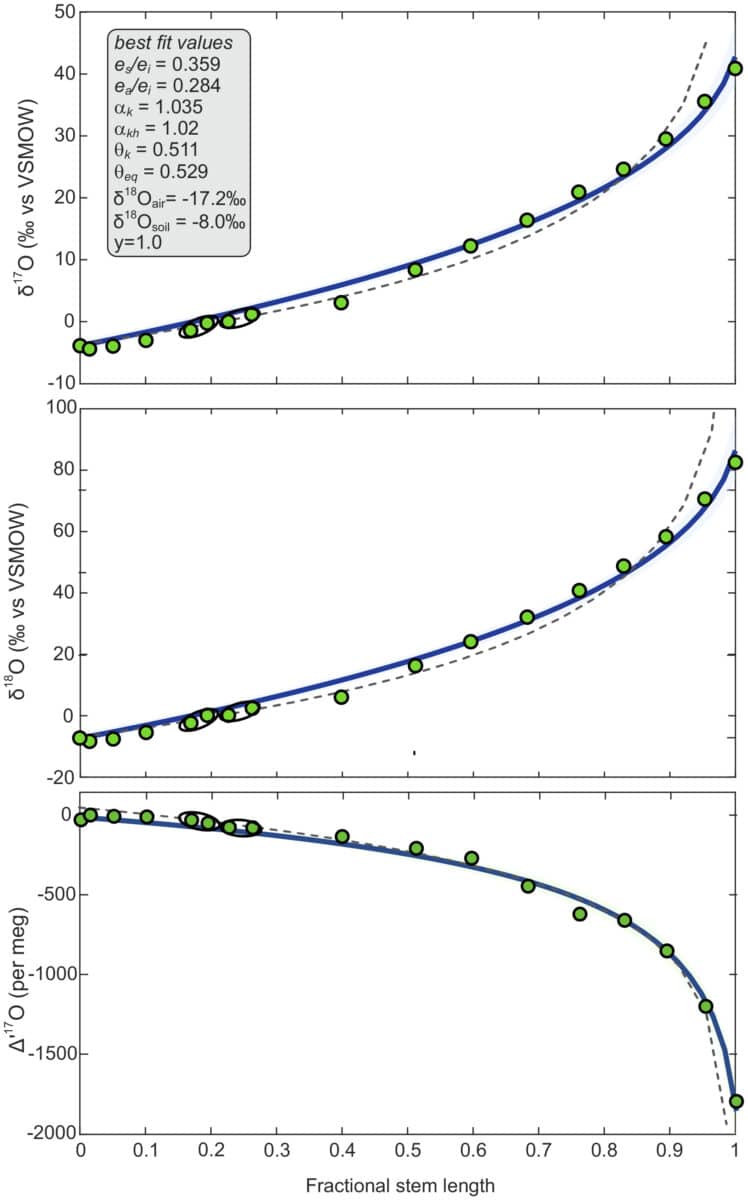
The Equisetum horsetail, a species that has existed for over 400 million years, continues to defy expectations. Known for its unique appearance with jointed, hollow stems, this plant has now revealed another of its secrets, an extreme chemical signature in the water it transports. Dr. Zachary Sharp, a scientist from the University of New Mexico, led the study and found that water moving through the stem of the horsetail becomes increasingly enriched with heavy oxygen isotopes as it rises. By measuring water samples from the base to the tip of the plant, Sharp and his team observed that the oxygen isotopes in the water exceeded any known terrestrial limits. The plant’s stem acts as a natural “evaporation chamber,” concentrating heavier isotopes as lighter ones escape into the air. The result is a chemical signature so unusual that, as Sharp noted, “If I found this sample, I would say this is from a meteorite.” This discovery forces a reassessment of the way scientists interpret water’s chemical journey through plants, particularly in dry environments.
The significance of the study reaches beyond the plant itself. It challenges the prevailing understanding of how water and its isotopes behave under normal atmospheric conditions. The team’s findings also suggest that these extreme chemical transformations could occur much more frequently than previously thought, especially in desert plants that experience high evaporation rates. By adjusting key assumptions in existing evaporation models, Sharp’s research helps explain the puzzling oxygen readings seen in plants that thrive in such arid climates.
Credit: PNAS
Implications for Fossil Studies: Rewriting Climate History
The implications of this discovery extend deep into the past. Researchers often rely on fossilized plants and the silica deposits they leave behind, known as phytoliths, to reconstruct ancient climate conditions. These tiny silica bodies capture chemical signatures that can reveal important information about the environment in which the plant lived. However, Sharp’s study has revealed a potential flaw in the way fossilized phytoliths are currently interpreted. The extreme oxygen isotope signature in living horsetails doesn’t match that of the silica in the plant tissues, suggesting that previous fossil models may have been misled by incorrect assumptions about evaporation processes.
“The oxygen pattern left behind in fossil phytoliths can reflect how dry the air was,” said Sharp. This insight allows researchers to refine their methods for reconstructing past humidity and climate conditions, enabling a more accurate picture of Earth’s environment during the time of the dinosaurs. For example, scientists can now trace the level of evaporation in ancient plants with greater confidence, helping to map the climates that once shaped ecosystems.
The study, published in Proceedings of the National Academy of Sciences, also highlights how the chemical signature of water in modern plants can serve as a proxy for understanding climate conditions in ancient times. This breakthrough provides scientists with a new tool to study past environments, potentially unlocking answers about the Earth’s climate history that were previously beyond reach.
Credit: PNAS
The Role of Isotopes: A New Way to Measure Water Chemistry
Water’s chemical signature plays a crucial role in tracking the history of moisture on Earth. Oxygen, for instance, exists in multiple isotopic forms, with varying atomic weights. When water evaporates, lighter oxygen isotopes tend to escape first, leaving the remaining liquid enriched with heavier isotopes. This process, though subtle, can offer profound insights into environmental conditions—especially when studied in detail. Sharp’s team tracked three different oxygen isotopes in the water moving through the horsetail stem, which allowed for a more precise understanding of how evaporation impacts water’s chemical makeup. The findings from this study show that traditional models, which often relied on just one oxygen isotope, were missing key details. By analyzing all three oxygen isotopes together, Sharp’s team was able to refine the models used to interpret plant-water chemistry, improving their accuracy.
This new approach to measuring water isotopes may have wide-reaching effects, particularly in desert environments where moisture is scarce and evaporation is high. By understanding the intricate relationship between water and evaporation, scientists can gain a clearer picture of how plants adapt to these challenging conditions and how ancient environments may have differed from today.
Climate Models and the Role of Plant Water Chemistry
As Sharp’s findings continue to influence the field of climate science, they also open the door to new ways of studying both modern and ancient ecosystems. By measuring the oxygen isotope signatures in plants across various climates, researchers can test the limits of existing models and improve their understanding of how water cycles through the atmosphere. This work could lead to more accurate predictions about how plants and ecosystems will respond to future climate changes, especially as temperatures rise and droughts become more common.
The study’s significance lies not only in its findings but in the new direction it suggests for scientific research. Researchers now have a deeper understanding of how plants interact with their environment, allowing them to reinterpret existing data and build more robust climate models. This study also paves the way for future research into plant-water chemistry, encouraging scientists to explore how other species may contribute to our understanding of Earth’s past climate.
First Appeared on
Source link






