


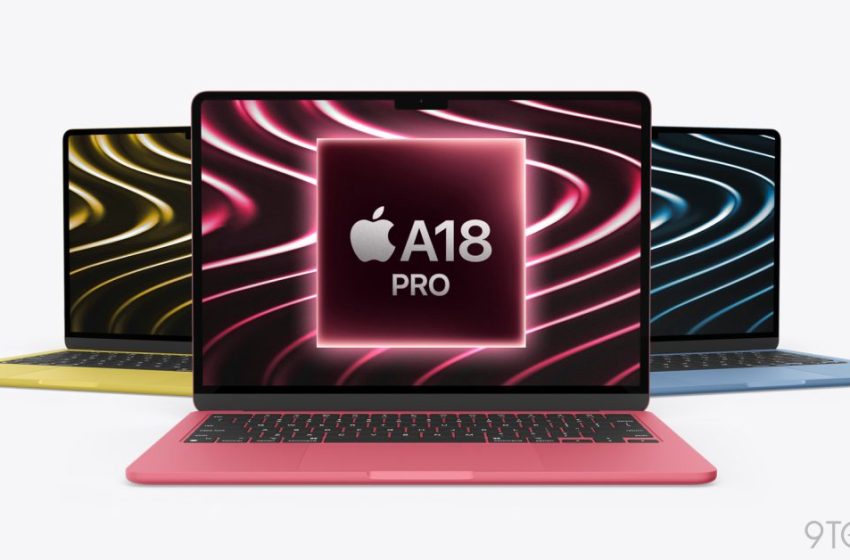
We already have a good idea how capable the new MacBook will be
Once the new low-cost MacBook launches this week, those wanting to buy a portable Mac will have a choice of three ranges: the MacBook, the MacBook Air, and the MacBook Pro.
For those with very undemanding or demanding needs, the choice may be very obvious – the low-cost MacBook on the one hand, or a MacBook Pro on the other. But what about those who sit somewhere in the middle … ?
As we’ve noted before, a large slice of current MacBook Air buyers have extremely undemanding needs. Tasks like email, web browsing and writing don’t require anything much in the way of either CPU or GPU performance. It will be obvious to most of these buyers that the upcoming MacBook will do the job perfectly, and the only question is whether they can live with whatever choice of colors is offered.
But what if you are someone whose needs are somewhat more demanding, without taking you into MacBook Pro territory?
For example, you may be a keen amateur photographer who regularly does modest levels of photo editing on your machine. Perhaps you do some 4k video editing from time to time, but with relatively few tracks. Maybe you’re a musician who does a certain amount of multitrack audio editing. You’ve already decided your usage doesn’t justify the additional cost and bulk of a MacBook Pro, but how do you choose between the MacBook and MacBook Air?
Reviews of the new machine will help, of course, but comparing both benchmarks and usage of older MacBook Air models already gives us a good idea.
M1 versus A18 Pro
Although the idea of using a smartphone chip to power a laptop sounds somewhat controversial, this isn’t really the case in reality.
The first Apple Silicon MacBook Air model was powered by the M1 chip. This was widely praised for its combination of performance and power efficiency. The A18 Pro chip is remarkably similar to the M1, as the benchmarks show.
Geekbench 6, single-core
Yep, in single-core performance, the smartphone chip is faster – and there are a number of other benchmarks, such as NPU performance in AI tasks, where the same is true.
Geekbench 6, multi-core
In multi-core performance, the two are neck-and-neck.
Results of other benchmarks vary, but the overall story is the same. In the majority of cases, there is no significant difference between the two chips.
Of course, the latest MacBook Air is about to be powered by an M5 chip, which will be substantially more capable, so is M1-level performance still acceptable in 2026?
M1 performance is more than enough for many
I’m a good test case for answering this question.
I bought a refurbished M1 MacBook Air last year as a test to see whether it met my needs or would prompt me to upgrade to the M4 model. If the M1 machine had proved inadequate, I got a sufficiently good deal that I knew I could recoup the purchase cost on resale, so it was a zero-risk experiment.
It only took a week to answer the question. Even for photo editing and occasional 4K video editing, the machine felt more than up to the task. Indeed, it proved so good that I now carry only this rather than my 16-inch M1 Max MacBook Pro when travelling, even when I know in advance that I’ll be doing some video editing.
The MacBook will likely prove the same
I do need to add one proviso which may or may not turn out to be important. When I bought the M1 MacBook Air, I opted for 16GB RAM. The upcoming MacBook will instead have only 8GB because that’s a limitation of the A18 Pro chip.
I did get the chance to try a few experiments on an 8GB M1 MacBook Air owned by a friend, and my casual impressions were that it’s still absolutely fine. Yes, RAM may prove significant if you need to run a lot of apps at the same time, but for the majority of tasks performed on the MacBook Air, I strongly suspect the MacBook will be more than good enough.
So far we’ve needed to have a good enough reason to choose the MacBook Pro over the MacBook Air. As of this week, we’ll also need to have a good enough reason to choose the MacBook Air over the entry-level MacBook.


FTC: We use income earning auto affiliate links. More.
First Appeared on
Source link






