


What I learned from psychedelics: The guides, not the drug, are key
During my first psychedelic session, a violin flourish turned the sky yellow. A comet’s tail of severed body parts flew past and receded behind me.
Speaking with the guides and study staff in the hours and days that followed, I came to understand the humor: Breast cancer was not who I was. The imagery provided a metaphorical lens through which I could view my illness.
It was 2012, and I was part of the first Johns Hopkins psilocybin clinical trial designed to trial to treat cancer-related depression. The conditions in which I underwent the sessions were optimal: I had two well-trained guides with me at all times during the session, one man, one woman. I had days of debriefings and support from the study staff. A psychiatrist outside the study, who leads psychedelic research at another university, spoke with me the day following the first session and suggested I find community support once I was back in the U.K., where I was living.
After the trial, I had more psychedelic experiences (which were not part of the original Hopkins study). All of them left me with an abiding awareness of the vastness of the universe.
Such insights are hallmarks of psychedelics: In the right context, they show promise for treating many emotional and mental health problems: depression, as well as nicotine and alcohol addiction, and pain and anxiety during palliative care. When used in optimal circumstances, psychedelics promote emotional, social, and creative processes. This is true even on the neurobiological level: psychedelics have been found to promote both neuroplasticity and neurogenesis.
In the years since my first session, it’s been gratifying to see psychedelics becoming more widely accepted.
But the field is hurtling in an alarming direction. Over the past decade or so, the mythmaking and profiteering around psychedelics — from boutique retreats to the venture-capital stampede toward pharmaceutical monopolies — has followed a trajectory similar to the rest of modern medicine, which prioritizes throughput over human considerations.
The most transformative, curative, and life-affirming parts of the psychedelic experience include both ritual process and community involvement. But these elements cannot be monetized, so the companies seeking to profit from psychedelics are discarding them, often in favor of a one-on-one therapeutic session with one or two follow-up calls as aftercare.
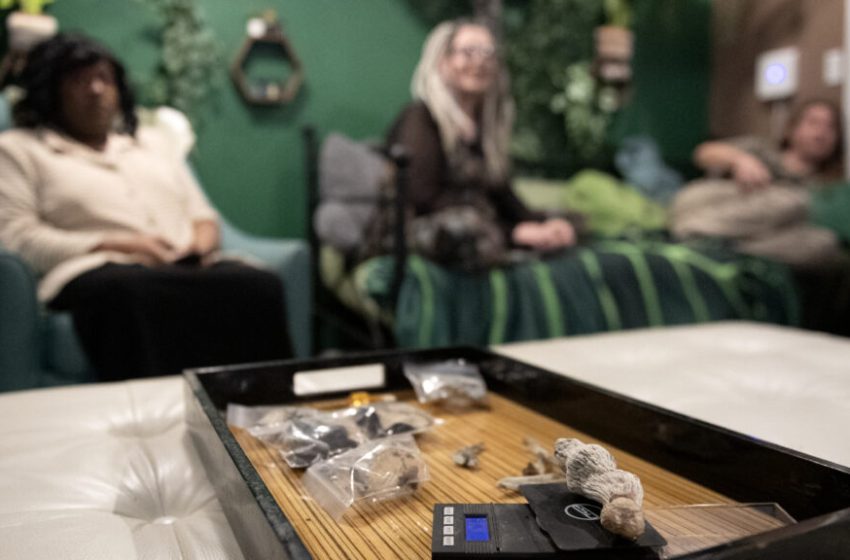
Despite the marketing hype that puts the drugs themselves at the center of the story, psychedelics are therapeutic accelerants, not panaceas. Unlike antibiotics, pain relievers, or chemotherapy, their therapeutic success is context-dependent. Psychedelics are curative when they are used within a culturally defined, healing process involving spiritual or community leaders, multiple participants, and a dedicated ceremonial space.
Skilled practitioners emphasize the need for a container: a safe space and time for psychedelic activity and the serious inner work it entails. Trust and safety are part of the concept of set and setting, where set refers to mindset and setting refers to the physical and social environment.
Days of integration should follow the sacramental transformation, during which the participant contextualizes their newfound knowledge before returning to the quotidian world.
During this phase, skilled guides encourage a group of subjects to examine and right-size any grandiose “aha” insights that occurred during the session. There are two important elements here: the community and the guide.
The presence of other participants acts a key moderating factor in tempering ego and perceptual distortions that often occur with psychedelic use. During the session, subjects may have profound insights about themselves and the world. They may envision themselves as the bearers of universal truths they feel need to share with friends, governments, or religious leaders. They may feel they’ve suddenly acquired special powers or abilities which the world at large must and will instantly recognize.
Fellow participants are key in moderating intense sessions. They challenge and support one another, and become constructive allies facilitating emotional growth following the session.
Without other participants, the person pursuing psychedelic therapy is also more vulnerable. Even trained and experienced guides may violate emotional or interpersonal boundaries of participants, who are in vulnerable and suggestible states brought on by the effects of the drugs themselves. Guides who may believe themselves to be well-intentioned can misinterpret cues about what a participant wants to share or whether they want to be touched. Guides can press subjects to speak about traumas or divulge personal truths that under normal circumstances they’d keep hidden.
Compounding this, psychedelic facilitation is largely unregulated. Guides are often not equipped to navigate complex emotional states, such as those involving childhood or sexual abuse.
And then there is the threat of guides who are not well-intentioned. Lykos Therapeutics — whose application for approval of MDMA to treat PTSD was rejected by the Food and Drug Administration in 2024 — faced legal scrutiny for failure to disclose sexual abuses at one of the Phase 2 study sites.
It is important to recognize that not all psychedelics are the same. Their effects on the brain and the nervous system vary from substance to substance because of chemical differences between them. MDMA is not a true psychedelic like psilocybin or ayahuasca. It is a synthetic stimulant in the same class of drugs as amphetamines with some serotonergic effects similar to mescaline. It is a mild rather than strong hallucinogen. Neurochemically the way it effects the brain is very different from the classic hallucingens like psilocybin or LSD.
Perhaps more than other psychedelics, MDMA can open participants up to abuse because it produces a marked increase in levels of the neurohormone oxytocin — the “love hormone” — which plays a key role in social and emotional bonding. In this, MDMA differs from the classic psychedelics. The sudden flood of oxytocin accompanying the onset of the drug produces feelings of emotional communion, oneness, and openness. Neurochemically, the drug works by causing a decrease in activity in the amygdala — the brain structure associated with memory formation — and an increase in activity in the prefrontal cortex — the brain region where cognitive functions are processed, including ethical judgments.
Those who take MDMA for therapeutic purposes must make sure they have a strong supportive community around them both during and after the sessions. One-on-one sessions with an unfamiliar guide, as sold by some companies, increase the chance for the sessions themselves and post-session processing to go sideways.
British psychiatrist Humphry Osmond, who took part in a peyote ceremony with a First Nations group the Red Pheasant Band in Saskatchewan, Canada, in 1956, intuited the necessity of community, empathy, and ego renunciation during the psychedelic process. He wrote:
“Peyote acts not by emphasizing one’s own self but by expanding it into the selves of others, with a deepening empathy. … The self is dissolved and, in being dissolved, enriched. It becomes aware of the nobility of other selves and so of itself.”
The importance of the integration process cannot be overstated. Psychedelics are non-specific amplifiers of existing personality traits. Traits like humility, creativity, and kindness are amplified by psychedelics, as are the dark triad traits, such as Machiavellianism, narcissism, and psychopathy.
In the absence of a community process which provides emotional and psychological checks and balances, participants can carry distorted perceptions about themselves into the quotidian world. The criminal mania of cult leader and prolific psychedelic user Charles Manson, who murdered seven people in 1969, is often cited by researchers as an example of the worst possible outcome of psychedelic use untempered by an ego-deflating ritual process. Elon Musk, another self-identified psychedelic user, exemplifies the actions of someone who has not adhered to the most basic principles of responsible psychedelic use.
The very characteristics that make psychedelics effective are at odds with the extractive practices of private enterprise. Community interdependence and the common good have been supplanted by for-profit services, leaving many people feeling isolated and ignored.
For psychedelics to be effective, “the village” must be restored. The collective spiritual and ritual aspects of the psychedelic experience in community settings are what relieves suffering and strengthens bonds.
Erica Rex is the author of “Seeing What Is There: My Search for Sanity in the Psychedelic Era,” available now. She advises the Congressional PATH Caucus (Protecting Public Health and Safety with Psychedelics Advancing Therapies).
First Appeared on
Source link






