


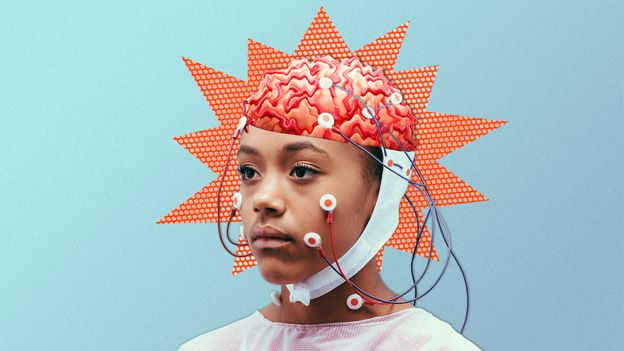
What really causes migraines?
“Well, that’s a classic example, and the causal attribution is probably wrong,” says Peter Goadsby, professor of neurology at King’s College London, in the UK. “What if, instead, during the premonitory phase of an attack, you’re sensitive to scent, you notice smells that you wouldn’t normally.”
Goadsby has analysed the brain scans of migraine patients who feel that light triggers their attack and compared them to patients who don’t tend to blame light for the onset of their pain. Only the former had overactivity in the part of the brain responsible for vision right before their migraine, suggesting that, during that moment, they were biologically primed to be more sensitive to light than their counterparts. “Unquestionably, something is going on biologically,” says Goadsby.
But the quest to discover what that underlying biological mechanism has been a long one.
The genetic origin of migraine
Studies on twins show that there is a strong genetic component and that if your parents or grandparents had migraine, you’re statistically likely to inherit the neurological condition too. Inherited genes appear to play a role in an estimated 30-60% of people who suffer from migraine, with other cumulative external factors such as life history, environment and behaviour accounting for the rest, says Dale Nyholt, a geneticist at Queensland University of Technology in Australia.
Nyholt is screening thousands of people to find the exact genes running amok, but the quest has been “more complex than what we were ideally hoping for”, he says. In 2022, he trawled through the genes of 100,000 migraine patients, comparing them with those of 770,000 people who do not have migraines.
First Appeared on
Source link






