


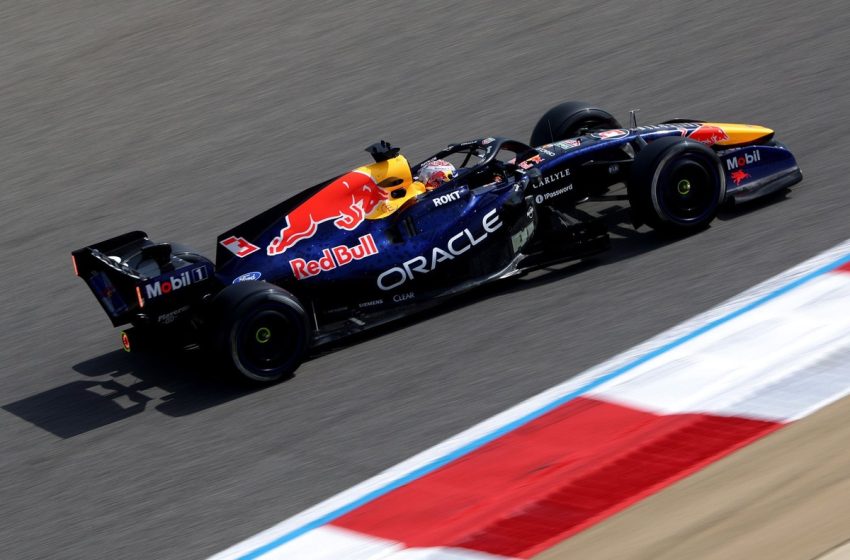
What Verstappen means by warning of F1 2026 “disaster” to come
In recent days and weeks the commercial rights holder’s spin doctors have been growing increasingly agitated about the narratives emerging around Formula 1’s new technical rules for 2026. Driver feedback – the tenor of it, and how it’s then reported – has been a particularly touchy subject.
Once testing started, trying to manage the message has been akin to pushing water uphill. Now they may as well give up, go home and hide under a blanket – Max Verstappen has made it clear what he thinks, and no amount of you-might-have-heard-him-say-that-but-that’s-not-what-he said is going to contain the effects, let alone undo them.
Autosport has reported the key elements of Verstappen’s rant elsewhere – an unfavourable comparison with Formula E, a not-very-veiled threat to quit F1 entirely, the suggestion that he’ll have more fun in the Nurburgring 24 Hours. And that was just the English-language session.
Speaking to the Dutch media immediately afterwards he went further.
“It’s mainly that you’re very energy-inefficient on the straights,” he said, when asked to explain why he doesn’t feel the cars are enjoyable to drive. “On this circuit it’s still manageable. But we’re also going to tracks where it will be a real disaster. And just the overall feeling in the car, in terms of grip and how you have to drive it, it’s simply not very enjoyable.”
The key issue Verstappen raised was one which has haunted the development of the 2026 regulations like a Shakespearean spectre at the feast: the fear that at some tracks, drivers will have to slow down drastically on long straights to harvest energy. Much effort has been put into mitigating this possibility, including the development of active aero.
Slowing down on straights to harvest energy remains a major concern which Verstappen ranted about during Bahrain testing
Photo by: Alastair Staley / LAT Images via Getty Images
While technically an interesting achievement, it is still a sticking-plaster solution. Verstappen’s contention is that F1’s stakeholders and rulemakers have either not grasped the full scope of the consequences, or downplayed the likelihood of such circumstances occurring.
Since the cars have mostly been lapping in isolation during shakedown and testing, the real-world impact of ‘clipping’ or extreme de-rating while running together on track is yet to be seen.
“I think maybe they didn’t fully realise how bad it would be,” Verstappen continued. “But we’ll see. Like I said, this circuit is still manageable. When we go to Melbourne, you’ll really see how much you have to back off on the straights.”
Having to brake or at least downshift on the straights will not be a good look for F1, and of course raises potential safety issues in terms of closing speeds if cars do so at different times in race situations
Asked to be more specific about which tracks would be particularly at risk, Verstappen rattled several names off the top of his head. “Melbourne, Monza for example,” he said. “Not Mexico, because of the thin air and heavy braking. But that long straight there as well. Spa will be bad. There are quite a few. Maybe Las Vegas too, with that long straight. Maybe we’ll have to brake halfway down the straight because we’ve run out of energy. I’m laughing about it now, but it really makes no sense.”
Circuits vary hugely in terms of time spent at full throttle, demanding maximum torque: from around 50% at Monaco to nearly 80% at Jeddah. This picture is complicated by venues such as Baku, which combines a lot of stop-start through the city with a long, flat-out blast along the main straight.
In practice, Verstappen’s prognostications may not come to pass as dramatically as he claims. The fear that drivers would have to abruptly back off on the straights when the electrical power ran out emerged from early simulations (which is why some teams made a point of not exposing their race drivers to early sim models).
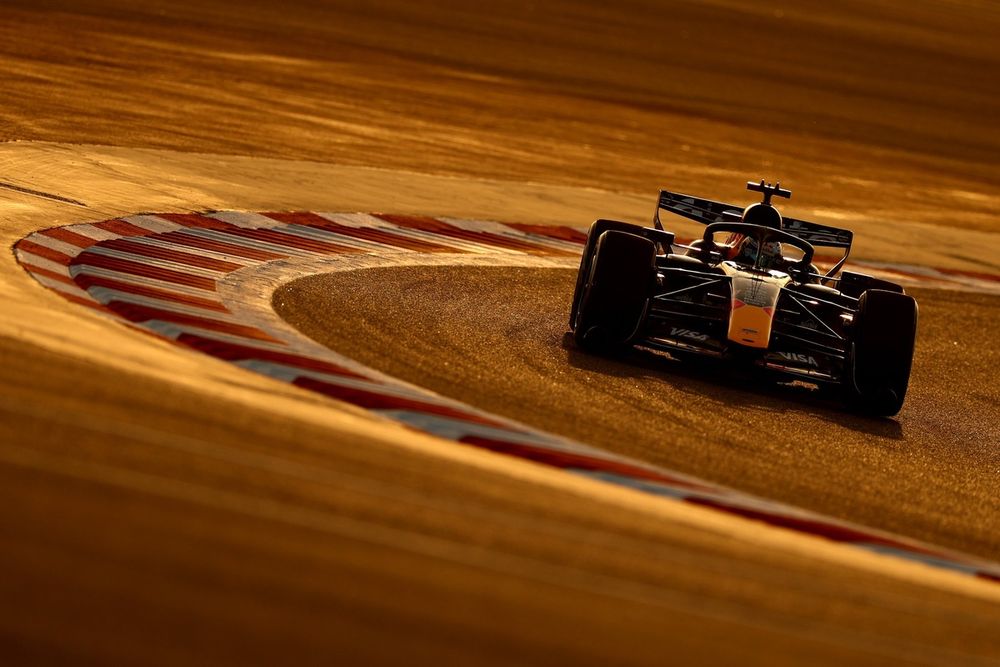
Can development allow F1 to stop Verstappen’s fears becoming a reality?
Photo by: Zak Mauger / LAT Images via Getty Images
In these relatively low-fidelity simulations, drivers were in effect emptying the 4MJ capacity of the energy store while pushing flat out around the lap, since at full chat the battery goes from full to empty in just over 11 seconds. But these models were still fundamentally based on the existing strategies to recover energy.
As well as bringing active aerodynamics to the table – the implementation of which has been finessed over the past year or so – the FIA also introduced a mandatory ramp-down rate which governs how the deployment of electrical power tapers off on the straights. There is also a greater understanding among the teams of how to approach the process of harvesting energy.
Key to this is burning fuel to charge the battery by applying negative torque to the electric motor – which is why we’ve seen so much experimentation during the Bahrain test as drivers and teams evaluate the effect of running lower gears. As widely predicted, first gear is seeing a lot more use in several corners.
Burn-to-charge is not new – it’s been a fact of life since the dawn of the hybrid era at circuits with high energy demand but relatively few opportunities to recharge conventionally. It’s now just going to be more so, given the increasing electrical demand and the three-fold expansion of the electrical motor’s capacity to harvest.
Having to brake or at least downshift on the straights will not be a good look for F1, and of course raises potential safety issues in terms of closing speeds if cars do so at different times in race situations. But will it be the “disaster” Verstappen predicts?
Well, it will be fascinating to see what eventuates at Baku, where drivers spend over 20 seconds in pedal-to-the-metal mode – long past the capacity of the energy store. Given the shift to a near 50:50 balance of internal combustion to electrical power, this is bound to have a more pronounced effect than before.

F1’s new Apple deal depends on the growth to continue
Photo by: Getty Images
There is an argument to say that F1’s power brokers have spent the past few years focusing on admittedly lucrative commercial deals predicated upon the enormous audience growth generated by ‘the Netflix effect’ – and have grown complacent while doing so, assuming that the audience will continue to grow. Only now are they beginning to sweat about the potential impact on audience sentiment if the new rules have a detrimental effect on the spectacle. One can certainly imagine the Apple executives who signed off on a megabucks deal last year to stream F1 in the US, on the expectation of “exponential growth” (their words), will begin to chafe mightily if the on-track action comes to resemble a clownshow and viewers switch off accordingly.
But as this ruleset matures, energy recovery strategies will converge. Already the drivers are beginning to grumble that they will in effect have to perform management tasks on cue, according to predetermined and pre-rehearsed strategies, rather than being able to take a more freewheeling approach. Chances are that come the middle of the season, the onset of ramp-down on the straights will simply be greeted by a collective rolling of eyes, much sighing and groaning, and misty-eyed nostalgia for the V10 era rather than wholesale carambolage.
In Melbourne, of course, when everybody is in first-day-back-at-school mode, things might get a little tasty…
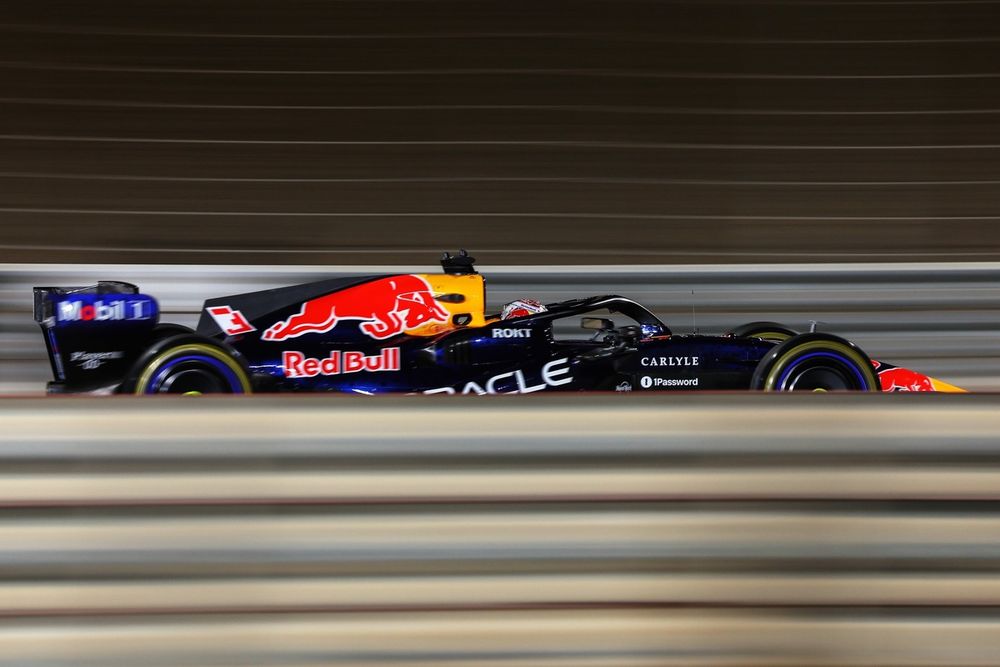
Development and strategy will see teams and drivers converge eventually, but the first few rounds could be a learning experience for all
Photo by: Glenn Dunbar / LAT Images via Getty Images
We want to hear from you!
Let us know what you would like to see from us in the future.
– The Autosport.com Team
First Appeared on
Source link






