


Whooping cough cases soar as vaccine rates drop among kids
In states that provided data back to 2019, more than 75% of counties and jurisdictions showed declining rates in DTaP vaccination. In Texas, around 85% of counties saw declines.
The dropoff comes as several states are reporting significant increases in whooping cough.
In Texas, there have been more than 3,500 cases through October — roughly four times as many as the same period last year, according to the state’s health department. The state saw a surge at the end of last year, and experts said they expect to see the same this year.
In Oregon, the state saw a record 1,475 cases for the year as of Dec. 10, surpassing the previous high seen in 1950. The Oregon Health Authority said that one baby died of whooping cough this year, the first since 2012.
“Although infant deaths from pertussis are rare, it underscores our focus on protecting babies,” a spokesman for the Oregon Health Authority wrote in an email. “Approximately one-third of babies with pertussis must be hospitalized and one in 100 will die.”
At least six other pertussis-related deaths in children have been reported in the U.S. since September 2024: two in Louisiana, one in South Dakota and three in Kentucky.
“When we see these [deaths] … they’re preventable. And when I say preventable, they’re entirely preventable. We don’t have to be dealing with this,” said Dr. Raphael Mattamal, a hospital pediatrician with Texas Tech Physicians Pediatrics in Amarillo.
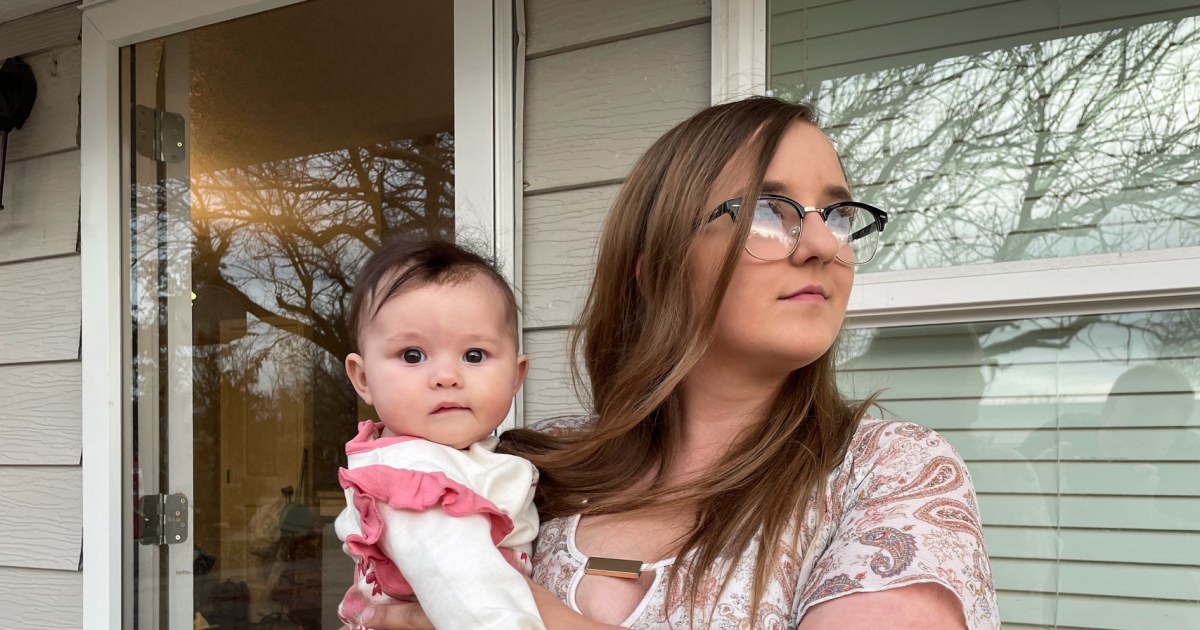
Sophie Owens said she has no idea how Feleena was infected. The entire family — Sophie, Justin and their older daughter, Brylee — had been vaccinated against the bacteria that cause whooping cough. Feleena was too young to have received the shots when she got sick.
Sophie got a booster shot when she was pregnant. Pregnant women are encouraged to do this during their third trimester to give their babies some level of protection when they’re born — when they’re most vulnerable to pertussis — and before they’re eligible for the shots themselves.
That protection, however, isn’t 100%.
“If there’s enough adequate protection in the community, these things don’t percolate,” Mattamal said. That extra level of community protection is especially important when it comes to shielding people who can’t yet be vaccinated, like Feleena.
Whooping cough often starts like other typical winter illnesses: runny nose, slight cough, sometimes a low fever.
Violent coughing fits tend to follow. They can be severe enough to break ribs and collapse lungs. Babies are most vulnerable because their tiny airways can’t withstand the pressure.
The cough can last for weeks, even months. People are contagious from the beginning of their symptoms to three weeks after the first coughing fit begins.
“It can still be in the air after someone leaves the room, especially if they’ve been coughing a whole bunch,” Mattamal said. “You don’t need many bacterial particles to pick it up.”
Many people, especially adults, don’t know they’re infected and continue to spread the bacteria unknowingly. A small study published in 1995 found that 20% of people who sought care at an emergency department for a cough lasting two to three weeks actually had pertussis.
There’s no specific treatment for the infection. Antibiotics, such as azithromycin or a Z-Pak, can be given to help clear the bacteria from the nasal passages so patients aren’t able to spread the illness as easily.
‘A burst of pertussis cases’
In the 1920s, before the introduction of the whooping cough vaccine, there were around 200,000 cases of the illness each year in the U.S. That dropped to between 1,000 and 5,000 in the 1970s and 1980s.
But cases have been rising steadily in the U.S. since the late 1990s and early 2000s, when 6,000 to 9,000 whooping cough cases were diagnosed each year, according to CDC data. Cases dipped during the pandemic, but then took off dramatically.
First Appeared on
Source link






