


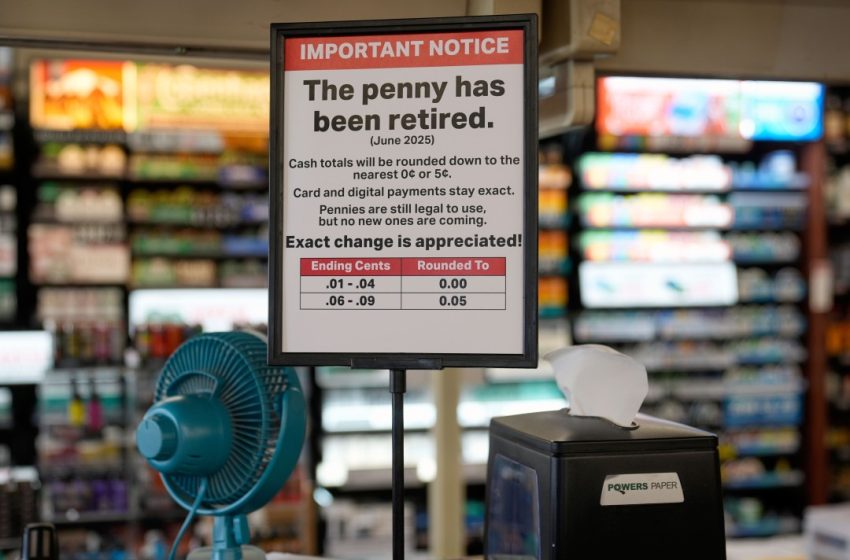
With Pennies Scarce, States Begin to Set Rounding Rules
Months after the last of the United States’ 1-cent coins were pressed, some states are beginning to set rounding guidance for cash purchases, per the AP. The move to stop minting the penny last year has led to shortages and struggles to make exact change. One solution is rounding to the nearest nickel, using a practice called symmetrical rounding. If the final price, after taxes, ends in one, two, six, or seven cents, payment in cash rounds down. For example, $1.91 or $1.92 becomes $1.90. If the price ends in three, four, eight, or nine, cash payment rounds up. For $1.98 or $1.99, the consumer pays $2.
A bill introduced last year in Congress and passed out of the House financial services committee would apply symmetrical rounding across the country. The bill hasn’t been voted on in the House and would still need to move through the Senate before reaching Trump’s desk. In the meantime, penny-rounding bills await the governor’s signature in Arizona, Florida, Oregon, Tennessee, Virginia, and Washington, and legislation elsewhere is in the works. Some states are proposing to allow businesses to round cash purchases, while others consider requiring it, though with different approaches. It’s small change, but big money: Rounding up could cost consumers millions of dollars. Read the full story.
First Appeared on
Source link






