


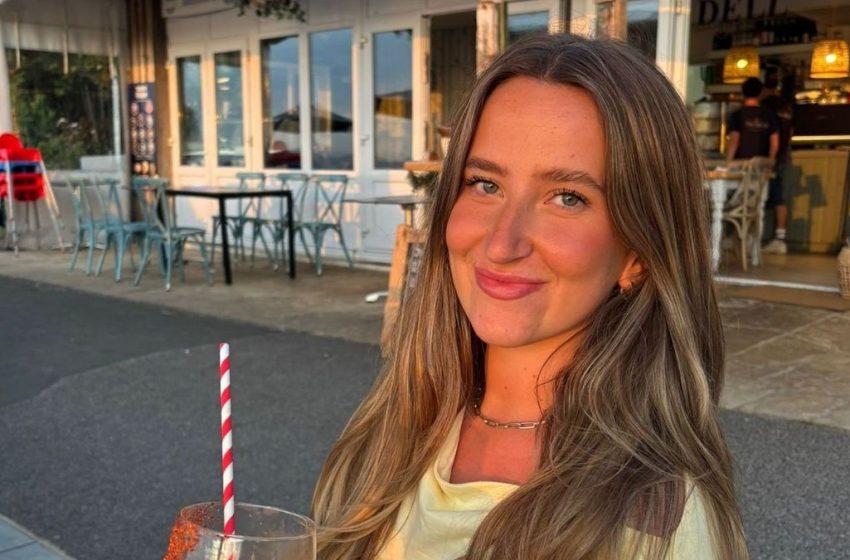
Woman spent years believing she was a paedophile until discovering health condition
Warning: This article contains discussion of suicide which some readers may find distressing.
A young woman has revealed how a mental health condition made her ‘genuinely’ believe she was a paedophile.
When Molly Lambert was 15 years old, she began to have intrusive sexual and violent thoughts, which left her convinced she was a monster.
“I remember thinking, ‘Oh my gosh, I’m a paedophile – I thought, I’m never going to forget this thought. My life is over’,” she recalled.
Her intrusive thoughts that she might be a paedophile began when she was 15 and saw ‘a little girl wearing a crop top and short skirt and thought, “This is weird for a child to wear.”‘
She said: “Then I panicked – ‘Why would I even notice that? Why would I think about that? She’s a child.'”
The 22-year-old went on to recall how she spent months living in fight or flight mode, struggling to eat, sleep or be alone due to her thoughts.
Molly began experiencing unwanted intrusive thoughts at the age of 15 and suffered in silence for years (SWNS)
Six months later, she remembers being at her job at a swimming pool cafe and ‘thinking there are kids here and I honestly thought to myself that I would have to kill myself on the way home’.
Believing she was a threat to children, Molly changed jobs to work in retail in order to avoid them, despite being great with children and describing herself as a ‘kid person’.
It wasn’t until Molly came across a video discussing P-OCD – a type of OCD where a person experiences unwanted sexual thoughts or images about children – that she was able to get some clarity about her condition.
What is P-OCD?
According to Sheppard Pratt, P-OCD (Paedophile-themed Obsessive-Compulsive Disorder) is a rare form of OCD in which a person exhibits an obsessive fear that they are or will become a paedophile.
Intrusive thoughts related to P-OCD can often include:
- Intrusive unwanted sexual thoughts about children
- Fear that positive emotions towards children is somehow sexual
- Fear that incidental contact with children is sexual
- Fear that noticing cuteness in a child could be perceived as sexual
The International OCD Foundation explained that some intrusive thoughts someone with P-OCD might have include: “Did I ever do anything inappropriately sexual when I was younger?”; “I should stand on the other side of the tube, away from this 6-year-old boy so that I don’t impulsively grope him”; “Will I be creepy or do something inappropriate when I have a baby?”
What is the difference between P-OCD and pedophilia disorder?
According to clinical psychologist, Federico Ferrarese, pedophilic disorder, as defined by the DSM-5, is ‘recurrent, intense sexually arousing fantasies, urges, or behaviours involving sexual activity with prepubescent children’ that has lasted six months.
Whereas P-OCD is the exact opposite, as those with the condition are horrified by their thoughts and will actively go out of their way to avoid triggering them.
International OCD Foundation adds that P-OCD is a disorder of ‘anxiety and uncertainty’ and that a person with the condition is ‘no more likely to be a pedophile than an individual who does not have P-OCD’.
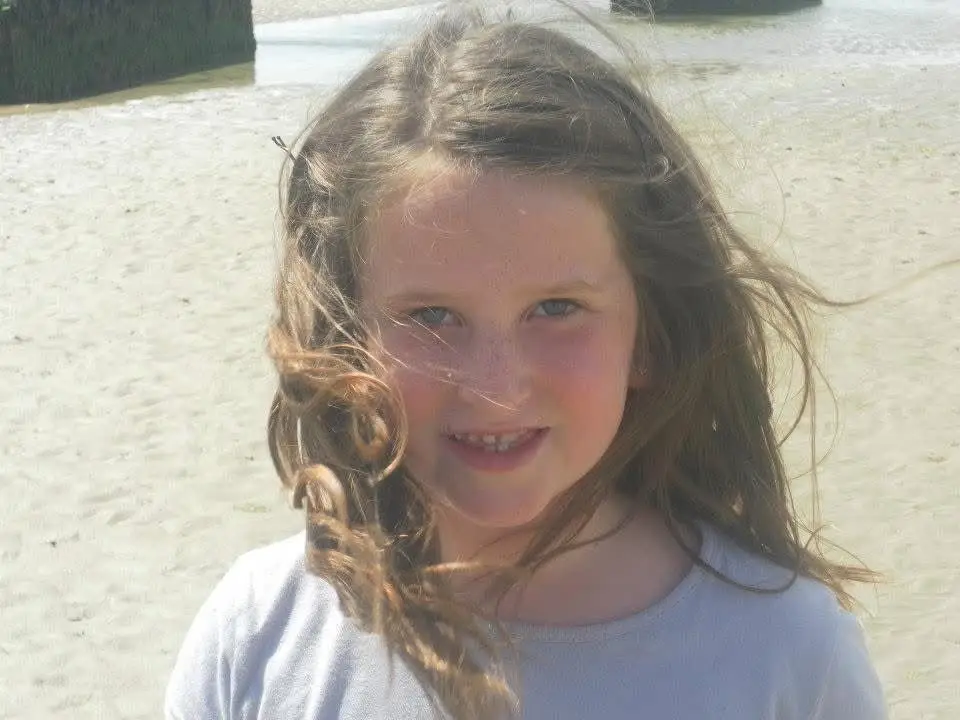
Molly Lambert as a child (SWNS)

For Molly, she experienced fears that she’d sexually assaulted someone in the past, another symptom related to P-OCD.
“The shame was overwhelming, I felt like a monster. I couldn’t even tell anyone what I was going through,” she said.
For years, Molly suffered in silence, believing OCD was ‘cleaning and tidying’, until she saw a TikTok in 2021 in which a girl explained having similar symptoms to hers.
Recalling the moment she learnt about the diagnosis, she said: “The weight that lifted off my shoulders was crazy. I thought only freaks had this.”
She began to research the condition and, after a heartbreaking sit-down with her parents, received an official diagnosis in July 2025.
“My therapist said it is an awful thing to go to but that it is way more common than you would ever expect,” she said.
“Getting all of that outside of me was the biggest part of my journey. It felt like I was in a war with myself, but now I knew what I was fighting.”

She now uses her platform to raise awareness about P-OCD (SWNS)

Molly still experiences intrusive thoughts, however her therapy has taken her diagnosis from severe to mild on the diagnostic scale, with the digital PR worker now using her social media platform (@mollambert) to raise awareness about the condition, despite having to deal with some backlash.
“I get a lot of hate, but this conversation is so important for the people suffering in silence,” she added.
“The scariest part is how many people might not be here anymore because of this. I remember thinking I’d be 50 and never escape these thoughts, or I would be dead.
“Always talk to someone, once you understand what it is, you realise it’s not you. It’s OCD.”
If you’ve been affected by any of these issues and want to speak to someone in confidence, please don’t suffer alone. Call Samaritans for free on their anonymous 24-hour phone line on 116 123 or contact Harmless by visiting their website https://harmless.org.uk.
Alternatively, the Campaign Against Living Miserably (CALM) is there to support you. They’re open from 5pm–midnight, 365 days a year. Their national number is 0800 58 58 58 and they also have a webchat service if you’re not comfortable talking on the phone.
First Appeared on
Source link






