



You Can Go Your Own Way: ‘Industry’ Season 4, Episode 6 Recap


I can always count on Ken Leung to leave me with a lasting image. In Industry, in which he plays the once-mighty moneymaker Eric Tao, he’s been delivering memorable visuals for all of the show’s four seasons: Eric prowling the now-shuttered Pierpoint & Co. trading floor with a baseball bat and a headset; Eric paraphrasing Denis Johnson to a room of restless bankers; and, most recently, at the tail end of “Dear Henry,” the sixth and newest episode of this season, Eric walking down a tree-lined street, bound for points unknown.
It’s not just on TV, though. Even when he’s not performing, Leung has a way of painting pictures with far fewer than a thousand words. Last week, during a Zoom conversation I had with him and Myha’la, who plays his protégé (and, for a time, business partner), Harper Stern, Leung described a key similarity between Eric and Harper. “They’re like cats,” he said, “in that, you know, cats need toys that mimic prey in order to keep their brains healthy.” At another point in the conversation, as Myha’la and I chatted about the rad five-piece power suit that has been Harper’s go-to in high-octane situations this season—including her market-moving presentation at a finance conference in “Dear Henry”—Leung mused: “It makes me think of those, you know, those sheaths that you put a knife in, and then when you pull it out, the knife gets sharp.”
And during a different chat back in December, when I asked Leung about what seemed to be one of Industry’s overarching themes this season (the power of crafting a narrative), he responded by comparing a line from the Season 4 premiere (“In America, your story begins when you start telling it”) to foreign-language poetry.
“It reminds me of one of my favorite quotes from a Spanish poet,” Leung said. “Walker, there is no path. The path is made by walking.” You have an impulse, and you do, and then things are revealed. … And I think that feels right for this show. We feel an impulse, and we do and see where the chips fall.”
Indeed, as Industry rounds into the home stretch of its season, “Dear Henry” follows Eric and other characters as their impulses reveal their uncertain paths. Whitney Halberstram (Max Minghella), the shady COO of the frothy fintech company Tender, forges a trail of debauchery while evading an audit. His colleague Sir Henry Muck (Kit Harington) follows Whit’s every move—right up until he doesn’t. Tender employee Hayley Clay (Kiernan Shipka) continues to boldly go places she never has before, discovering her own stride. Harper, instead of delivering a rote “women in finance” speech at an investing conference as planned, lays out her case against Tender step by step for all to see. Tony Day (Stephen Campbell Moore), the skittish head of Tender’s operations in Africa, inspires a literal footrace toward his breakfast table, even as he doesn’t even seem to know which road he’ll be traveling. Ferdinand Schwarzwald (Nico Rogner) keeps his head down and goes where he’s told—or else what, we’re still waiting to learn.
And Eric, having come face-to-face with the grave consequences of his own impulsive decisions, determines that getting out is the only way through. I looked up the poem Leung mentioned: It’s by Antonio Machado, and it concludes:
Caminante, no hay camino
sino estelas en la mar.
“Traveler, there is no road / only a ship’s wake on the sea.” For pretty much everyone in “Dear Henry,” it’s far too late to turn back now.
The Bottom Line
So, what happened in this episode?
Before Leung compared Harper’s suit to a self-sharpening knife sheath, Myha’la told me she thought of the outfit as Harper’s “armor.” And Leung also described a scene in which Eric appears on CNN as “his last battle,” in which all his old “weaponry” comes out. It makes sense that they both defaulted to the language of combat: To watch “Dear Henry” is to watch people constantly provoking and/or advancing on one another with cruel, pointed remarks. No one in these fights is innocent, and everyone has their own incentives.
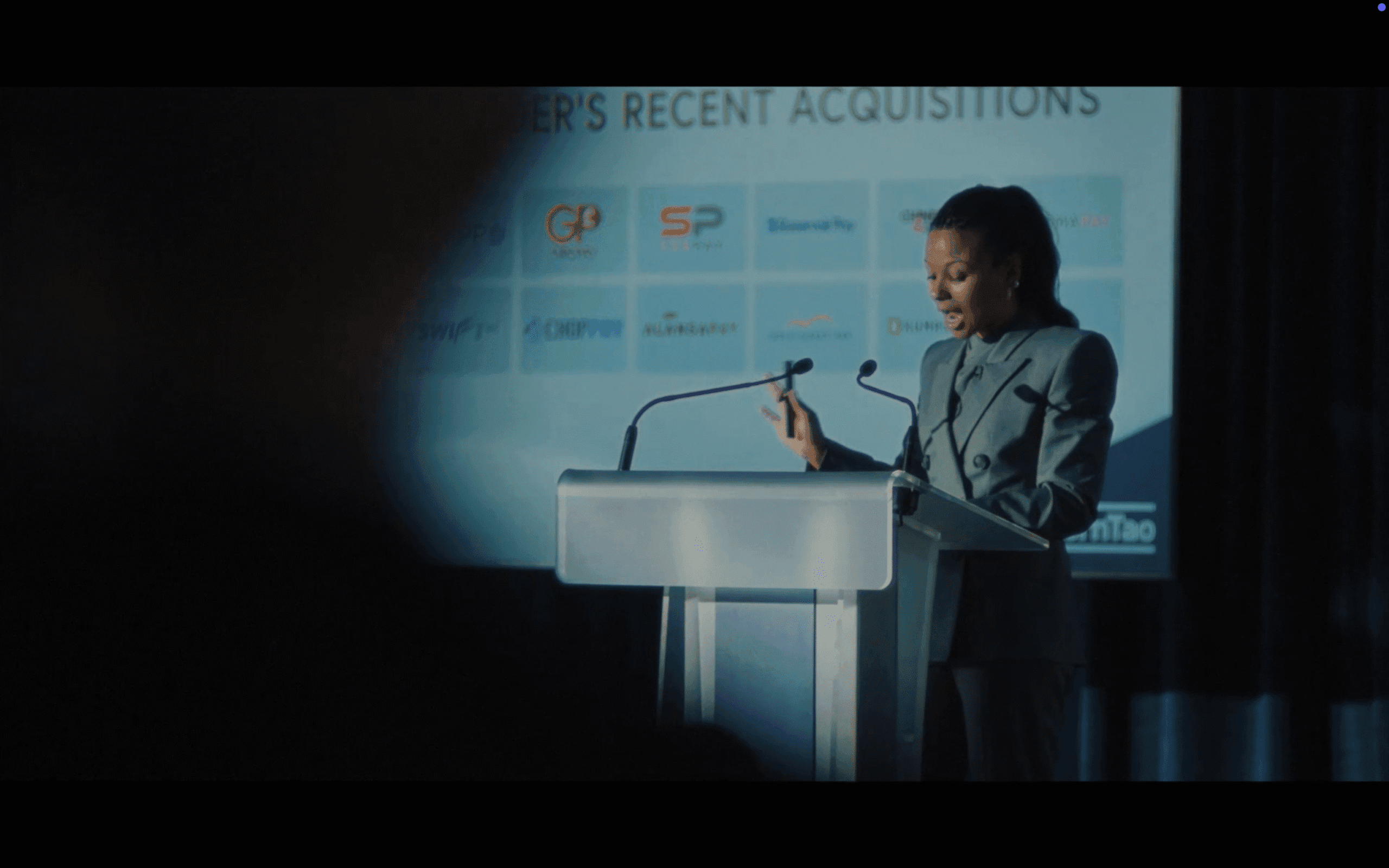
In the opening scene alone, for example, between Harper and her fiercest frenemy, Yasmin Kara-Hanani (Marisa Abela), we get one woman calling the other “an abstraction of insecurities and compensations” and the other responding: “There’s, like, no empathy left in you, is there? Just an imitation of it to trap people.” Game on!
And so, in the spirit of the ongoing Olympic Games in Milan and Cortina, I’m going to recap “Dear Henry” by awarding medals for the meanest things said throughout the episode, organized into various competitive categories.
Cruelest Things Said to Yasmin by Henry
Marriage is an Olympic sport, to paraphrase Andrew Bird, and it turns out that the reason Henry was so distractingly jacked at the start of this season was that he was strength-training to most effectively roast his wife. Our podium:
Bronze and silver: Both winners originate from the same office conversation between Lord and Lady Muck: “I think you want me out of control because that’s how you’re necessary,” Henry tells Yasmin. “Do you not see that people can see how transparent you are?” As Henry blames Yasmin for undermining him, he doesn’t yet want to see that it’s Whitney who has become the real threat to his stability and his sobriety.
Gold: By a country-estate mile, it’s when Henry tells his wife, in front of company: “Being such an exacting cunt is usually a tell that you don’t have that much to complain about, darling.” First of all, damn. Second of all, it’s important to note what Yasmin has just done to deserve this: walk into her own bedroom to find her husband nakey and her boss holding flowers. Sometimes the knockout blow is the one you didn’t see coming.
Rudest Moments in International Relations
The geopolitical tensions sure are rising in “Dear Henry” as Tender keeps trying to go global. Our medalists:
Bronze: “Greatest mistake I ever made,” Whit vents to Harper over the phone, “was moving Tender to this piss-wet history project of a fucking island.” It lacks the succinct beauty of “Knifecrime Island,” but bonus points for the evocative language.
Silver: “You know very well we are not dealing with people who care about red lines,” the cryptic consigliere Ferdinand tells Whitney, referring to some unnamed (and violent) apparent overlords who, via context clues, sound Russian. (By context clues, I mean when Ferdinand explains: “Razoblachenie: Do you know the word? It’s Russian for exposure. The bargaining power of the threat of exposure.”) Ferdinand’s goal: to help these handlers get access to the financial secrets of the world’s most secretive banking clients. If you squint, it’s kind of like the biathlon?
Gold: Awarded to British politician Lisa Dearn (Chloe Pirrie), who snarks at an American representative in a meeting: “Some here think Americans got bored of having the best lives, so they elected a narcissistic dementiac to detonate it all so that their kids might earn factory workers’ wages building widgets pathetically stamped Made in America.” I mean … tough, but fair.
Best Economy of Words
Because sometimes, less is more.
Bronze: I mentioned this one already, but what I appreciate about Yasmin’s “You’re an abstraction of insecurities and compensations” is that it has the qualities of a good horoscope: It kind of means nothing yet can also apply to anything. Yasmin has been training her whole life for this.
Silver: The way Whitney refers to Eric live on TV as “some, uh, fund manager” during their CNN conversation is the perfect encapsulation of how one guy who pushes money around all day can still find ways to look down on another who does, too.
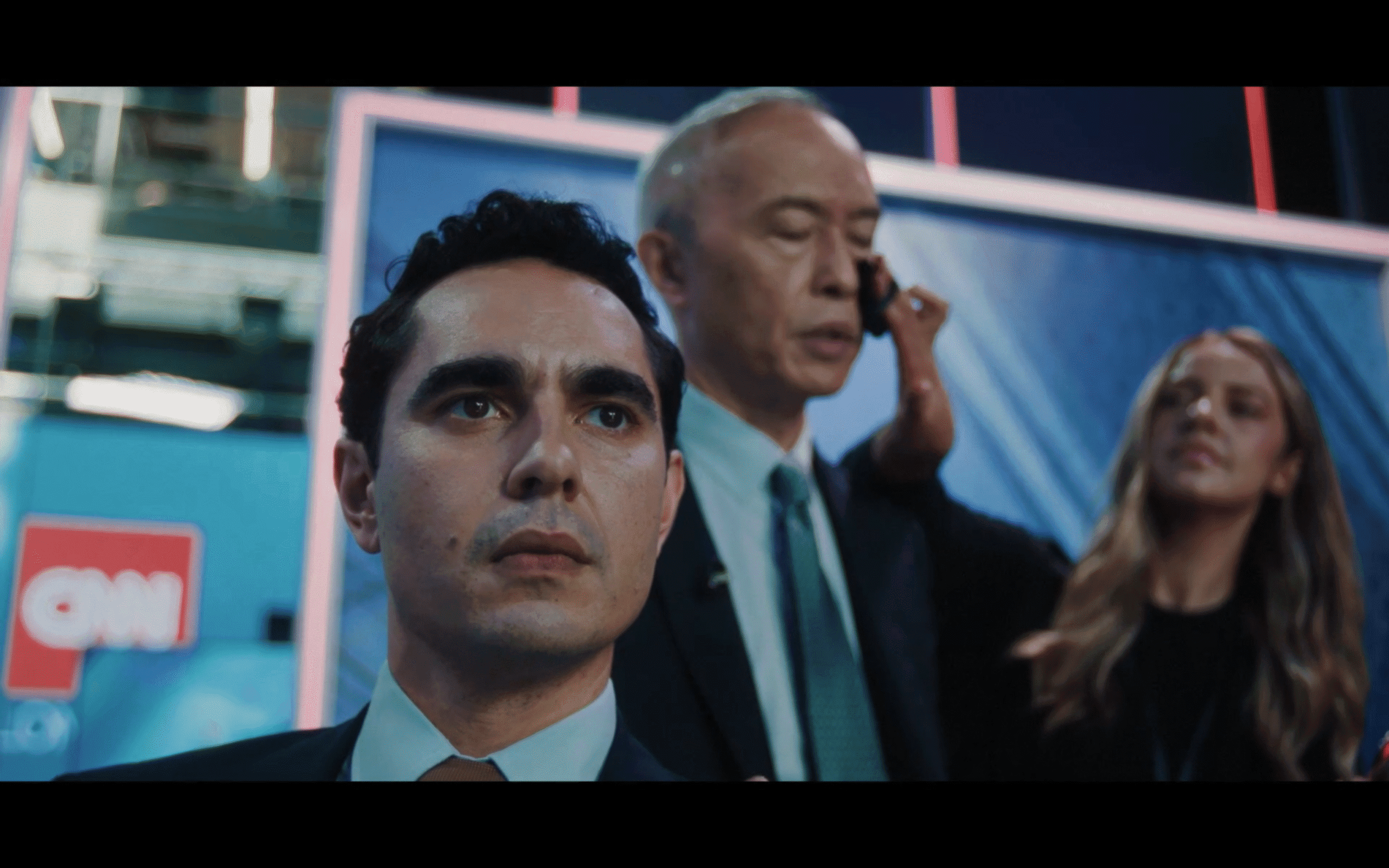
Gold: But winning in a photo finish is the way Hayley spits “you fucking try-hard loser” at Whitney, the kind of normie diss that so many people—even those who aren’t being made to work, uh, after hours—wish they could say to their boss.
“I was so happy that we got that scene to really kind of air it out,” Shipka told me last month about her character’s confrontation at Tender HQ, “because I think there was a lot bubbling underneath the surface with us the whole time. I think that Hayley has a disdain for Whitney that she has to completely and utterly hide. It was fun to have that come out.”
Which brings us to …
Remarks Most Likely to Actually Hurt Whitney
As Harper observes to Yasmin, Whitney is “not some hobbyist sociopath; he’s a fuckin’ criminal.” Which is why he’s pretty impervious to most of the things you can say about him, probably including that! Still, there are a few ways to attack him that could leave a mark. Here are some of the episode’s best.
Bronze: Ferdinand may be focused on razoblachenie, but Whitney has long been a master of another Cold War tactic: whataboutism. “When this guy’s not garbling pseudo-MBA word salad about organic increase of volume, state-of-the-art merchant compliance—whatever the hell that means—most of the smoke screens he deploys are blanket dispersions,” Eric sneers about Whitney live on CNN. “Cast enough doubt on everyone else, none falls on you.” Eric may not be able to stop Whit, but perhaps he can hope to contain him by naming and shaming his default moves.
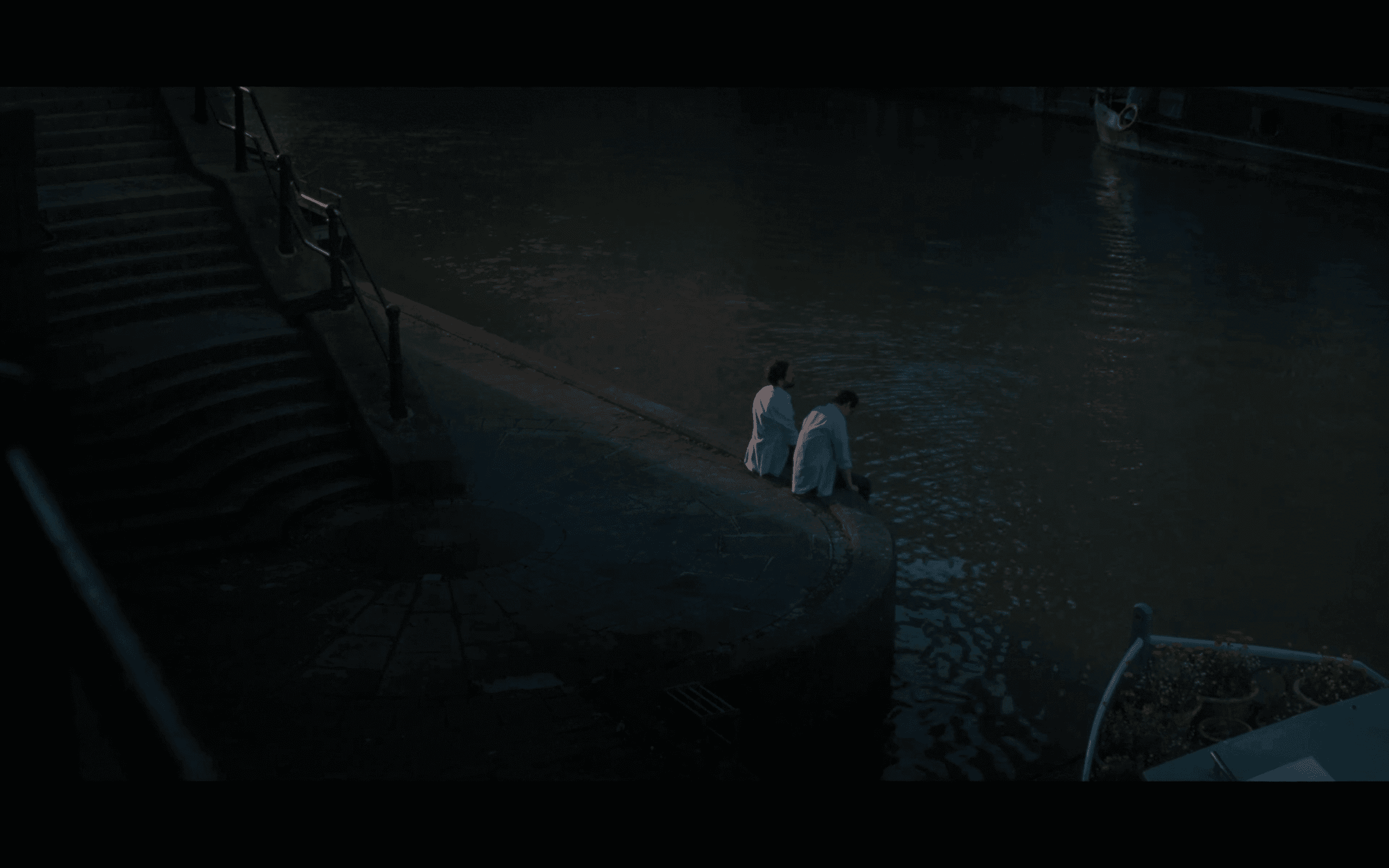
Silver: A tie between two beautifully cut-the-crap lines delivered by Henry during his and Whitney’s heart-to-heart down on the docks: (1) “Why does everything from your life sound like a bad novel?” and (2) “Don’t worry, man, I’ve got plenty of middle-class friends.” Henry is always at his finest when he’s at his snobbiest, and his station in life is the one thing that Whitney knows he can never have.
Gold: But I think the most wounded I’ve ever seen Whitney look is when he calls his old buddy Jonah (Kal Penn) and is told: “Get a lawyer or kill yourself. Whatever’s cheaper.” Minghella told me last week that while he struggles to find any shreds of humanity in Whitney, the way his character reacts to Jonah strikes him as an exception. Watching back his own performance, Minghella observed: “Whitney’s relationship with Jonah has a lot more tenderness in it than I maybe even intended.”
Turns of Leverage
On Industry, characters love borrowing trouble—and are always up to double down. Whose bets are paying off big-time this week, and who is in the midst of a downward spiral?
Leveling up: This was a big week for two very different flies on the wall at Tender: the no-see-um Ferdinand and the fluttering Hayley, both of whom wind up buzzing in Whitney’s ear. Ferdinand is more than just an IBN Bauer executive with a big financial interest in Tender—he’s something of a middle manager, in the most menacing sense of the word. (You do not want this man looping in his version of human resources.)

Hayley, meanwhile, attempts to leverage her particularly unique set of skills (wooing big bankers into surveilled Abu Dhabi rooms, being in the Mucks’ lives, things of that nature) to negotiate a few more zeros on her next paycheck from Whitney and lobby for some more qualitative benefits from Yasmin. Is it too late to get this gal (and/or her “cousin”) onto the Mike White season of Survivor?
Credit crunched? Just about everyone else in this episode is struggling. I thought last week was rough for Eric, but this episode was worse. No one at Tender is having a good time, no matter how hard Whitney stresses that the app is “the most popular bank for Gen Z.” (Is that u, MrBeast?!) And all the politicians who just kowtowed to London’s hottest fintech company? Awk-ward! My jotted notes for this section also included “Sweetpea and the Mucks?” which sounds like a band that the showrunners probably already featured on the Industry soundtrack.
On the watch list: “Must be exhausting,” Harper tells Whit one night over the phone, “living every moment knowing you could be completely undone by one single question.” She would know. When Industry premiered in 2020, it was Harper who harbored a secret—lying on her résumé—that was capable of upending everything she was right in the middle of building. In “Dear Henry,” she’s on the other side of that market, fighting to expose someone else’s big lie. Can she win?
Harper’s investment thesis on Tender might be on the money, but everyone is still waiting for a truly destabilizing catalyst—like a new audit—to sink the company for good. And as the episode nears its end, just as Harper is finally smiling after Eric’s CNN hit? She gets stunned by her now-former partner’s dissolution agreement. (The showrunners’ Michael Clayton shout-out ahead of this Industry season has taken on a life of its own, but this scene, with its bloodless barrister cleaning up Eric’s dirty work, really did feel like that film at its best.) It’s fitting that the song that plays over the episode’s closing credits—“Both Sides Now,” written by Joni Mitchell and inspired by a passage in a Saul Bellow novel that describes a guy looking out a plane window en route to Africa—was also played in the Season 6 finale of Mad Men, an episode in which a number of relationships, in the workplace and otherwise, blow up.
“She takes it fuckin’ personally,” Myha’la told me of Eric’s abrupt departure, “because it is personal. She feels abandoned. She feels lied to, deceived. She feels played.” Which of Eric’s nicknames might Harper embody going forward: the plucky Harpsichord or the deadly Harpoon?
Tender Offers
Is that a “private banker in your pocket,” or are you just happy to see me? Here’s the latest haps at Tender, the most ambitious “bank killer” in Canary Wharf.
“The cash can never sit still,” Harper and Sweetpea Golightly (Miriam Petche) realized in last week’s episode, “Eyes Without a Face,” as they traced Tender’s attempts to make fake profits seem real by whooshing funds around a confusing web of shell accounts and transactions. The same goes for Whitney in “Dear Henry”: He is in almost constant motion throughout, trying to plug the hole in the bucket as Tender stock takes a tumble that could threaten the entire company’s survival.
In the span of less than a week (and possibly as few as, like, three days?), Whitney:
- sweet-talks a restless accomplice;
- stalks Henry, who is singing selections from H.M.S. Pinafore while sudsing up in the shower;
- meets with CEOs and international leaders;
- seduces an auditor and his superior;
- noodle-dances;
- oversees glory hole operations;
- hops a flight to Ghana and back (a business trip that really could have been an email!);
- dials into a board meeting midair in the midst of a billion-dollar drop in Tender’s market cap;
- is threatened by his assistant who is also (surprise!) a hired escort carrying out global Mata Hari missions;
- croons some Whitney Houston into the phone in a conversation that is half “Do you like scary movies, Sidney?” and half “No, you hang up”;
- reveals the existence (and inquires about the motivations) of his shadowy puppet masters;
- intercepts and charms a near turncoat at 7 in the morning and recommends the blueberry pancakes on his way out;
- shows some real commitment to writing his morning pages, if all those “Dear Henry” brainstorms are any indication;
- appears on CNN beside a cornered, Art of War–quoting, doomed-Mets-fan antagonist who has little to lose;
- bickers with Tender’s panicking CEO;
- aaaaand handwrites and delivers one heck of a letter.
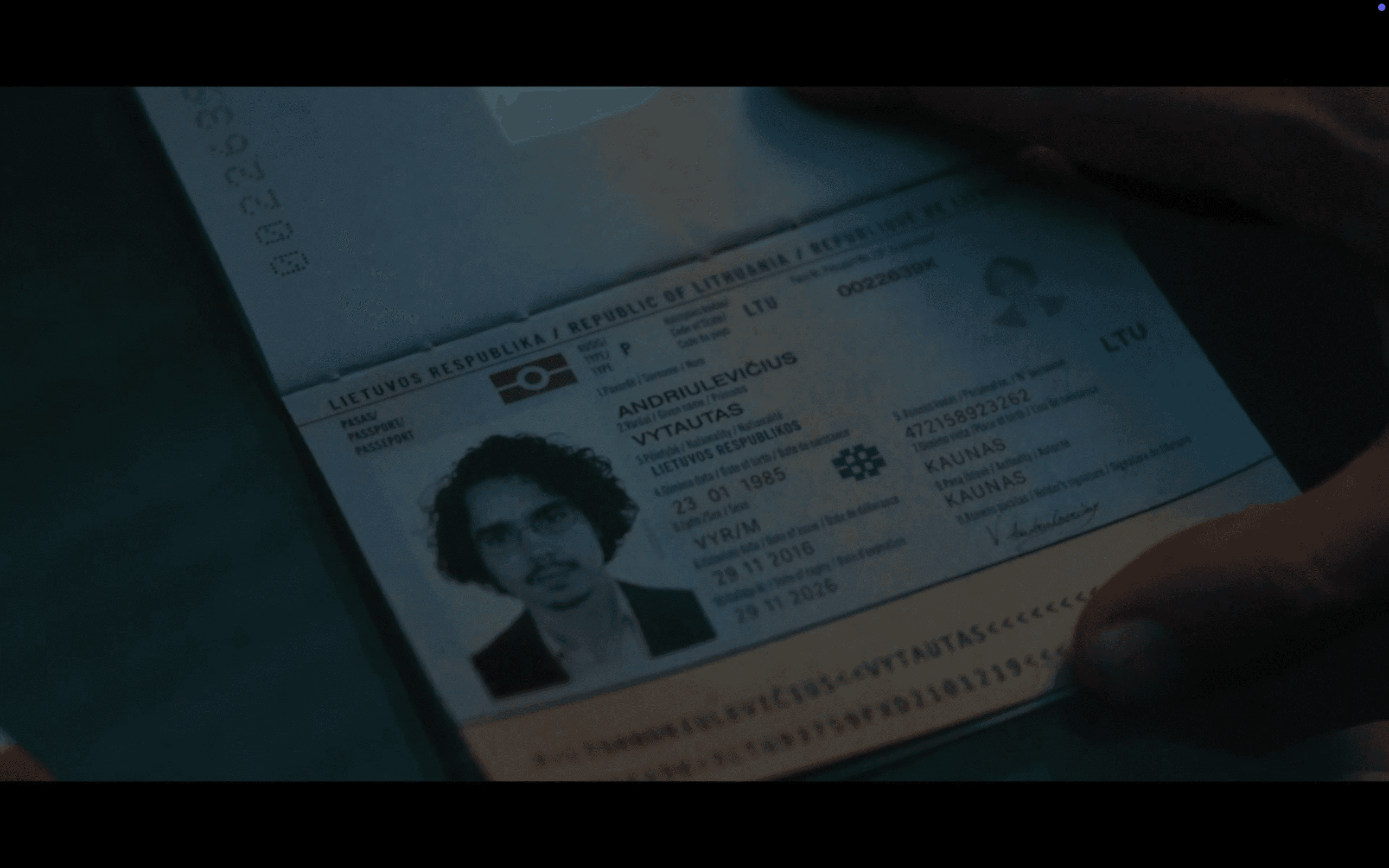
Did I forget anything? Oh yeah! He also fondles a Lithuanian passport, juggles a secret phone, and recites a code to someone for good measure. No wonder, as Eric observes, Whitney looks so damn shiny under those CNN lights. (Marginally better than shimmering, I suppose.)
Mergers and Acquisitions
Activist investor? I hardly know’r! This is a judgment-free zone to discuss emerging corporate synergies in Industry and do our due diligence on who’s doin’ it.
First and foremost, this flourish made me miss my TI-83 calculator!

Switching gears: I kept expecting Jacob (Steven Cree) to turn up at that after-hours sex club, what with Whitney’s hand lingering atop the auditor’s at dinner and all. (Maybe he was the guy in the dog mask?) Either way, between Whitney’s wine order for Jacob at dinner and his head massage for Henry—was he filming that, too?!—Whitney did a thorough job in “Dear Henry” of fulfilling Jonah’s description of him to Sweetpea a few episodes ago: “rapidly social,” sneakily sober, and someone who leaves “clients, investors, [and] auditors” hungover and believing, “Boy, that cat from Tender parties like a pre-crisis Florida realtor.”
Watch Watch
Time is a flat circle, ideally powered by quartz. Here, we examine Industry’s tick-tocking timepiece(s) of the week.
Two of this week’s watches are aptly named. Whit wears what appears to be a “Conquest Heritage Central Power Reserve” from Longines, with a beige/champagne dial (and a black strap—his fav!). And while I don’t know enough about watches to know what this actually means, when I read that this product has “two wheels in motion,” I thought: Sounds about right!
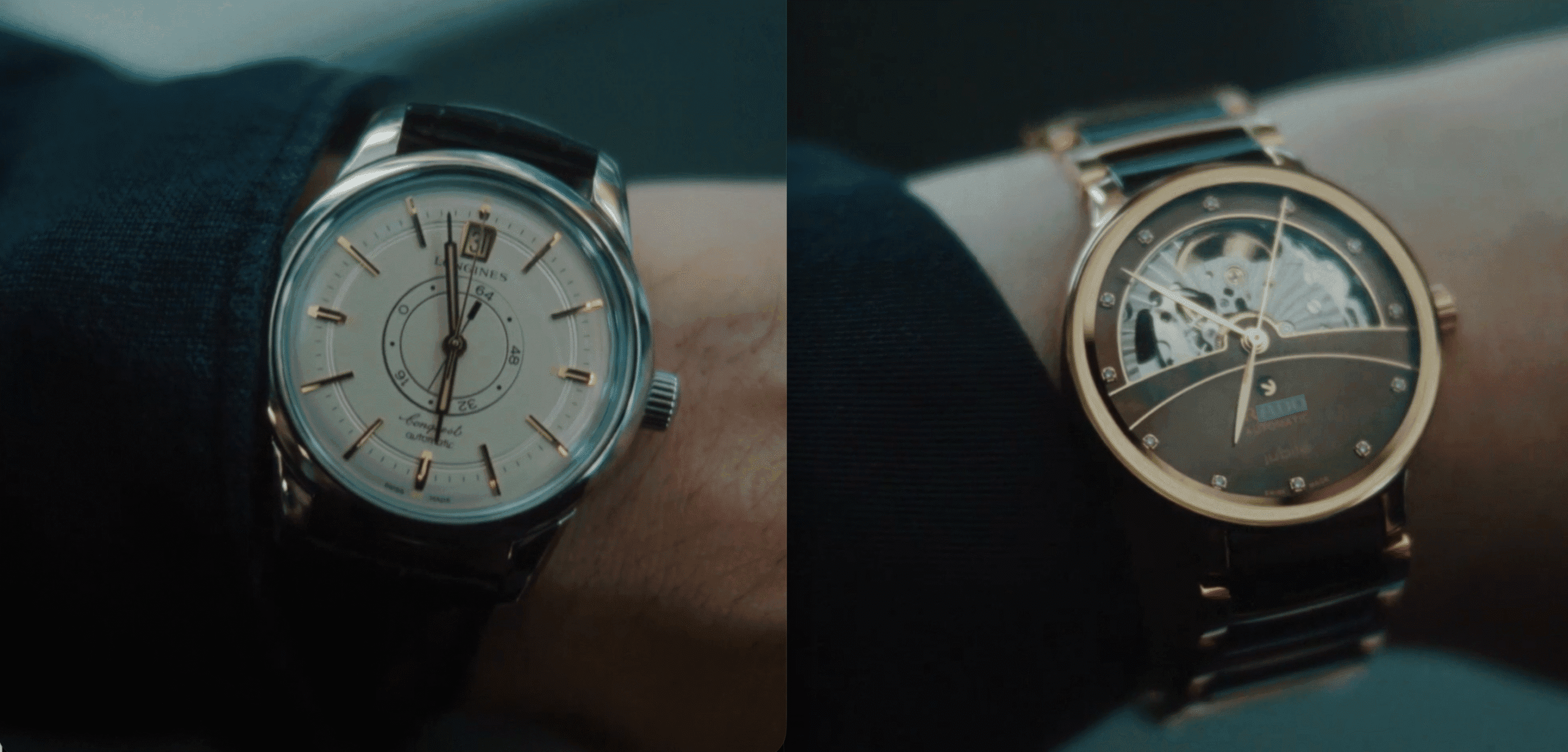
Which is the same reaction I had to learning that Sweetpea accessorizes with a “Rado Centrix Automatic Diamonds Open Heart.” Earnest queen—even if her credulousness did mean she handled the big Tony Day breakfast like a real novice.
Get Me the Comps!
On the one hand, past performance neither guarantees nor predicts future results, as the SEC requires investment firms to remind clients. On the other hand, plus ça change! Here are some of the real-world stories that might be relevant to Industry’s fictional realm.
On Industry: In her Alpha Conference presentation, Harper notes that “case studies from the past—Enron, Valeant, Luckin—teach us that shorting insolvency is always lucrative.”
IRL: Ah, a veritable Olympic podium of fraud! Enron, the gold(-plated) standard, was the “it girl” of early-aughts innovation … until it was all revealed to be a hall of mirrors. After pharma company Valeant failed to acquire its way into good health—another Bill Ackman L—the company sought to shed its skin by changing its name. And while you’d think “the Starbucks of China” would do brisk business, Luckin added a few too many pumps of fabricated revenue to its java.
On Industry: Eric receives a text message with footage of himself and “Dolly Hotel Girl” in flagrante delicto.
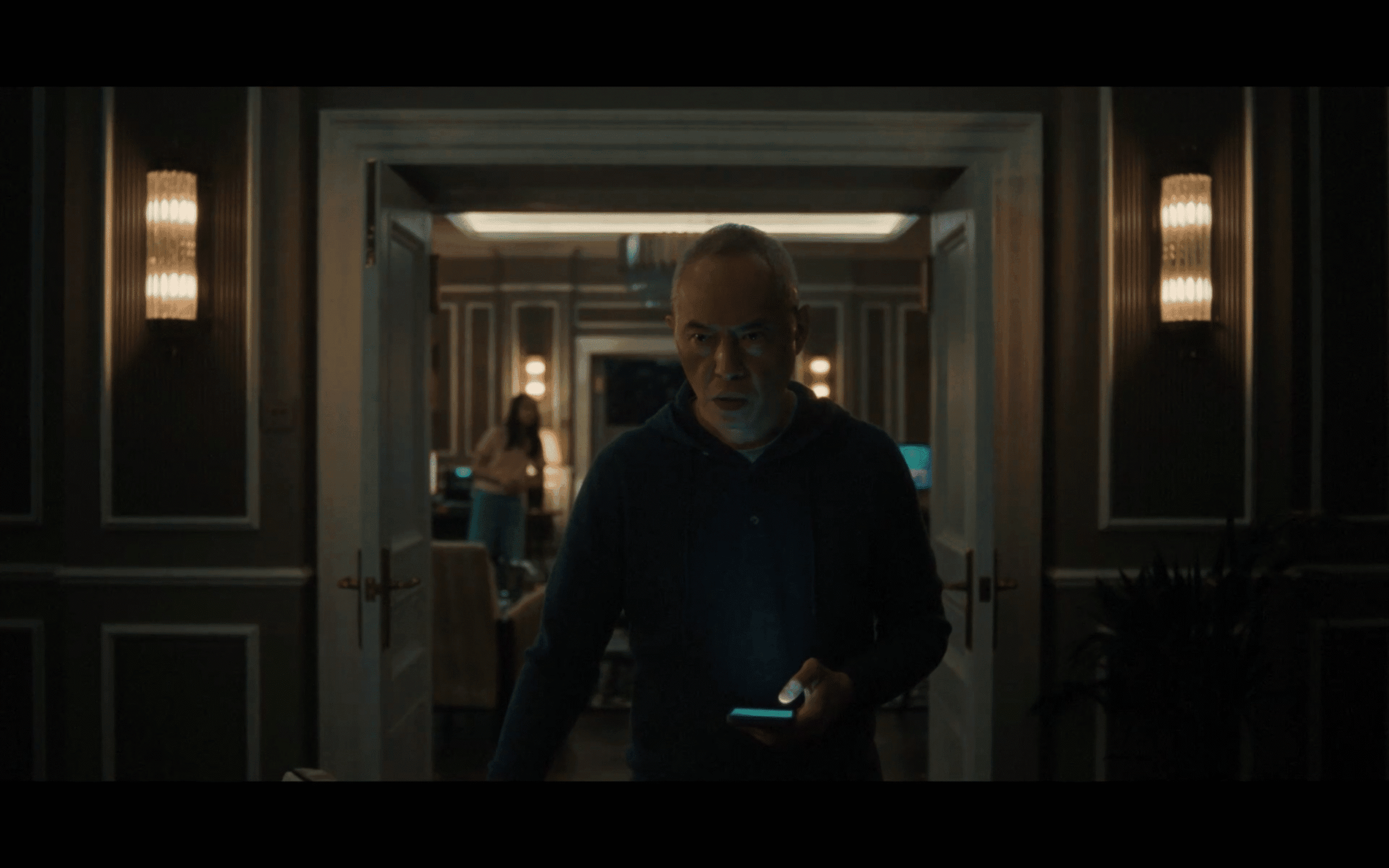
IRL: In the 2023 New Yorker article about the Wirecard investigation, which I’ve mentioned before in this space, there’s a story about a trader named Nick Gold who picked up “the hottest girl you’ve ever seen” when he was out in New York City one night—only to later receive blackmail footage of their dalliance in his email. “The worst part was that I had my socks all the way up,” Gold told The New Yorker. “You don’t want to be seen fucking with white socks up at my age.”
On Industry: “I’ve heard all about Solomon Asch, the Milgram experiments,” Whitney tells Harper. “People’s will to be deceived is practically in their DNA.”
IRL: The work of mid-century social scientists Solomon Asch and Stanley Milgram included creepy studies on conformity, personality, and submission to authority.
On Industry: Ferdinand tells Whit: “I was found by Cozy Bear, the tech arm of the SVR and the FSB.”
IRL: The SVR and the FSB are semi-competing intelligence and espionage networks in Russia. And Cozy Bear? Ruh-roh, just some state-adjacent hacker/spear phisher hotshots who probably already hacked into your corporation’s (and/or your country’s!) enterprise software suite years ago.
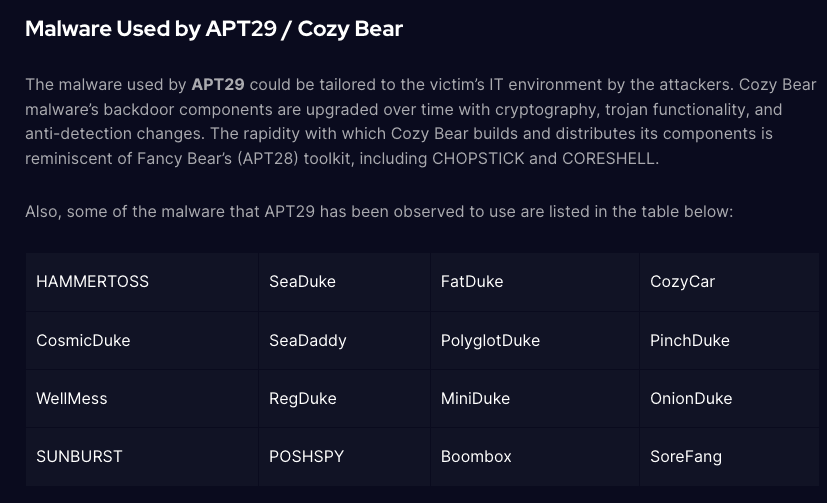
Tag yourself! Personally, I’m a FatDuke girl living in a POSHSPY world.
On Industry: Yasmin, trying to figure out what Hayley means when she says she wants better access, rues that “Chiltern burned down.”
IRL: Almost exactly a year ago, the luxury London hotel Chiltern Firehouse—which was repurposed out of, yes, an old firehouse—burned down on Valentine’s Day in a blaze ignited by wood from a pizza oven. (This story also made me think of the characters in the novel A Visit From the Goon Squad who purposely burn themselves so that people think they were present at an A-lister party that goes up in flames.)
Open Interest
What are we left wondering?
- So … what is Ferdinand’s whole deal? Does he liaise with this so-called “cell” out of mercenary greed, desperation, or a secret third reason?
- Have we seen this guy before?

- What was the overarching objective for Hayley’s Abu Dhabi assignment involving Al-Miraj? I’m assuming it had to do with closing the initial Pierpoint–Tender app partnership. But could it have some broader geopolitical implications?
- What person or entity does Whit dial up? Maybe that code he gave over the phone was a passcode for a dark-web crypto wallet. Or maybe it was a message in code to a shadowy intelligence network of his own! He was asking a suspicious number of expository questions to Ferdinand … (Side note: It would have been funny if the call connected to that corn-fed American government rep from the earlier Tender meeting, followed by Whitney getting patched through to a Dr. Claw–like presence with a cheeseburger by his side and a tiny hint of a visible red cap lit by the glow of Eric and Whit’s CNN debate on the boob tube …)
- Related: Is Whitney’s Lithuanian passport a break-glass-in-case-of-emergency alias or … his truest self? “He’s a hard character for human beings to relate to,” Minghella told me during a conversation about the character last week. “But what I did identify with was: I’m an actor, and I’ve spent most of my career, if not all of it, playing Americans even though I’m an English person. So that’s something interesting, because Whitney is a pretender—and whether he’s even American might be a question mark. Whether his accent is authentic is a question mark. And so I think that that was something I could connect to.”
- JESSE BLOOM MENTIONED. I REPEAT: JESSE BLOOM MENTIONED! Could my wildest dreams be true? Might we wind up being reunited with the Wu-Tang Clan/tennis court icon??? (I do like that he named his new fund after a green space in the Bronx whose history is rife with rivalries and grievances.) I know it’s a long shot, but we did get some sweet, sweet Anraj action in “Dear Henry,” so I can hope. (Hiiii, Anraj! That nod with Eric was the best wordless exchange since the ending of The Dark Knight Rises.)
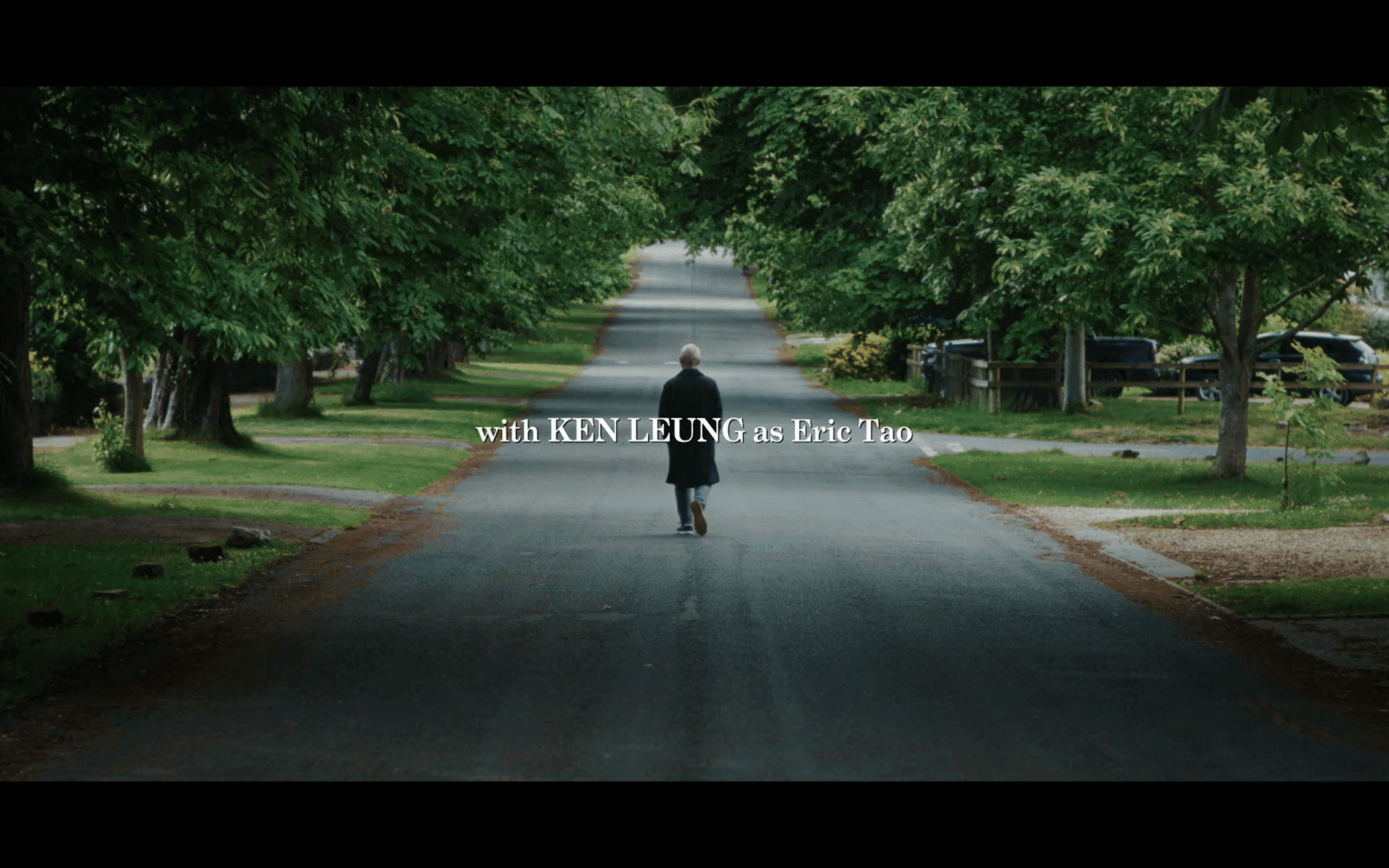
As the credits roll in “Dear Henry” and Eric saunters off into the world a newly faithless servant, the “Both Sides Now” lyrics—moons and Junes and Ferris wheels, things of that nature—remind me a little bit of the late Reggie Muck’s diary entry about “sherbet, strippers, and florescence.” Leung told me that filming the scene was a memorable experience: His job was just to keep walking and walking and walking until he was basically all the way out of sight, and then repeat that a few more times.
“It took a long time to walk, like, logistically,” Leung said. “So you’re different at the end of the walk than you were in the beginning.” I can picture it now.

Katie Baker
Katie Baker is a senior features writer at The Ringer who has reported live from NFL training camps, a federal fraud trial, and Mike Francesa’s basement. Her children remain unimpressed.
First Appeared on
Source link






