


4 Features The C9 Corvette Needs To Put Itself Ahead Of The Pack
The Corvette is, without question, one of the most important cars in American automotive history. Ever since its introduction in 1953, it has been the main, and frequently the only, real rival to the vast fleet of sports cars coming out of Europe. With all the previous generations, the Corvette was strict in its design: front-engine, rear-wheel drive. And while the latter is still the case for the current C8 generation (aside from the AWD E-Ray), the newest Corvette adopted a mid-engine layout.
Since 2019, the C8 Corvette has broken new ground for the American sports car, allowing Chevrolet to offer ultra-competitive performance at a fraction of the price you’d pay for European rivals. Especially with the ZR1, it costs six figures but offers capabilities typically reserved for seven-figure cars. Looking forward, we’re most likely closer to the release of the C9 generation than the start of the C8. The C8 Corvette has improved massively from a driving perspective, but there’s still room to work with to ensure the next iteration of the sports car doesn’t fall behind the rapidly developing competition.
The introduction of active aerodynamics
Reaching 60 MPH in under 3 seconds (which the current ZR1 does in 2.3 seconds) is no longer enough to grab headlines in the same way it used to, with record-breaking lap times now frequently being chased instead of just raw straight-line speed. While Chevrolet has delivered a mighty aero package with the ZR1, helping it set said records at tracks like Road America and Laguna Seca, which SlashGear was lucky enough to experience, some of its closest rivals offer something that, if incorporated with the C9 Corvette, could certainly help it remain ultra-competitive at the pinnacle of the industry.
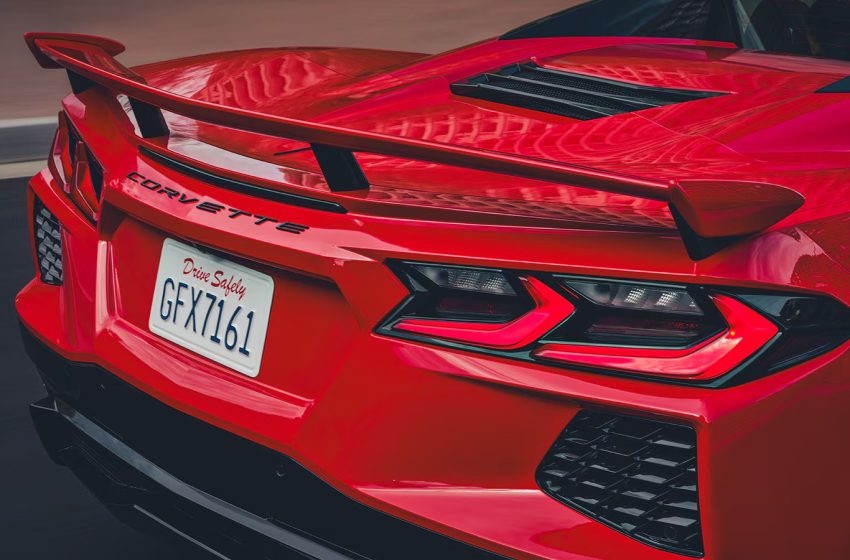
The Porsche 911 GT3 RS instantly springs to mind here, with its active aerodynamic rear wing acting as a drag-reduction system to gain time on the straights without sacrificing downforce in the corners. Closer-to-home rivals are also applying the tech, namely, the Mustang GTD, which also has little flaps under the front splitter. The ZR1’s massive rear wing and multi-layered front splitter are staples of the trim’s philosophy, but introducing one of the latest editions to cars with equally aggressive aero packages may be crucial to prevent the C9 from falling behind in this area. It could already be infused with the C8’s design, so we hope that the C9 still leaves room for it whenever it hits the road.
Higher focus on luxury
You struggle to find someone who doesn’t agree that the C8 is a big step up over previous generations when it comes to overall luxury. Despite its relative value, it’s not among the cheapest sports cars, though its interior traditionally has been. That changed with the C8, which does offer great value-for-money when it comes to interior quality. If the C9 can take an extra step to move closer to the Ferraris and Aston Martins without increasing the relative price too much, Corvette can carve out its own space in the performance segment even more.
While features like Nappa leather keep the C8 Corvette in line with other similarly priced luxury cars, the rivals that the C8 targets tend to offer more unique, bespoke trim options to add a sense of exclusivity. The interior of the 2026 model-year Corvette has been updated to remove some of the least-liked elements, but the lack of refinement compared to the two mentioned European brands can still be noticeable, especially on entry-level trims, where some plastic can be found in the cabin.
Another area where rivals have the edge is with interior technology. While the fit and finish of the likes of the Aston Martin Vantage and Ferrari 296 are class-leading, the integrated, cutting-edge technology has become just as vital for creating the luxury feel with these cars as the fancy materials. That’s not to say the Corvette’s infotainment doesn’t get the job done. It just doesn’t come across as sophisticated as what near peers have recently introduced.
Widespread usage of hybrid technology
Each of the four C8 Corvette models for sale today offers unique selling points, whether that’s being more affordable than the competition or offering better performance on paper than almost every car on the road. In the case of the E-Ray, though, its hybrid powertrain makes it perhaps the most distinct of the bunch, with not a volt of electrification used in the Corvette engines elsewhere. In our review of the E-Ray, the hybrid provided a lot of enjoyment.
While this makes the E-Ray one of the most unique American production cars at the moment, you can’t help but think about what benefit electrification could have for the rest of the lineup when it comes to performance. This doesn’t mean Chevrolet should go to the same lengths as the 296 with a plug-in hybrid powertrain; rather, it should infuse the standard, regenerative hybrid technology from the E-Ray alongside the more powerful V8 engines that we hope to see in the C9.
Other sports cars have begun to implement hybrid technology, most notably the new Porsche 911 Carrera GTS. It uses regenerative methods to power the motor, with the flat-six remaining the car’s core element. Hybrid tech will continue advancing while the C9 is readied, so hopefully the E-Ray’s benefits will be more widespread in the next generation, keeping both the lower- and top-spec models competitive with direct rivals.
Reducing the weight
Switching from front-engine to mid-engine has done heaps for the Corvette’s handling, even if it did mean abandoning the philosophy the car had used for 60 years. Despite changing the fundamentals of the car to compete with similarly designed sports cars in Europe, one area of the C8 stands out compared to them: the weight.
While Chevrolet uses a few methods to keep the overall cost down, the heavy use of aluminium for the frame doubles down. Aluminium is also used extensively in other sports cars like the current 911 Carrera, but the price tag is justified when you look inside and experience the dynamics on track. But even so, Car and Driver weighed the C8 Corvette when it came out back in 2020 at 3,600 pounds, which is around 300 pounds heavier than the newest 911. It is not one of the lightest sports cars around. The 490-horsepower output does help offset that, but shaving the extra weight could make it feel even faster while improving handling.
Moving up to the top-spec models, the weight differences are larger, with the ZR1 weighing almost 500 pounds more than the GT3 RS. Both use carbon fiber-reinforced plastic, but the latter much more than the former. Again, though, the incredible power of the ZR1’s 5.5L V8 makes up for it, but being as light as the competition could make the C9 truly unmatchable for the money.
First Appeared on
Source link






