


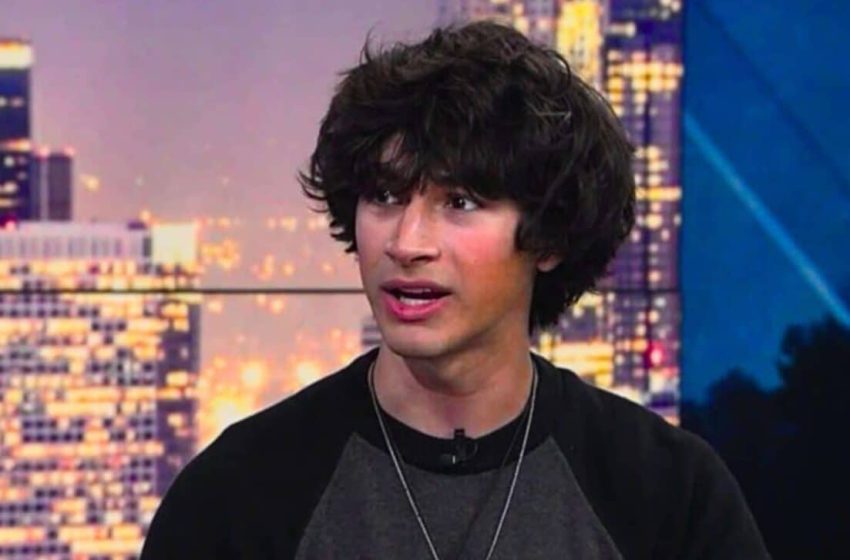
U.S. High-School Student Uncovers 1.5 Million Hidden Cosmic Objects NASA Missed
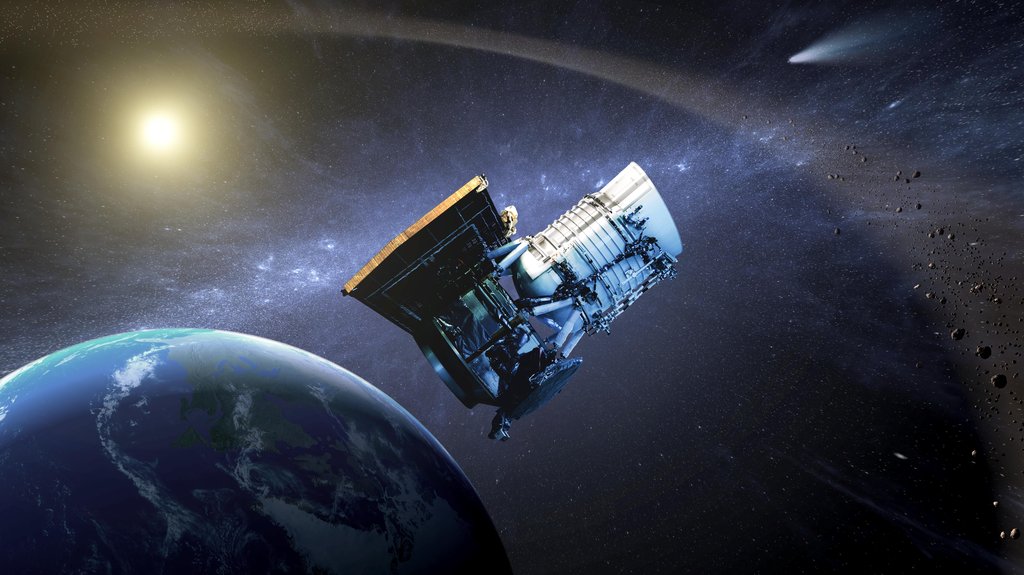
For more than a decade, NASA’s NEOWISE telescope scanned the entire sky in infrared. Its primary mission was hunting for asteroids near Earth, but it kept recording everything else in its view: distant stars, quasars, and galaxies. When the mission ended in 2024, it left behind an archive of nearly 200 billion individual detections.
Astronomers knew the data contained far more than moving rocks. Hidden in the rows were quasars that flicker, stars that pulse, and binary systems that dim as one passes in front of the other. The problem was that no human could sift through 200 billion measurements by hand, and conventional computer methods were too slow to process the sheer volume.
For years, the data sat largely unread. Davy Kirkpatrick, a senior research scientist at Caltech’s IPAC, had been looking at the archive and wondering what it contained. He had mentored high school students for five summers, but even he didn’t have a practical way to extract all the variable objects buried in the noise.
A 17-Year-Old Walks Into a Caltech Lab
Then a teenager from Pasadena High School walked into his laboratory. Matteo Paz had attended Caltech’s public stargazing lectures with his mother since elementary school. In the summer of 2023, he joined Kirkpatrick’s lab through Caltech’s Summer Research Connection program, an experience later detailed in a Caltech feature on exploring space with AI.
Paz brought an unusual background. He had completed AP Calculus in eighth grade through Pasadena Unified’s accelerated Math Academy and was already studying undergraduate-level mathematics. An elective course integrating coding and theoretical computer science had introduced him to machine learning, a tool he was ready to apply to astronomy.
Kirkpatrick’s original idea for the summer was modest: take a small patch of sky, manually find some variable stars, and publish them as a proof of concept. Paz proposed something else entirely on their first day. He told Kirkpatrick he wanted to build a model that could analyze the entire dataset and publish a paper.
Kirkpatrick, who grew up in a Tennessee farming community, recognized the ambition. He had become an astronomer because his ninth-grade chemistry and physics teacher told him he had potential and mapped out the courses he would need for college. “If I see their potential, I want to make sure that they are reaching it,” Kirkpatrick later said. “I’ll do whatever I can to help them out.”
The Algorithm That Runs at 53 Microseconds Per Star
Paz named his model VARnet. The architecture processes astronomical time series data through three integrated stages. Wavelet decomposition first reduces the impact of spurious measurements that come from cosmic rays or instrument errors.
A modified discrete Fourier transform then extracts periodic features from irregularly sampled light curves. This step was critical because NEOWISE did not observe stars on a fixed schedule—it scanned in great circles centered on the Sun, creating clusters of observations months apart. Finally, a convolutional neural network classifies each source into one of four categories: non-variable, transient events such as supernovae, intrinsic pulsators, or eclipsing binary systems.
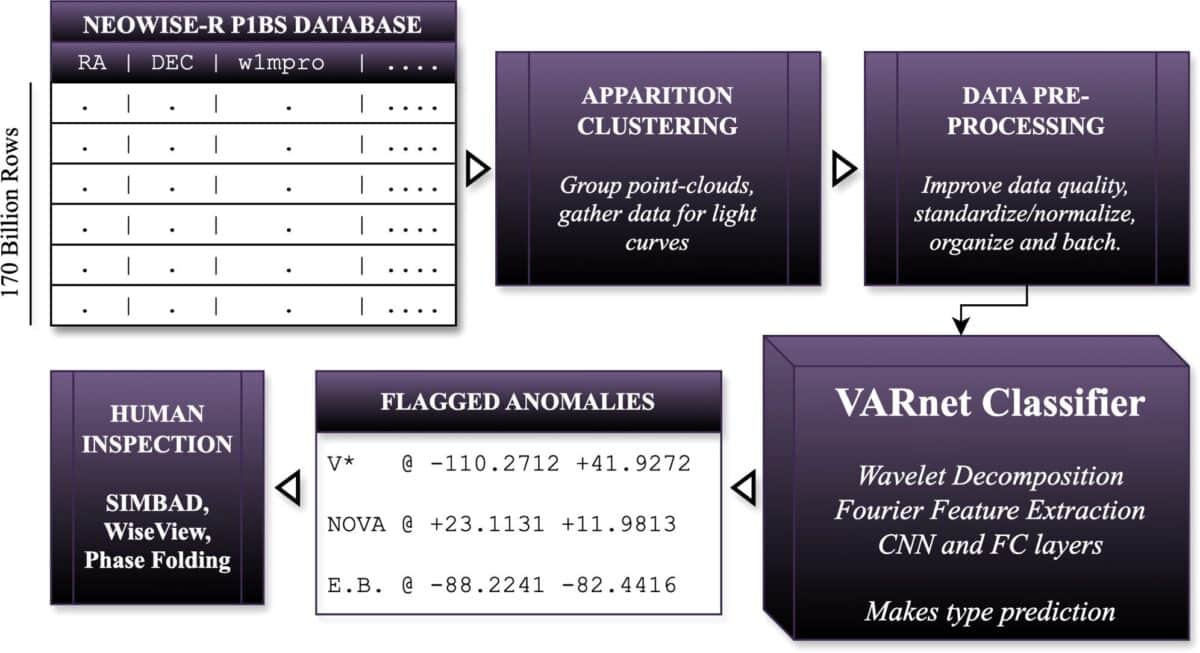
The full technical specifications were published in The Astronomical Journal in November 2024, with Paz listed as the sole author. The peer-reviewed paper on the VARnet architecture documents the model’s validation methods and performance metrics in detail. On a GPU with 22 gigabytes of VRAM, VARnet processes each source in less than 53 microseconds, achieving an F1 score of 0.91 on a validation set of known variable objects.
1.5 Million Candidates Hidden in Plain Sight
When Paz ran VARnet across the full NEOWISE dataset, the model flagged 1.5 million potential variable objects. The number does not represent 1.5 million confirmed discoveries in the traditional sense. Each flagged source is a candidate requiring follow-up observation and classification by astronomers.
Some will prove to be known objects now characterized in infrared wavelengths for the first time. Some will be false positives. A fraction will be genuinely new detections of quasars, variable stars, and transient events that no one had previously cataloged.
Kirkpatrick connected Paz with other Caltech researchers who provided specialized expertise. Shoubaneh Hemmati, Daniel Masters, Ashish Mahabal, and Matthew Graham helped refine the machine-learning techniques and advised on analyzing objects that vary on different timescales. The collaboration also revealed a constraint: NEOWISE’s observational rhythm meant it could not systematically detect objects that flashed once and faded or those that changed gradually over years.
From Summer Project to Published Catalog
The complete catalog of variable objects is scheduled for publication in 2025. When released, it will provide the astronomical community with a dataset large enough to support statistical studies of infrared variability across the entire sky. Paz, now a Caltech employee working at IPAC while finishing high school, said the model’s potential extends beyond astronomy.
“The model I implemented can be used for other time domain studies in astronomy, and potentially anything else that comes in a temporal format,” he told Caltech News in April 2025. He noted possible applications in chart analysis, where information comes in a time series and periodic components can be critical, as well as in studying atmospheric effects such as pollution, where seasonal and day-night cycles play major roles.
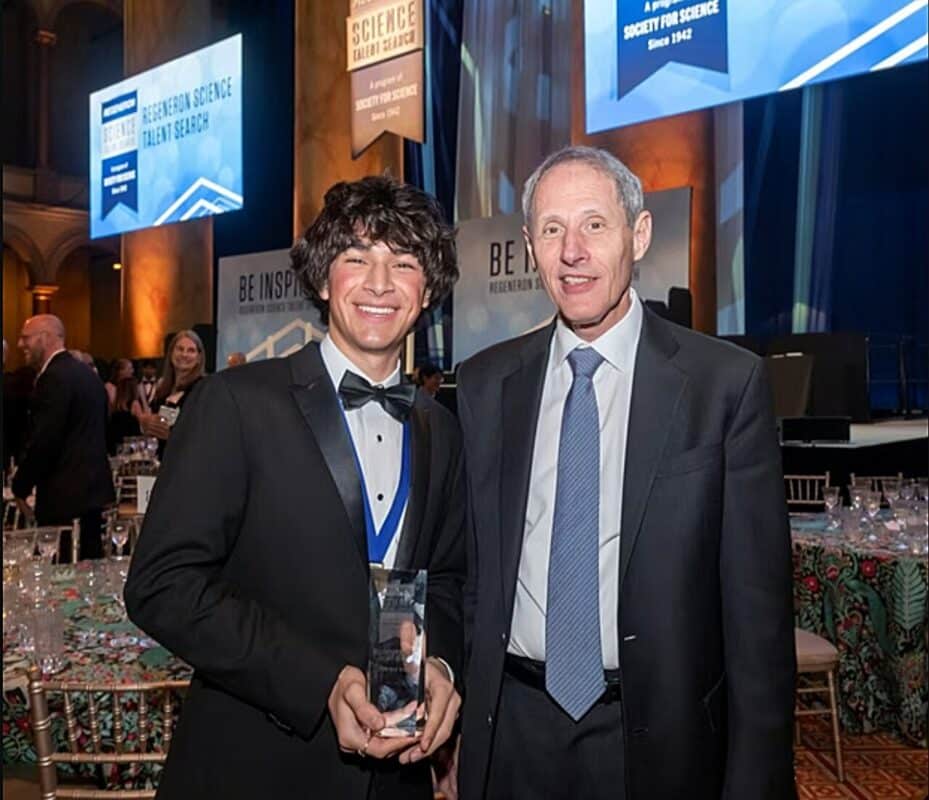
For Kirkpatrick, whose staff page at IPAC outlines his research in brown dwarfs and the Solar Neighborhood, the outcome was deeply personal. When Paz won the $250,000 first-place prize in the Regeneron Science Talent Search, Kirkpatrick said it was the highest high he had ever experienced. “I’ve won awards in the past as well, and that’s a big thrill,” he said, “but when you’ve helped someone reach some of their potential and be acknowledged for it, it’s a nice feeling.”
Paz’s work has already shifted how Kirkpatrick thinks about mentoring, reinforcing his commitment to finding talented young people in the local community. “The extent to which we can tap into the local community of really smart young people, mentor them, and make sure they don’t forget and lose their potential,” Kirkpatrick said, “the better off we are.”
First Appeared on
Source link






