


This Ancient Crocodile Could Outrun a Dog, And Scientists Just Found Its Bones in England
A 215-million-year-old crocodile relative with the build of a racing dog has been formally identified as a new species, discovered in the English county of Gloucestershire. The find rewrites assumptions about what early crocodylomorphs looked like, and it carries a touching personal tribute in its name.
The creature, Galahadosuchus jonesi, lived during the Late Triassic period in what is now southwest England, at a time when the region was a rugged, elevated landscape ringed by hot, arid plains. Unlike the wide, low-slung crocodilians we know today, this animal moved on long, slender legs with an upright posture, a body plan built for speed, not swimming. The research, led by Natural History Museum London and UCL PhD student Ewan Bodenham, has been published in The Anatomical Record.
This discovery matters beyond its novelty. It expands our picture of the extraordinary diversity of life that existed just before the Triassic-Jurassic mass extinction, a catastrophic event linked to volcanic upheaval and climate disruption. Understanding which creatures thrived in the lead-up to that extinction, and why, offers scientists a window into how life reorganizes itself in the face of planetary crisis.
A Fossil Hidden in Plain Sight
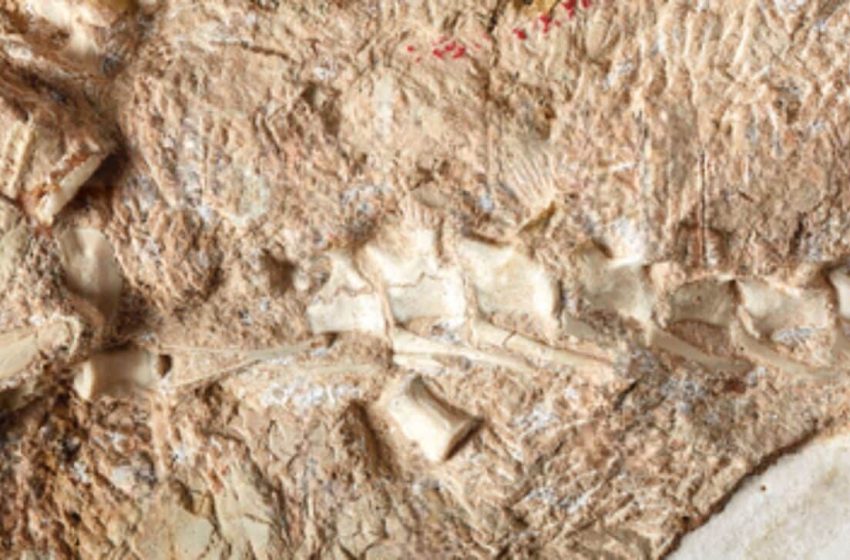
The specimen at the center of this discovery, catalogued as NHMUK PV R 10002, had been sitting in the Natural History Museum’s collections for decades. Originally recovered from Cromhall Quarry in Gloucestershire in 1969 by collector Ron Croucher, it was long assumed to be a specimen of Terrestrisuchus gracilis, the only other non-crocodyliform crocodylomorph previously identified from this region’s Triassic fissure deposits.
According to the published study, the fossil was recovered from fissure-fill deposits characteristic of the Bristol Channel area, stretching across southwest England and south Wales. These formations preserved ancient ecosystems in remarkable detail: animals that died on the surface were washed into underground cavities and buried by sediment, creating natural time capsules.
It was only when Bodenham conducted a detailed anatomical comparison as part of his PhD research into early crocodile evolutionary relationships that the specimen revealed its secrets. The team identified 13 distinct morphological differences between NHMUK PV R 10002 and Terrestrisuchus, concentrated in the vertebrae, limb bones, wrist elements, and ankle, enough to formally declare it a new genus and species.
Built for Speed: What the Bones Reveal
The anatomy of Galahadosuchus jonesi paints a vivid picture of a nimble, fast-moving predator. According to the research, the animal possessed elongated proximal wrist bones, long and tightly bunched hand bones, a distinctly medially directed femoral head, and an ankle joint configuration consistent with an erect, upright stance, all hallmarks of a cursorial, or running-adapted, quadruped.
Its metatarsal-to-femur length ratio, a proxy for running speed used in comparative studies of Triassic archosaurs, was calculated at 0.40, notably higher than the 0.35 recorded for Terrestrisuchus, suggesting Galahadosuchus may have been the faster of the two. The humerus-to-total-forelimb ratio also differed meaningfully, with the radius and ulna of Galahadosuchus substantially longer relative to the humerus compared with Terrestrisuchus, a proportional difference exceeding 15%.
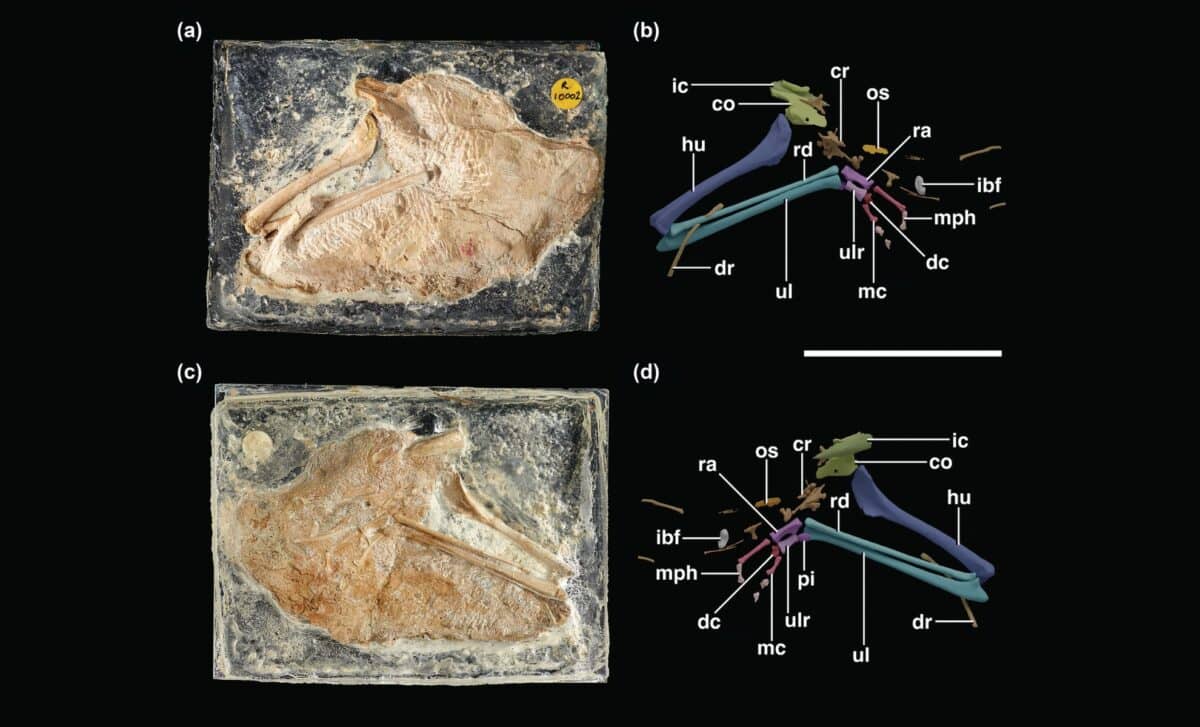
The researchers were careful to note, however, that some of these differences could partly reflect variations in growth stage, and that biomechanical studies on early crocodylomorphs remain limited. What the bones do confirm, according to the paper, is that Galahadosuchus was “a highly gracile, cursorial terrestrial quadruped with an erect stance“, the reptilian equivalent of an apex sprinter navigating a vanished Triassic landscape.
A Name That Honors a Teacher
The species name jonesi honors David Rhys Jones, a physics teacher at Ysgol Uwchradd Aberteifi in Cardigan, Wales, and the lead author’s secondary school educator. “Mr. Jones was just such a good teacher,” Bodenham told the Natural History Museum. “He also didn’t let me settle. He was very good at challenging people and helping students be the best they can be.”
The genus name Galahadosuchus draws on Arthurian legend, specifically Sir Galahad, a knight renowned for moral uprightness, combined with the Greek word suchus, meaning crocodile. According to the study, the name is a deliberate double meaning: a nod both to the physical uprightness of the animal’s posture and to the upstanding character of the teacher it celebrates.
Phylogenetic analysis places Galahadosuchus as the sister taxon to Terrestrisuchus within the clade Saltoposuchidae, a grouping of small, fast, land-dwelling early crocodile relatives. The two species likely shared broadly similar ecosystems in Late Triassic Britain, yet their anatomical differences suggest they may have carved out distinct locomotory niches, adding a new layer of complexity to our understanding of early crocodylomorph diversity.
First Appeared on
Source link






