


A Man Discovered a Mysterious Stone in His Barn that Turned Out to Be an Archaeological Treasure
A seemingly mundane stone in a Czech village has revealed a connection to ancient history. What was once part of a barn’s foundation is now recognized as a rare Bronze Age artifact: a mold used to cast bronze spearheads over 3,000 years ago.
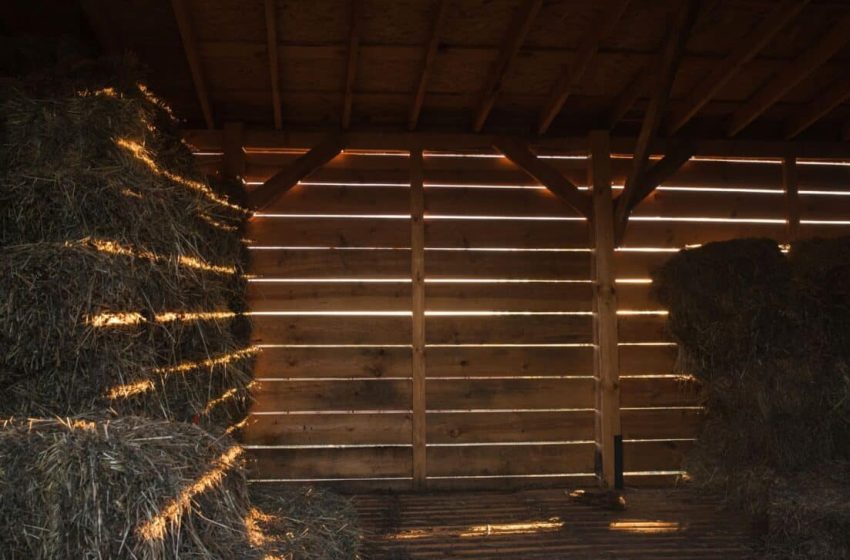
In 2007, a man from Morkuvky, a small village in the southeastern Czech Republic, found the unusual stone while working on his barn. Initially used as a building block, the object piqued his curiosity, leading him to contact local archaeologists. After extensive analysis, experts determined that the stone was an essential weapon of the era.
Crafting the Spearhead
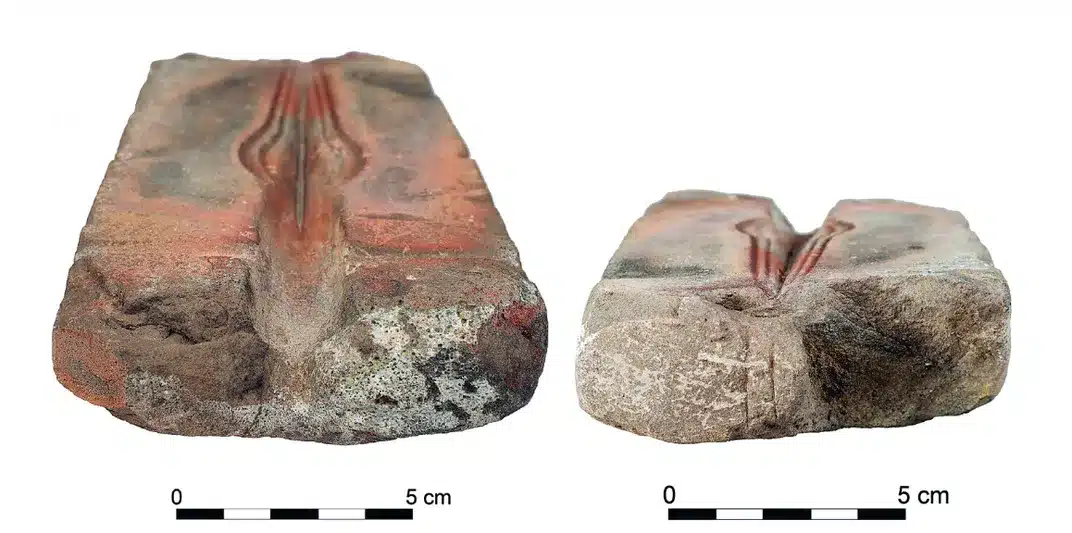
The stone mold, made from volcanic rhyolite tuff and measuring about nine inches in length, was designed to produce specific spearheads used by warriors of the time. As stated Milan Salaš, an archaeologist at the Moravian Museum in Brno:
“It is a casting mold, technically called a matrix, for a bronze spearhead.” The mold was used to create a lance-shaped spearhead with a hollow base. “On one side, there’s a very precisely shaped negative impression for casting a bronze spearhead,” Salaš explained.
A Look into Bronze Age Metalworking
People in the Bronze Age, especially those of the Urnfield culture, had already mastered the craft of casting bronze weapons. A study published in Archeologicke Rozhledy noted that crafting spearheads like this required both expertise and suitable materials. The volcanic rock used for the mold likely came from northern Hungary or southeastern Slovakia, suggesting long-distance trade networks.
As Salaš explained, the stone is important for the details it provides about the production of these weapons.“As we can see, it’s a fairly regular rectangular stone slab. On the dividing surface of the mold, on one side, there is a very precisely shaped and very well-preserved negative impression used for casting a bronze spearhead.” he said.
Making bronze weapons wasn’t a simple task, it involved working with molten metal, which had to be carefully monitored for temperature and consistency. This shows that people of the time had an advanced understanding of metallurgy, allowing them to produce large quantities.
What the Urnfield Culture Really Left Behind?
The Urnfield culture, known for its unique burial practices, was widespread across Central Europe, including modern-day Czech Republic, Austria, and Slovakia. While many Urnfield artifacts have been found in burial sites, finding this particular mold in a modern village is pretty rare.
Salaš and his team suspected that the mold might have originally come from a nearby Urnfield settlement. As he pointed out in a Facebook post, while the exact location remains unknown, the mold’s volcanic origin suggests long-distance trade networks. Researchers believe the artifact was redeposited in Morkuvky at a much later time.
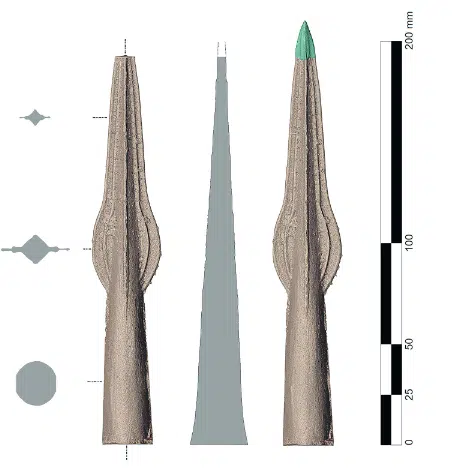
As stated by Antonín Přichystal, a geologist at Masaryk University, the heavy use of the mold suggests it played a significant role in the production of military equipment. “It could have been used to cast many spearheads,” he says. The researchers also found evidence of “high thermal stress” on the artifact’s surface, suggesting it was used repeatedly.
First Appeared on
Source link






