


How Many Gripen E/F Saab Can Actually Produce, What It Means for Ukraine, Why 36 Jets per Year Remains a Stretch
In light of new contracts for the delivery of JAS 39 Gripen E/F fighters, as well as likely future orders, the Swedish defense company Saab is exploring options to increase production volumes. As of now, the company plans to reach a production rate of up to 36 fighters per year. Achieving this would require expanding existing production lines in two countries, Sweden and Brazil.
This information was disclosed by Saab and reported by The Aviationist. From the Defense Express perspective, it is worth noting that discussions about expanding Gripen production have been ongoing for several months, while actual production capabilities appear to be far more modest than the stated target of 36 aircraft per year.
In the autumn of 2025, it was reported that Gripen production rates at Saab’s Swedish facilities could reach 12 aircraft per year. At the same time, Saab has been investing in its manufacturing infrastructure with the aim of increasing output to 20–30 aircraft annually. Even then, it was stated that such production rates could only be achieved within 2–3 years.
At the same time, when Saab refers to these higher production figures, the company emphasizes the need to establish manufacturing capacity in other countries. These include Canada, which has not yet decided whether it will procure the Gripen, and Ukraine, which could potentially begin assembling Gripen aircraft domestically starting in 2033.
There are also production facilities in Brazil. However, at least for now, these sites are fully occupied with fulfilling Brazil’s own contract. Deliveries under the Brazilian program are expected to stretch over eight years and conclude in 2032. It is also worth noting that Brazil required as many as 11 years to organize local assembly of the Gripen.
Therefore, when estimating how long Saab will need to fulfill its firm contracts, it is reasonable to rely primarily on the production capacity available in Sweden.
It should be emphasized upfront that all further estimates are conditional. It is difficult to account for all factors that may affect production timelines, including potential delays. Moreover, Saab has not yet announced clear timelines for when expanded production capacity could actually be achieved.
As for the current volume of firm contracts for Gripen E/F fighters, they include:
- deliveries to the Swedish Air Force (60 Gripen E/F ordered, with several aircraft likely already delivered);
- Colombia (17 fighters);
- Thailand (4 fighters ordered, with plans to order an additional 8);
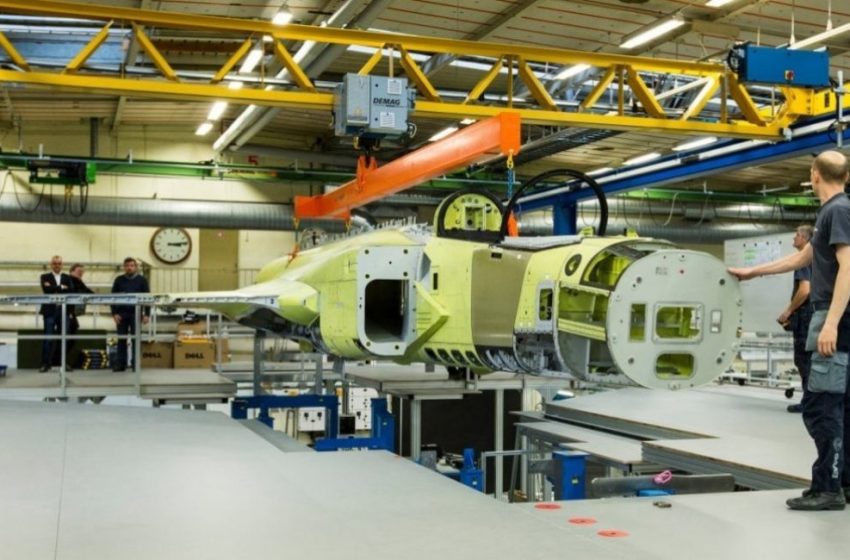
- Hungary (4 fighters, with assembly of the first aircraft completed as of mid-January).
In total, this amounts to more than 80 Gripen E/F fighters that Saab must deliver under existing agreements, including those already handed over to the Swedish Air Force. Separately, it should be noted that 25 aircraft remain to be delivered under the Brazilian contract. However, it is difficult to assess Saab’s exact workload in this project, as aircraft assembly and the production of a number of components are carried out at Brazilian facilities.
At the same time, the following delivery schedules are known. For Thailand, delivery of the first batch of four Gripen fighters is planned for 2025–2029, while the additional eight aircraft are intended to be delivered in the 2030–2034 timeframe. For Colombia, 17 aircraft are scheduled for delivery between 2027 and 2032.
Thus, a production rate of 12 fighters per year appears to be sufficient, albeit very tight, to complete all existing contracts by 2032. This excludes a limited number of aircraft for Thailand, scheduled for delivery in 2033–2034. This assessment also includes the largest contract for the Swedish Air Force. However, this calculation does not account for force majeure factors. For example, the Swedish Air Force, which ordered the Gripen E back in 2013, received its first aircraft only last year. Attention should also be paid to the notably extended delivery timelines.
Therefore, if Saab secures new contracts, the issue of expanding production capacity will become critical. Otherwise, the company will be forced to offer customers very long delivery schedules, which may influence procurement decisions. At the same time, the need to “stand in line” has become a reality for many categories of weapons, especially combat aircraft.
Previously, Defense Express reported that the Storm Shadow and SCALP-EG cruise missiles, following their exceptional combat use in Ukraine, will receive the Mk2 modification.
Read more: Saab Nears Completion of First Hungarian Gripen Amid Pending Order for Ukraine
First Appeared on
Source link






