


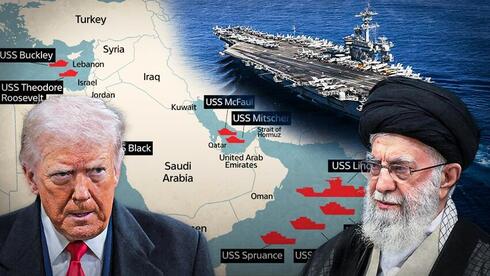
Iran rejects US offer as Trump faces military trap and ‘cannot pull back without losi
According to the report, those sources said hopes for a diplomatic solution to the dispute over Tehran’s nuclear program are fading.
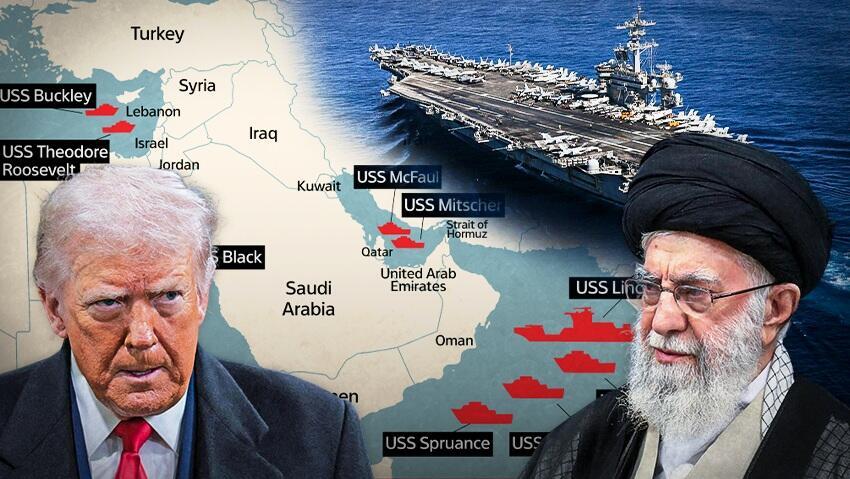
Israel and Iran’s Gulf neighbors now believe a confrontation is “more likely than an agreement,” the sources said. President Donald Trump signaled that possibility himself Thursday, confirming he is considering at least a “limited strike” on Iran.
Washington is assembling one of its largest military buildups in the region since the 2003 invasion of Iraq. On Friday, the USS Gerald Ford, the most advanced and largest aircraft carrier in the world, was seen entering the Mediterranean through the Strait of Gibraltar. It is the second carrier Trump has dispatched to the region.
Another source familiar with the matter told Reuters the Israeli government believes Iran and the United States are at a “dead end” and is preparing for the possibility of joint military action with Washington, though no final decision has been made.
Regional officials said Gulf states are also bracing for potential conflict, fearing it could spiral out of control and destabilize the Middle East.
Two Israeli officials said they believe the gaps between Washington and Tehran are “unbridgeable” and that “the likelihood of military escalation in the near term is high.” Several regional sources added that Iran is making a “dangerous mistake” by insisting on its position.
They said Trump is effectively “trapped” by the massive military deployment he ordered and cannot retreat without losing face unless Iran makes a clear commitment to abandon its nuclear weapons ambitions.
2 View gallery
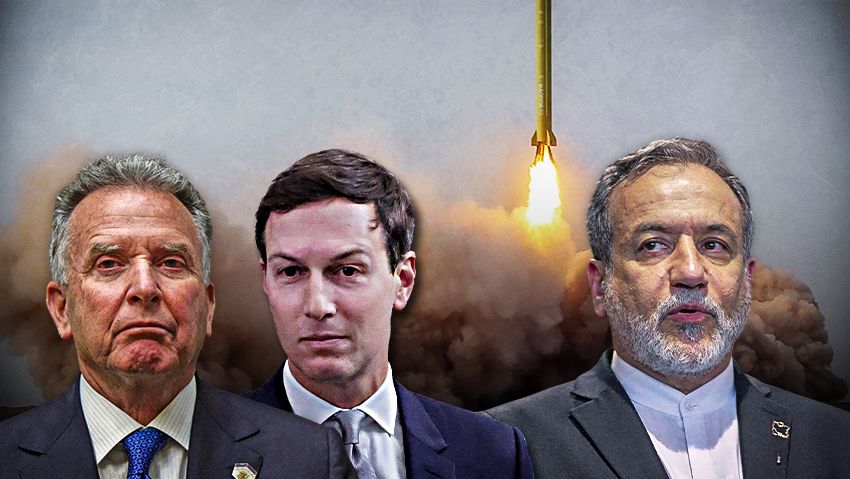
Two rounds of talks between Iran and the United States stalled over core issues, from uranium enrichment to missiles and sanctions relief
(Photo: RS/Dawoud Abu Alkas, Reuters/Evelyn Hockstein, AP/Hassan Ammar)
“Both sides are digging in,” said Alan Eyre, a former US diplomat and Iran expert. Nothing meaningful will materialize, he said, “unless the US and Iran step back from their red lines, and I don’t think that’s going to happen.”
“What Trump cannot do is assemble all this military power and then come back with a mediocre deal and withdraw the forces. I think he would see that as losing face,” Eyre said. “If he strikes, it will escalate quickly into something ugly.”
Two rounds of talks between Iran and the United States stalled over core issues, from uranium enrichment to missiles and sanctions relief.
After the second round of talks in Geneva on Tuesday, Araghchi said the sides had agreed on “guiding principles,” but the White House said significant gaps remain.
A US official said Iran is expected to submit a written proposal in the coming days, and Araghchi himself said Friday he expects to present a draft within two to three days.
Trump, who has sent aircraft carriers, warships and aircraft to the Middle East, warned Thursday that Iran must reach an agreement on its nuclear program or “very bad things” will happen. He set a deadline of 10 to 15 days, prompting Tehran to threaten retaliation against US bases in the region if attacked.
US officials told Reuters that Trump has not yet decided whether to use military force, though he said Thursday he may order a “limited strike” to try to compel Iran into a deal.
“I guess I can say I’m considering it,” he told reporters.
The timing of any potential strike remains unclear. Secretary of State Marco Rubio is scheduled to meet Prime Minister Benjamin Netanyahu on February 28 to discuss Iran. A senior US official said the full US force deployment in the region will not be complete until mid-March.
European and regional officials believe the scale of the US deployment would enable Washington to strike Iran while simultaneously defending its bases, allies and Israel.
Washington’s core demand remains unchanged: a ban on uranium enrichment on Iranian soil. Tehran says it must preserve its nuclear capabilities and refuses to discuss its ballistic missiles. It denies seeking to build a nuclear weapons arsenal.
“If talks fail,” security analyst David Des Roches said, “the American activity in the Gulf already signals how any strike would begin: disabling Iran’s air defenses and then targeting the naval arm of the Revolutionary Guards,” the force behind years of tanker attacks and threats to close the Strait of Hormuz, a route for roughly one-fifth of global oil shipments.
Several Arab and European officials said they are unsure of Trump’s ultimate objective. European governments want Washington to clarify what strikes would aim to achieve: damage to Iran’s nuclear and missile capabilities, deterrence, or a more ambitious goal such as regime change.
Some regional and European officials doubt that military action could alter the course of Iran’s regime under Supreme Leader Ayatollah Ali Khamenei. In the absence of a clear political alternative in Iran, and with the leadership largely stable, they said it is dangerous to assume strikes would produce regime change.
“It is easier to launch military action than to control it, and much harder to translate it into a strategic outcome,” they said.
There are few signs of compromise. Ali Larijani, a close adviser to Khamenei, told Al Jazeera that Iran is prepared to allow broad oversight by the International Atomic Energy Agency to prove it is not pursuing nuclear weapons. Tehran has updated agency chief Rafael Grossi on that decision.
A source familiar with the talks said Iran’s support for regional militias was not formally raised in the negotiations, but Tehran does not object in principle to discussing US concerns about its proxies.
Three regional sources said Iranian negotiators have made clear that any substantive concession depends on Khamenei, who views uranium enrichment and missile development as sovereign rights.
David Makovsky of the Washington Institute said each side is testing the other’s limits: Washington believes overwhelming force will compel Tehran to yield, while Tehran believes Trump lacks appetite for a prolonged campaign, and Israel believes the gaps are too wide to bridge.
The combination, he said, makes confrontation appear increasingly likely.
First Appeared on
Source link






