


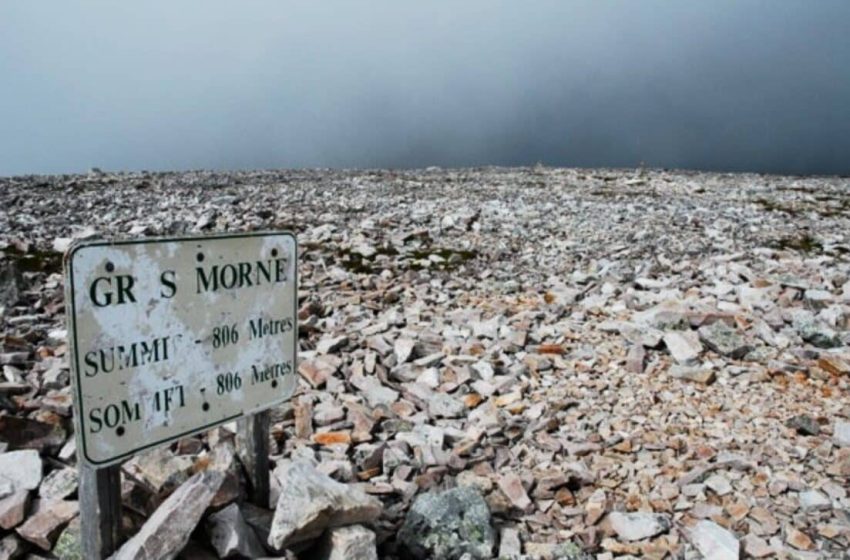
Is It Actually Possible to Walk Directly on Earth’s Mantle? Only Two Places Allow It
It is a proposition that strains credulity: that a person can stand, in ordinary hiking boots, on material that once resided dozens of kilometres below the Earth’s surface. The planet’s mantle, the 2,900 kilometre thick layer of solid rock between the crust and the core, is ordinarily accessible only through the indirect evidence of seismology or the rare xenoliths carried up in volcanic eruptions. Yet across two disparate points on the globe, one in the subantarctic and the other in maritime Canada, the mantle rises to meet the sky.
The claim that there exist precisely two such locations circulates widely in travel and science media, often stripped of the geological nuance that makes the actual sites more remarkable than the shorthand suggests. An analysis from IFLScience notes that Macquarie Island and the Tablelands of Gros Morne National Park both expose rocks that originated in the upper mantle, but they do so through fundamentally different mechanisms and on vastly different timescales. One represents an ancient collision preserved in a mountain belt, the other an active tectonic squeeze in the middle of an ocean.
That such exposures exist at all challenges basic assumptions about planetary structure. The crust, whether continental or oceanic, normally insulates the mantle from the surface. Where that boundary fails, the resulting landscapes prove as instructive as they are alien.
Where the Ocean Floor Becomes Dry Land
Macquarie Island, a 34 kilometre long sliver of land roughly halfway between Tasmania and Antarctica, holds a distinction that UNESCO recognised in 1997. The listing describes the island as “the only place on earth where tectonic forces have brought oceanic mantle-derived rock to the surface within the context of a currently active plate boundary.” The phrasing matters. Other sites expose ancient mantle, but none do so where the plates continue to move.
The island sits on the Macquarie Ridge, a 1,600 kilometre feature running from near New Zealand toward Antarctica. Compression between the Indo-Australian and Pacific plates has squeezed mantle material upward from depths of seven to eight kilometres. The island itself emerged above sea level only 300,000 to 600,000 years ago, a blink in geological time.
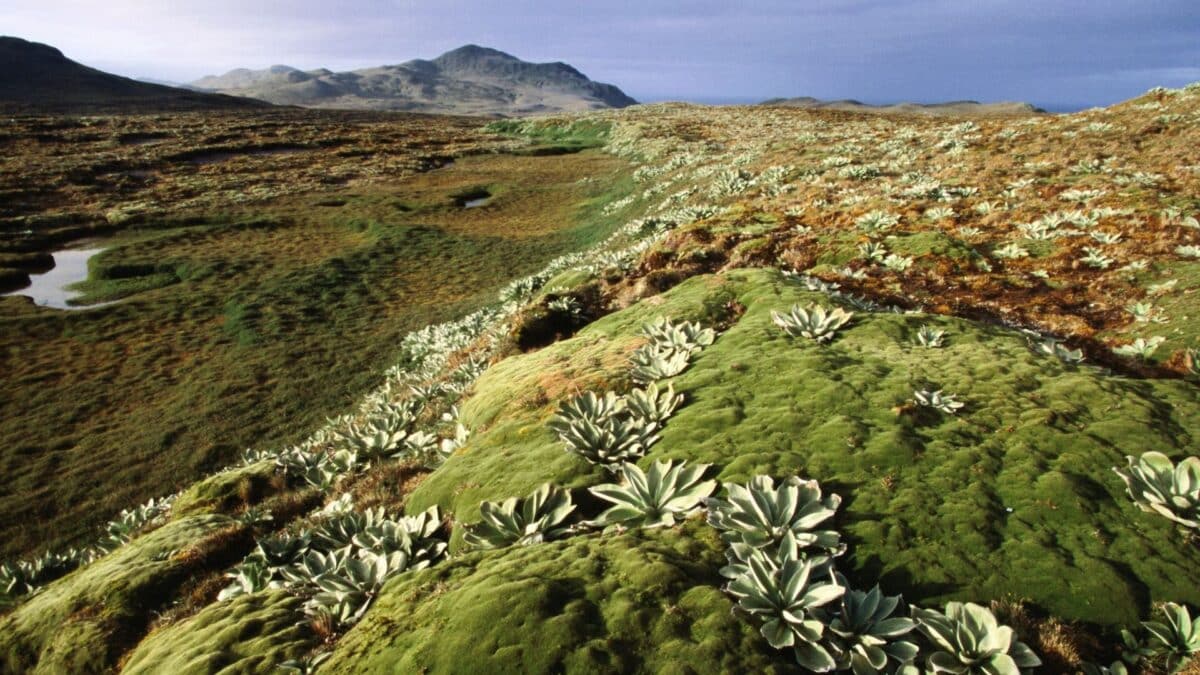
The Australian territory remains difficult to reach and tightly controlled. Annual tourist landings are capped at 2,000 visitors, a restriction imposed after a successful program eradicated cats, rats, and rabbits introduced during the island’s use as a sealing and penguin hunting station.
The wildlife has rebounded, and expedition cruises now include the site on itineraries, though access requires compliance with strict biosecurity protocols. A report from RNZ noted that social media platforms are driving increased interest in subantarctic destinations, with travellers describing Macquarie as the “Galápagos of the Southern Ocean.”
A Mountain Built From Middle Earth
On the opposite side of the planet, the Tablelands of Gros Morne National Park in Newfoundland expose mantle rocks through an entirely different mechanism. Here, approximately 485 million years ago, a slice of oceanic crust and underlying upper mantle was thrust onto the edge of the ancient North American continent during a plate collision. A travel account of the Tablelands describes walking on the Earth’s mantle and notes the landscape’s resemblance to Martian terrain. Geologists classify this as an ophiolite, a term for segments of oceanic lithosphere emplaced onto continental crust.
The Bay of Islands Ophiolite Complex, of which the Tablelands form part, proved instrumental in the development of plate tectonic theory. Canadian geologist John Tuzo Wilson used the site in the 1960s to establish evidence for how plates move and collide.
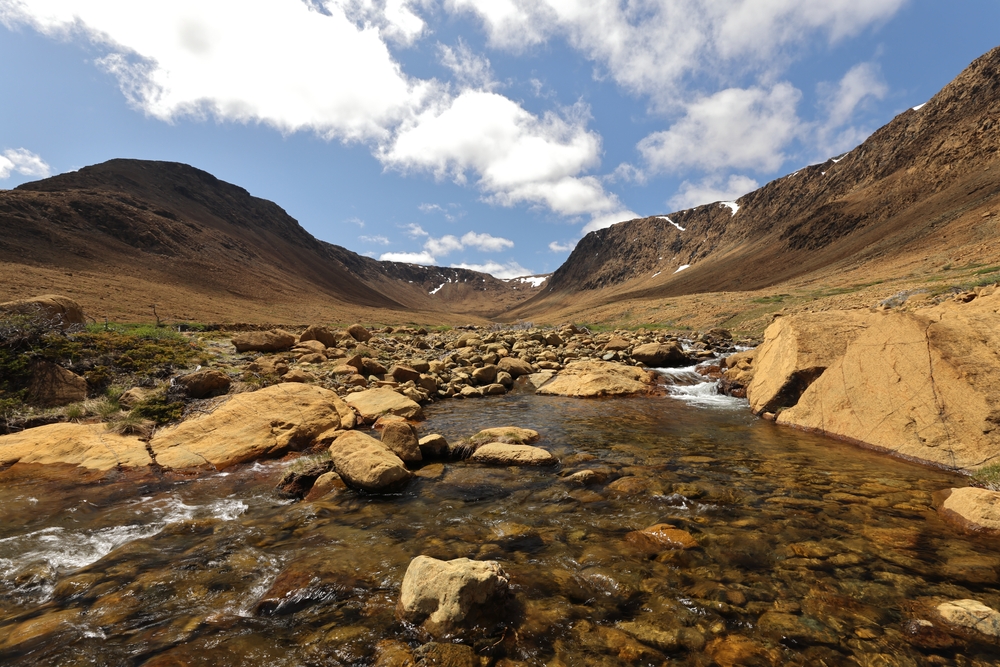
A scientific paper published in the Journal of the Geological Society examined the complex in detail, describing the metamorphic sole at its base and reconstructing the directions of subduction and obduction from the orientations of ancient dykes and mineral grains. The rocks themselves are peridotite, the primary constituent of the upper mantle, rich in iron and magnesium. Where exposed to air, the iron oxidises to produce the rust coloured, nearly barren landscape that draws visitors and researchers alike.
A Parks Canada interpretive guide available at the Discovery Centre in Woody Point explains the formation. The rock supports almost no plant life because peridotite weathers to soil lacking essential nutrients. The few species that survive, including shrubby cinquefoil, represent specialised adaptations to conditions more commonly associated with toxic mine tailings than mountain scenery.
The Science of Ascent and the Pressure of Visitors
The geological literature confirms the significance of both sites. The research on the Bay of Islands Complex indicates the complex formed as a fore arc ophiolite above a subduction zone, with the mantle section attached to the overriding plate during slab flattening.
Macquarie Island has attracted comparable scientific attention, though its remote location makes sustained study more difficult. The island’s value lies partly in its freshness; where Gros Morne’s rocks have been exposed for hundreds of millions of years, subject to erosion and glacial scouring, Macquarie’s mantle emerged so recently that the processes that brought it up remain readable in the fabric of the rock.
Neither site exists in isolation from human pressure. Tourism researchers at the University of Tasmania have tracked the sharp rise in Antarctic and subantarctic visitation, with annual numbers reaching 124,000 for Antarctica proper during the 2023 2024 season.
Social media platforms, particularly TikTok, have driven interest, with analysts noting that videos tagged with Antarctic tourism hashtags attracted more than 200 million views during the 2022 2023 season. Expedition vessels now compete for slots, and the diversification of onboard experiences has drawn concern from treaty parties about whether visitors arrive prepared to act as stewards rather than consumers.
First Appeared on
Source link






