


New Brunswick doctor renews call for investigation into undiagnosed neurological illness
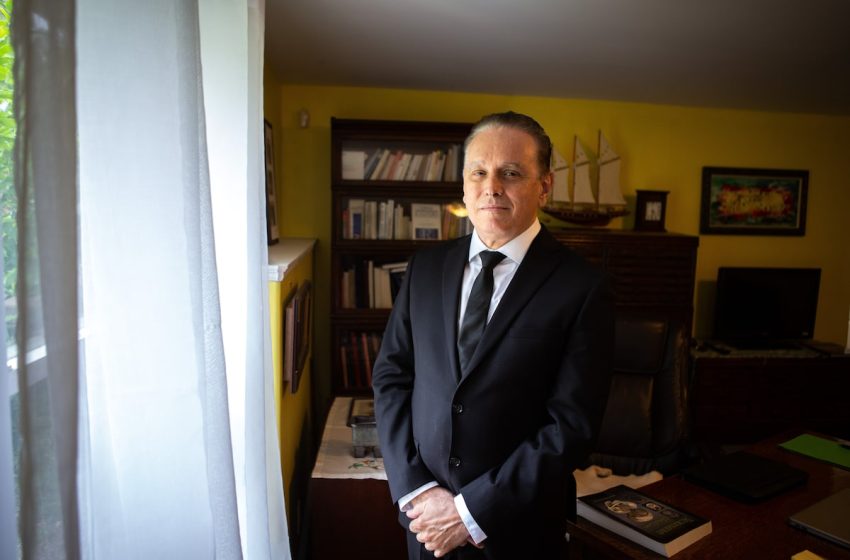
Dr. Alier Marrero at his home on the outskirts of Moncton, N.B., in June, 2023.Chris Donovan/The Globe and Mail
A New Brunswick neurologist, who was one of four doctors who alerted heath officials about neurological symptoms plaguing hundreds of patients, is renewing his call for an independent scientific investigation to explore causes.
In a letter sent Tuesday to federal and provincial health ministers and public-health officials, a copy of which was obtained by The Globe and Mail, Alier Marrero detailed an “immense sense of frustration and abandonment perceived by patients, families, communities and advocates” after a recent examination by New Brunswick’s Chief Medical Officer of Health that found no environmental link to widely reported neurological illness.
It was the second instance in which examinations conducted by the province’s top health official did not find evidence of a common illness among patients. The last probe began in 2021 and looked at 48 patients with neurological symptoms. A report was released in February, 2022.
In his letter to ministers and health officials, Dr. Marrero wrote that he was appealing to them to see that an “independent, multidisciplinary scientific investigation is urgently started, in a collaborative and open environment, where patients’ representatives are included.”
In 2020, Dr. Marrero and three other doctors informed health officials of a growing number of patients with undiagnosed neurological illness in addition to high levels of herbicides or metals in their bodies.
Editorial: An outbreak of lost trust in New Brunswick
The provincial government said it began looking at cases in 2021, with its initial investigation finding no evidence of a common illness. Then in early 2023, new concerns were raised, including additional patients who were reporting symptoms. The Office of the Chief Medical Officer of Health began its analysis of patient data in March, 2025.
A report released in late January by Chief Medical Officer of Health Yves Léger said its findings “do not suggest that either herbicides or metals were present at levels that could have contributed to illness for most patients.”
In an interview on Wednesday, the first time Dr. Marrero has spoken publicly since the January report, he said he has become a scapegoat, with criticism directed at him, adding that his patients deserve answers.
“We’re asking questions and providing evidence, and they should be answered in a scientific manner,” he said.
Dr. Marrero confirmed Wednesday he sent the letter in response to the examination conducted by Dr. Léger. Officials addressed in that letter did not provide immediate comment.
In Dr. Léger‘s report, he did not find toxins were present at levels that could have contributed to neurological illness experienced by most patients. But he pointed to mounting evidence to suggest patients likely have medical conditions that can be diagnosed.
N.B. report finds no environmental links to unknown neurological illness in patients
“At the end of the day, these are patients that are suffering, that are ill, and to do so without having a diagnosis and proper treatment and care plan is very concerning,” Dr. Léger said at a press conference last month.
Dr. Marrero’s letter said Dr. Léger did not meet with patients for the purposes of the examination. Additionally, environmental tests were not conducted, nor were tests completed on patients, Dr. Marrero wrote.
Dr. Léger’s report, which was reviewed by the Public Health Agency of Canada, recommended a “formal, robust and comprehensive process” that ensures a second clinical assessment is made available to patients.
It also critiqued media coverage, stating it has perpetuated a “clear and unquestioned narrative that has only helped to fuel distrust in public institutions that have the well-being of patients and all New Brunswickers at heart.”
After its release, patient advocates publicly defended Dr. Marrero and took issue with both the methodology used for the report, as well as its conclusions.
One of those advocates, Stacie Quigley Cormier, said in a statement that she believed the report was an attempt to discredit Dr. Marrero. Ms. Quigley Cormier has advocated on behalf of more than 40 patients, including her stepdaughter, Gabrielle Cormier. Since the age of 18, Ms. Cormier has struggled with neurological symptoms that have left her unable to continue university studies in her 20s.
Another advocate, Katherine Lanteigne, said she felt that Dr. Léger‘s report cherry-picked data and that it should have been conducted by a panel of independent neuroscientists and toxicologists.
First Appeared on
Source link







