


Revenge bedtime procrastination: when staying up late feels like taking control
Revenge bedtime procrastination is a phenomenon in which individuals deliberately delay sleep to engage in activities they feel they do not have time for during the day.
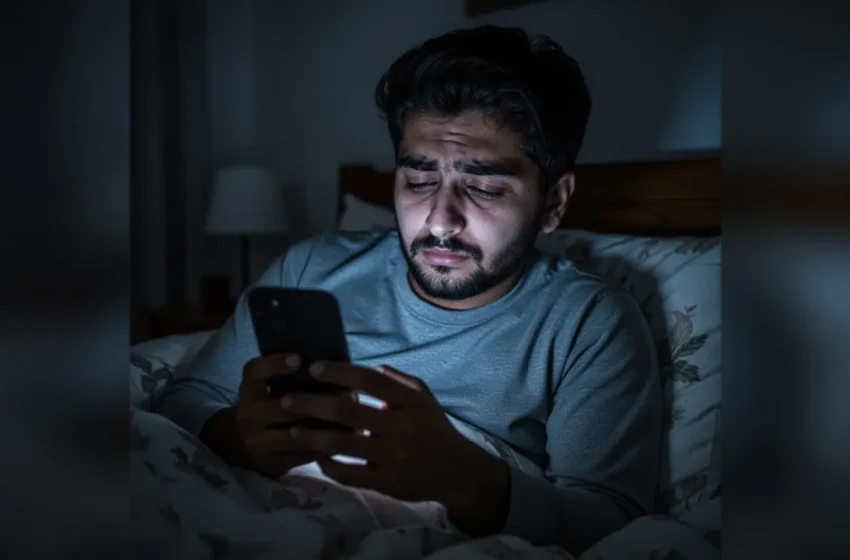
The glow of his phone screen often marks the end of Mohammad Daniyal Shahid’s day.
A final-year MBBS student, buried in exam preparation, says his nights are the only moments that feel truly his. “The whole day is scheduled, lectures, wards, studying,” he says. “Night is the only time that feels like my own.”
Between lectures, clinical rotations and the relentless pressure of becoming a doctor, Daniyal squeezes his passions, travel, fitness and photography, into whatever hours he can reclaim.
But when he checks his screen-time report, often stretching beyond four or five hours, the realisation hits. “I think I’ll scroll for a few minutes, and suddenly it’s 2am,” he says. “That’s when I realise I’ve delayed sleep again.”
Those late-night hours are both comforting and costly. For Daniyal, they are a way of taking control, a quiet rebellion against packed schedules and constant responsibilities. “It feels like I’m reclaiming time,” he says. “But the next day is brutal.”
The morning after, he says, brings heavy fatigue, fading motivation, and the feeling that one bad night can derail an entire week. “You wake up tired, irritated, and then the cycle repeats,” he adds.
Daniyal has tried small fixes, drinking water before touching his phone, experimenting with supplements and imagining a future where sleep trackers and cleaner air might help him rest better. Still, he admits that scrolling before bed has become a ritual he wants to break.
“I know it’s unhealthy, but it’s hard to stop,” he says. “It has become a habit.”
Daniyal is not alone.
Amna Aslam, a second-year university student, describes her relationship with her phone as both disciplined and indulgent.
“I use my mobile most of the time during the day, but I limit my usage during my blocks and modules,” she says. “During exams, I avoid any kind of usage, even YouTube Shorts.”
“But nights are different. At night, I reward myself for the work of the whole day. For some dopamine rush, I use my mobile phone for 30 to 120 minutes,” she explains.
Instagram is her main source of entertainment, but she admits it is highly engaging. “It requires a lot of time, so I limit my use of Instagram to weekends only. In my daily routine, my usage is limited to WhatsApp, YouTube Shorts and Netflix.”
Amna prefers shows with multiple short episodes and watches them at a faster speed. “As a university student, I have developed a habit of watching everything at 1.5x to 2x speed to cope with my workload,” she says.
However, she admits that the habit has sometimes led to consequences. “There were times when my excessive mobile phone usage at night led to serious problems, like missing my classes or lectures the next day, or feeling very drowsy,” she says.
Reclaiming time after dark
What Daniyal and Amna experience is known as “revenge bedtime procrastination”, a phenomenon that refers to the deliberate delay of sleep to engage in activities individuals feel they do not have time for during the day.
These activities may include scrolling through social media, watching videos, chatting online, or simply staying awake to enjoy uninterrupted personal time. While it is often framed as relaxation or “me time”, it comes at the cost of adequate sleep.
The term “bedtime procrastination” was first introduced in an academic paper published in 2014, which described it as going to bed later than intended without any external reason.
The word “revenge” was later added in China, where long working hours — sometimes stretching to 12 hours a day — led workers to sacrifice sleep as a way of regaining control over their lives.
The concept gained wider attention after a viral post by journalist Daphne K. Lee, who described the behaviour as something that happens when “people who don’t have much control over their daytime life refuse to sleep early to regain some sense of freedom during late-night hours”.
From exhausting routines to everyday habits
While the phenomenon is closely linked to China’s demanding “996” work culture, its reach is no longer limited to one country. A BBC report citing a 2018 national survey found that nearly 60 per cent of people born after 1990 in China were not getting enough sleep, particularly those living in major cities dominated by technology-driven work environments.
Experts say similar patterns are now visible globally. Extended screen time, blurred boundaries between work and rest, remote employment, and academic pressure have normalised delayed sleep, especially among young people.
When delayed sleep becomes a clinical concern
Speaking to Dawn, Dr Bilal Saleem, General Physician at the Bahawal Victoria Hospital (BVH), Bahawalpur, says patients who seek medical help for sleep-related issues often do so when they are already experiencing psychological or psychiatric conditions.
“Most patients who come to us are already in a diseased state, such as depression, anxiety disorders, schizophrenia or manic episodes,” Dr Saleem explains. “In mania, there is pressure of thoughts; in anxiety, people wake up due to overthinking and restlessness.”
He adds that people without diagnosed mental health conditions rarely visit doctors simply to explain why they sleep late.
“People don’t come and say, ‘Doctor, I sleep late because I use my phone too much,’” he says. “They usually think it is normal behaviour and not a medical problem, so they never report it.”
“For the general population, the common reasons are lifestyle-related factors such as excessive mobile use, social media, daytime sleeping, work stress or night shifts,” he says.
Dr Saleem notes that people who approach doctors with complaints related to revenge bedtime procrastination usually do so when they are already in a diseased state, often linked to underlying mental health conditions.
“Normal people don’t consider delayed sleep a health issue,” he adds. “They only seek help when their condition affects work, studies or mental health. Otherwise, they adjust their routine themselves and assume it is just part of modern life.”
He says a major reason people do not report the condition is a lack of awareness that what they are experiencing is a behavioural or health issue.
“Most people don’t even know there is a term for this. They think sleeping late is normal in modern life,” he says. “They don’t realise that this habit is quietly damaging their health, productivity and emotional well-being.”
Many young people, he explains, normalise exhaustion and irregular sleep patterns as part of academic pressure, work culture and digital life. “They say, ‘Everyone sleeps late, so what is the problem?’ But over time, it makes their lifestyle difficult. They feel tired, lose focus, become irritable, and their mental health suffers.”
According to the physician, people usually seek help only when the consequences become severe. “When studies, work, or relationships start getting affected, then they realise something is wrong. Before that, they just adjust and accept it as routine.”
He adds that awareness is key. “If people understood that poor sleep is not just a habit but a health issue, they would seek help earlier and change their routines.”
Psychology of control and autonomy
From a psychological perspective, revenge bedtime procrastination is closely linked to autonomy and control. Qulchaq Alam, an MPhil student at the University of Karachi and a practising psychologist, explains that individuals who spend their days following schedules imposed by work, study, or family often use nighttime to reclaim personal freedom.
“Late-night hours become the only time when they can choose what to do without interruption,” she told Dawn. “While doing so provides temporary relief and a sense of control, the coping mechanism becomes counterproductive when practised regularly.”
She added that over time, disrupted sleep patterns can lead to physical fatigue, emotional instability and broader psychological problems.
Youth, self-worth and emotional regulation
Dr Farah Iqbal, psychologist and professor of criminology at the University of Karachi, explains that sleep procrastination among youth is strongly associated with emotional dysregulation and unresolved psychological stress.
“Fear, anxiety and uncertainty, particularly those intensified during the pandemic, have impaired young people’s ability to manage emotions effectively.”
She noted that low self-esteem also plays a central role. “In the real world of work and education, young people often feel undervalued and unable to compete. Constant comparison with peers of the same age who appear more successful creates a sense of deprivation, damaging self-esteem.”
Social media, she said, then becomes an alternative space where individuals can construct identities, play with self-image and escape feelings of inadequacy.
Dr Iqbal added that such behaviour is not innate or natural. It has developed over time due to early exposure to gadgets, changing work patterns and a lack of healthy leisure during the day, which pushes young people to treat nighttime as their only personal space.
“Revenge bedtime procrastination also reflects resistance. When young people cannot express injustice, frustration or lack of control during the day, they take revenge at night by staying awake.”
“It can also function as a subtle act of defiance against authority figures like parents or guardians who insist on early bedtimes and allow youth to assert control over their own time,” she said.
Why does ‘FOMO’ keep young people awake?
Fear of missing out, or FOMO, often intensifies the behaviour. Teenagers stay awake watching shows, scrolling through feeds or replying to messages, not always out of interest, but out of fear of being excluded from conversations, trends or shared experiences. The need to stay connected overrides physical exhaustion, pushing sleep further into the background.
“You don’t want to be the only one who doesn’t know what everyone is talking about the next day,” Daniyal says. “So you keep scrolling, even when you’re tired.”
For Daniyal, the quiet rebellion of staying awake feels temporary, tied to the pressures of medical school and the uncertainty of a demanding career path.
“It’s my way of taking back some control,” he says. “But it’s a control that costs me energy the next day.”
Yet he knows the irony of sacrificing sleep while training to become a doctor.
“Sleep is one of the most underrated pillars of health,” he says, aware that poor rest affects mood, productivity and physical well-being.
He hopes that once exams are over and life slows down, nights will no longer be spent chasing time through endless scrolling, but reclaiming it through the deep, restorative sleep he believes is essential — not just for patients, but for himself.
Header image: A young man using his phone late at night while lying in bed. — Canva AI
First Appeared on
Source link






