


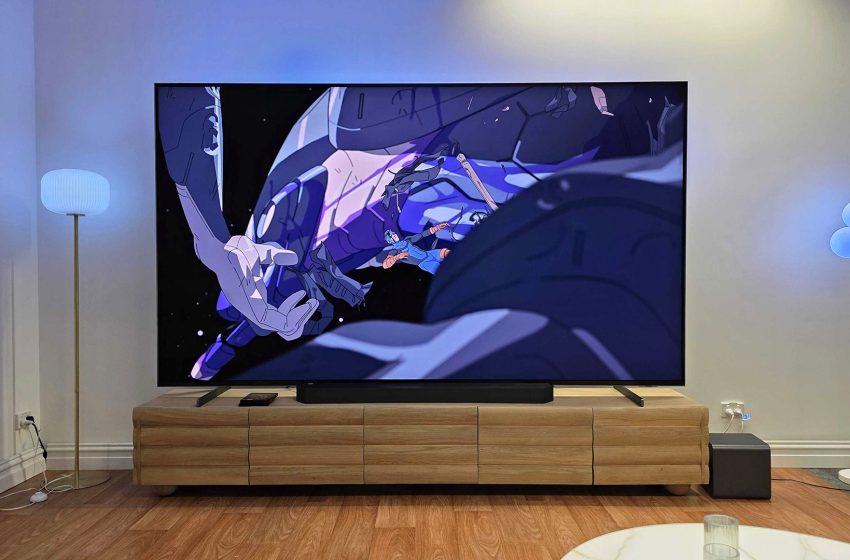
Samsung’s 115‑inch Micro RGB TV has colors so good, I briefly considered selling a kidney to afford one
The TV landscape is poised to shift this year, as manufacturers go all-in on Micro RGB technology that aims to topple OLED by delivering superior color accuracy and peak brightness — all while achieving comparable black levels and without OLED’s usual compromises in longevity and screen size.
I recently spent a full day putting Samsung’s 115‑inch MR95F through its paces, lining up a mix of carefully selected films and shows to really see what this monster of a TV could do. As Samsung’s first Micro RGB TV, and the first set of its kind to land in Australia, I approached the MR95F with astronomical expectations — and for the most part, it lived up to them. At AU$41,999 ($29,999 / £24,999), you’d certainly hope it would.
Walking into my hands-on session, I knew I’d be getting a big, bright, expensive showpiece — one that wasn’t necessarily a realistic option for most households. However, it did give me a glimpse of what home cinema will look like when Micro RGB finally trickles down to normal-human pricing and sizing, and that outlook is incredibly promising.
Having spent six consecutive hours with Samsung’s cutting-edge 115-inch MR95F Micro RGB TV, here are my key takeaways about the television that’s bound to shake up the industry.
It’s massive
Size is one area where Micro RGB trounces OLED — while most manufacturers cap their OLED TVs at around 83 inches (with the exception of some 97-inch LG models), Micro RGB TVs can easily blow past 100 inches and continue to scale up. In fact, Samsung plans to release a 130-inch model of this television later this year.
According to Samsung’s research, the fastest-growing TV segment in Australia is for 85 inches and above, with 35% of Aussies wishing they’d opted for a bigger TV than the one they own. That’s largely due to the country’s love of sports, where having the largest television is a point of pride — particularly if you’re the type to host your friends for the Grand Final.
As someone who’s no stranger to big TVs (my own set is an 85-inch 8K Mini LED TV), this statistic doesn’t surprise me, as Aussies typically have larger living spaces available to them than you’d find in many other territories, such as Asia.
Of course, not every household will be able to accommodate a television that’s this huge, especially as you’ll need a viewing distance of around 4 metres (approximately 13 feet) to take it all in.
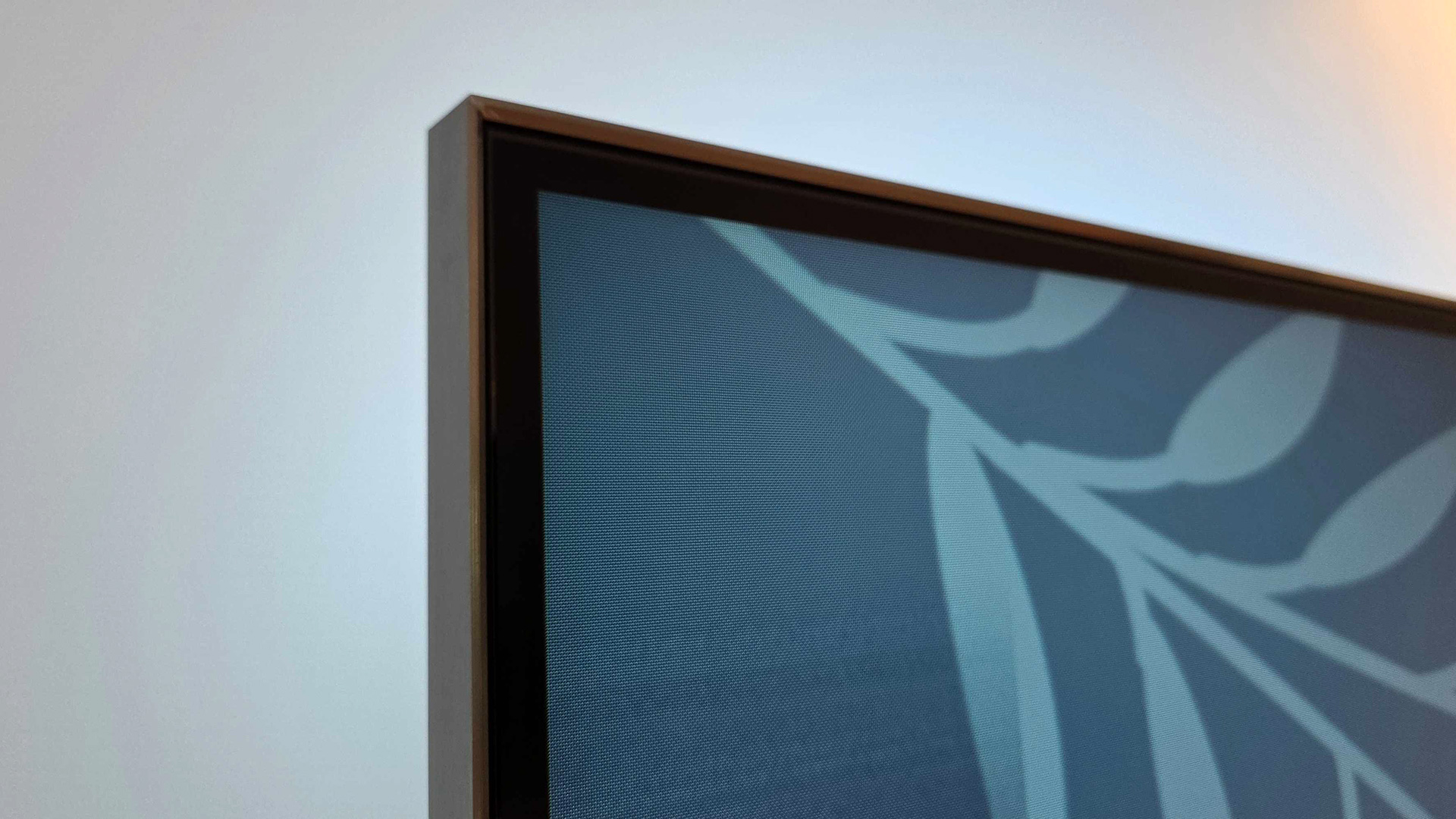
Your field of view (FOV) isn’t the only reason you’ll need some distance — as the 115-inch model MR95F has a 4K resolution, its pixel density is only around 38.27 pixels per inch (PPI), which means your eye will likely start to distinguish individual pixels if you get within 2.3 metres (7.5 feet) from the screen. By comparison, the aforementioned 85-inch 8K’s pixel density is far more tightly packed, with a 104 PPI and a minimum viewing distance of around 1.6 metres (5.25 feet) before the screen-door effect becomes noticeable.
Still, those with the room for it — and the bank balance to match — will find the MR95F stands well ahead of anything else at this size, both in overall picture quality and in the richness of color its Micro RGB panel can produce.
Article continues below
Micro RGB magic
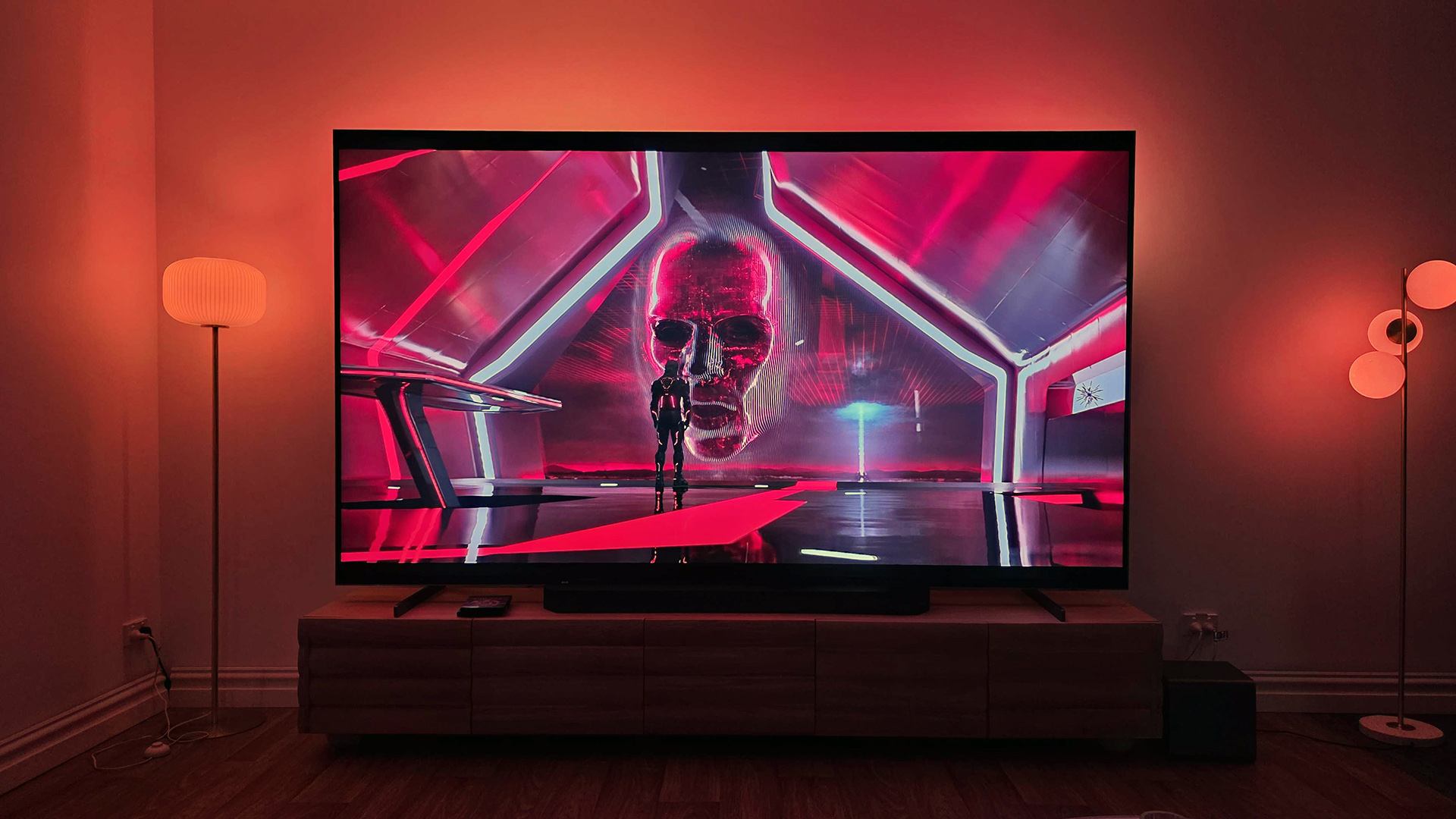
What sets Micro RGB apart is its use of individually controlled red, green and blue LEDs in its backlights, rather than the white or blue LEDs used in conventional Mini LED TVs. By generating pure, narrow‑band colors directly at the light source, the MR95F can deliver a much wider color gamut (including 100% coverage of the BT.2020 gamut ratio, according to Samsung) without relying on filters that inevitably sap color purity.
In checking out my go-to 4K demo disc, “Gemini Man”, I was blown away by the richness of its colors, particularly in the Colombia portion of the film, with its vibrant, sun-drenched locales. Colors were vivid and punchy without tripping into oversaturation, always maintaining a natural appearance.
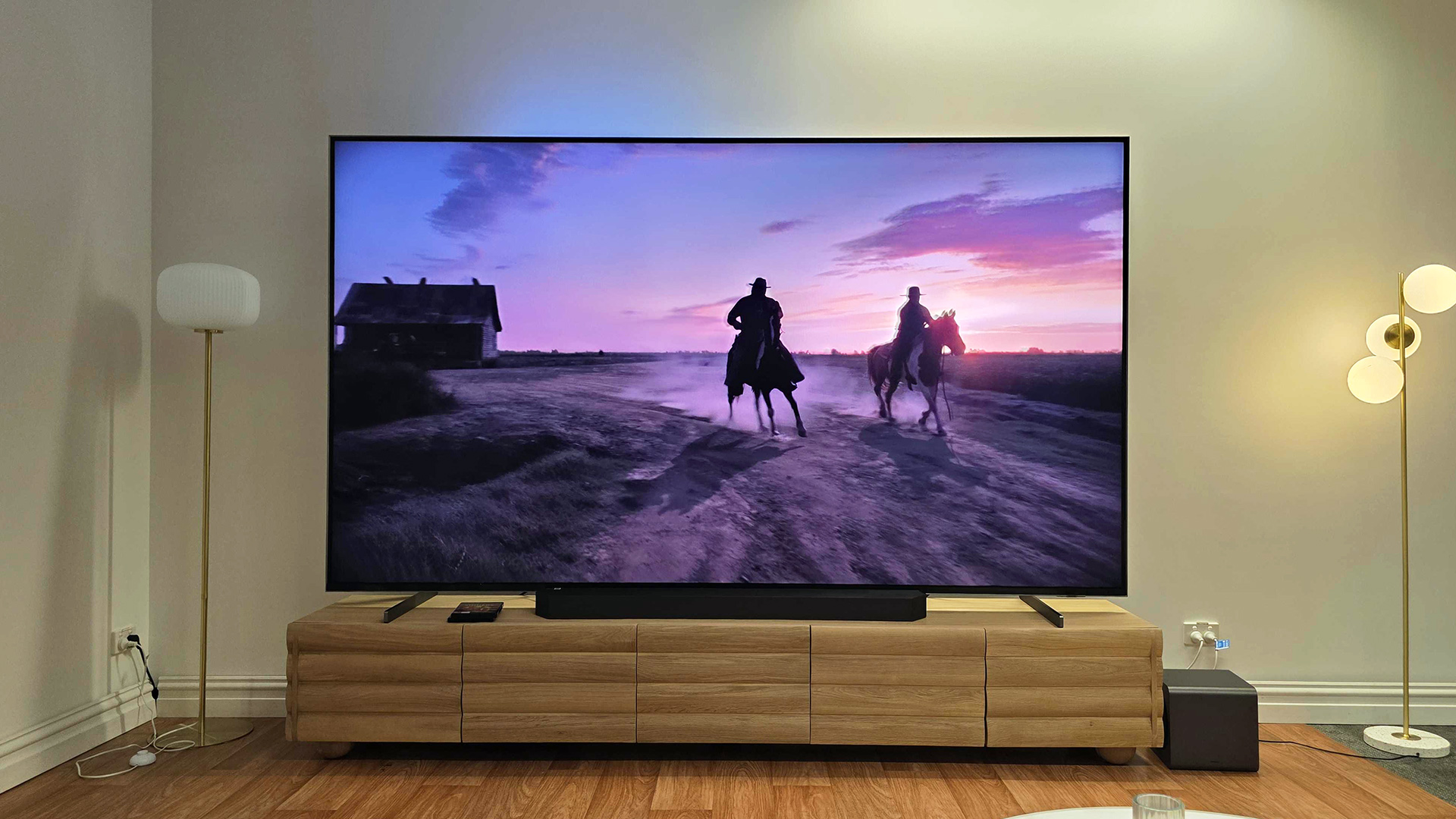
Next, I booted up several other notably colors films, including Pixar’s “Turning Red”, Marvel’s “Black Panther”, “TRON: Ares” and “Avatar: The Way of Water”. No matter what I threw at the MR95F, colors appeared striking and vivid — all while remaining natural and accurate.
Hello darkness, my old friend
On top of this, each Micro RGB LED is roughly half the size of a typical Mini LED — we’re talking less than or equal to 100 micrometers, or 0.1mm. The result is far more dimming zones and significantly tighter light control.
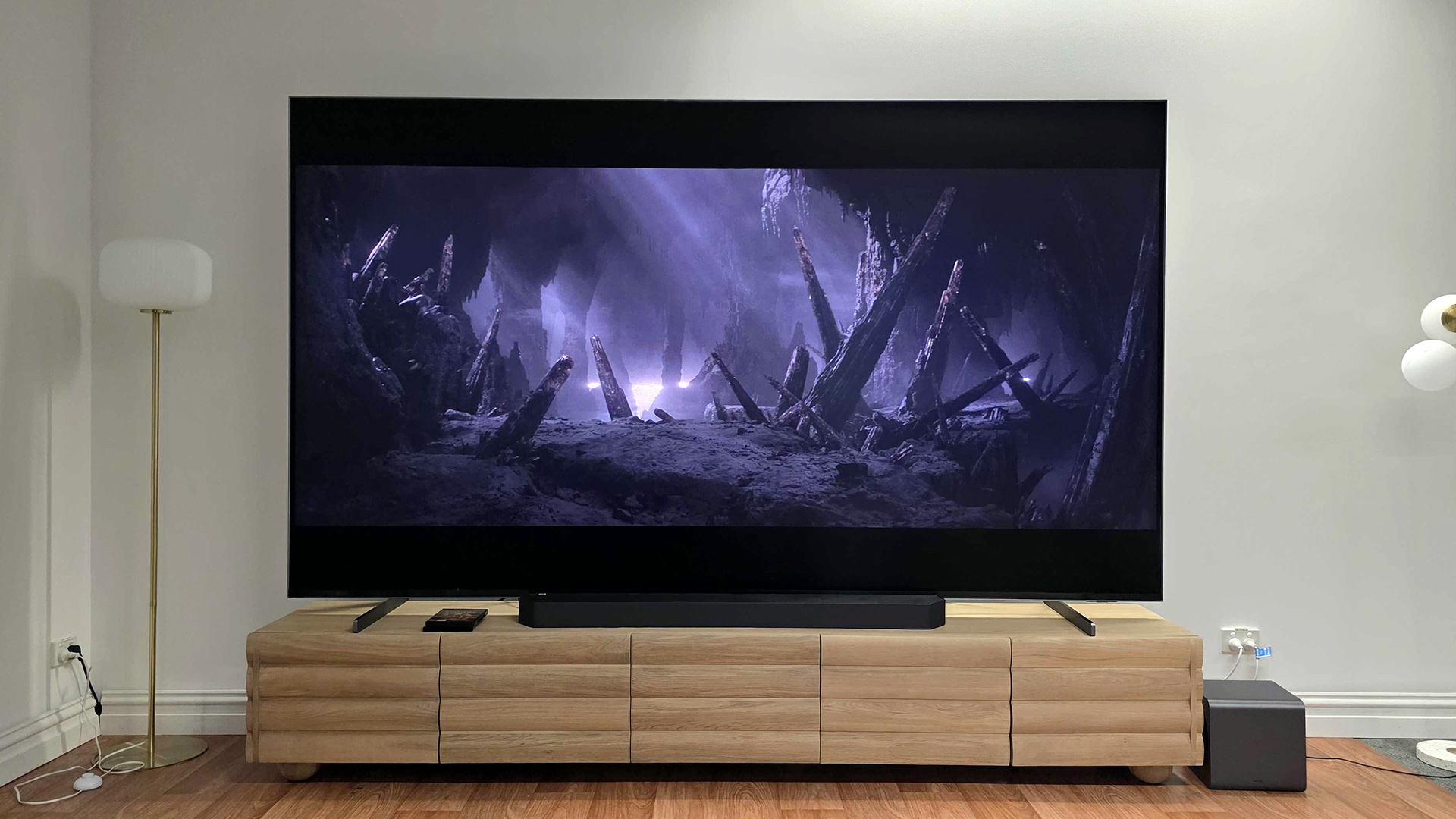
To test how the MR95F handles dark scenes, I revisited an old favourite — the hallway fight from the first season of “Daredevil”, along with the opening scene of “Predator: Badlands”.
While the TV’s default Filmmaker Mode was just way too dark to make out any fine details, I got substantially better results once I dipped into its picture settings and enabled AI mode. Suddenly, the MR95F exhibited exceptional black levels and a surprising amount of shadow detail, which I could tweak even further in the TV’s advanced settings.
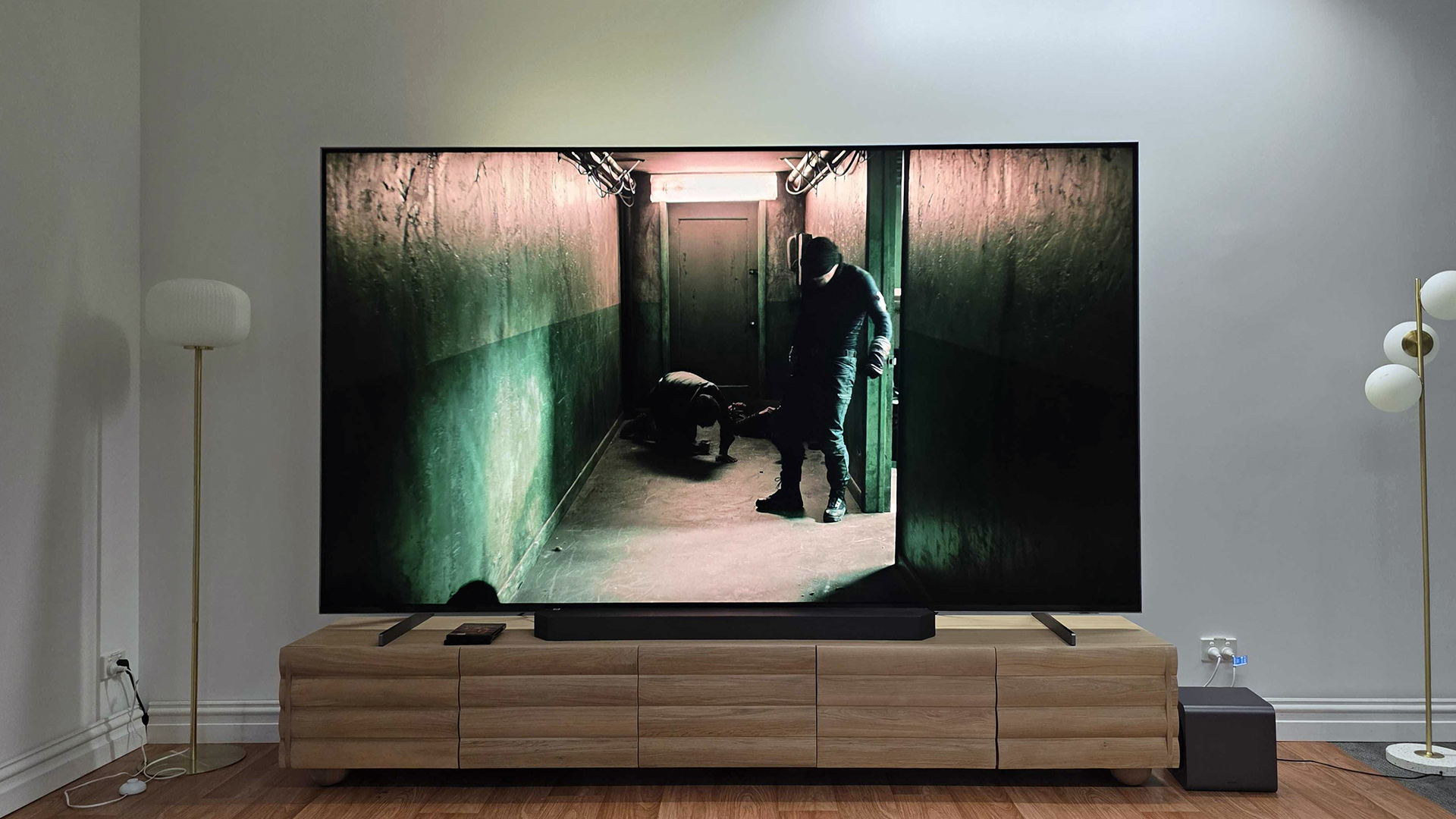
In the past, I’ve been highly critical of Samsung’s AI-tweaked picture modes for allowing a TV to automatically deviate from the artistic intention of filmmakers, particularly in my reviews of its S95F OLED 4K TV and QN990F Neo QLED 8K TV. However, in testing the MR95F, I found its AI picture mode to be far more subtle than in my previous experiences.
Rather than turning everything into candy-colored slop, it seemed to boost my content’s brightness, raise its color volume and enhance its contrast by just the right amount. That said, I still had to dial back blur and judder reduction in the TV’s picture clarity settings to avoid noticeable motion smoothing.
I should also point out that the MR95F boasts the same glare-free coating that adorned last year’s most premium Samsung televisions. Some purists aren’t keen on TVs with anti-glare properties, arguing that it can impact picture clarity. That was not my experience with the MR95F or any previous TVs I’ve reviewed that were advertised as glare-free. In fact, I’d argue that seeing my own reflection staring back at me from a TV whenever there’s a dark scene is far more detrimental to the viewing experience.
A dramatic reduction in light blooming
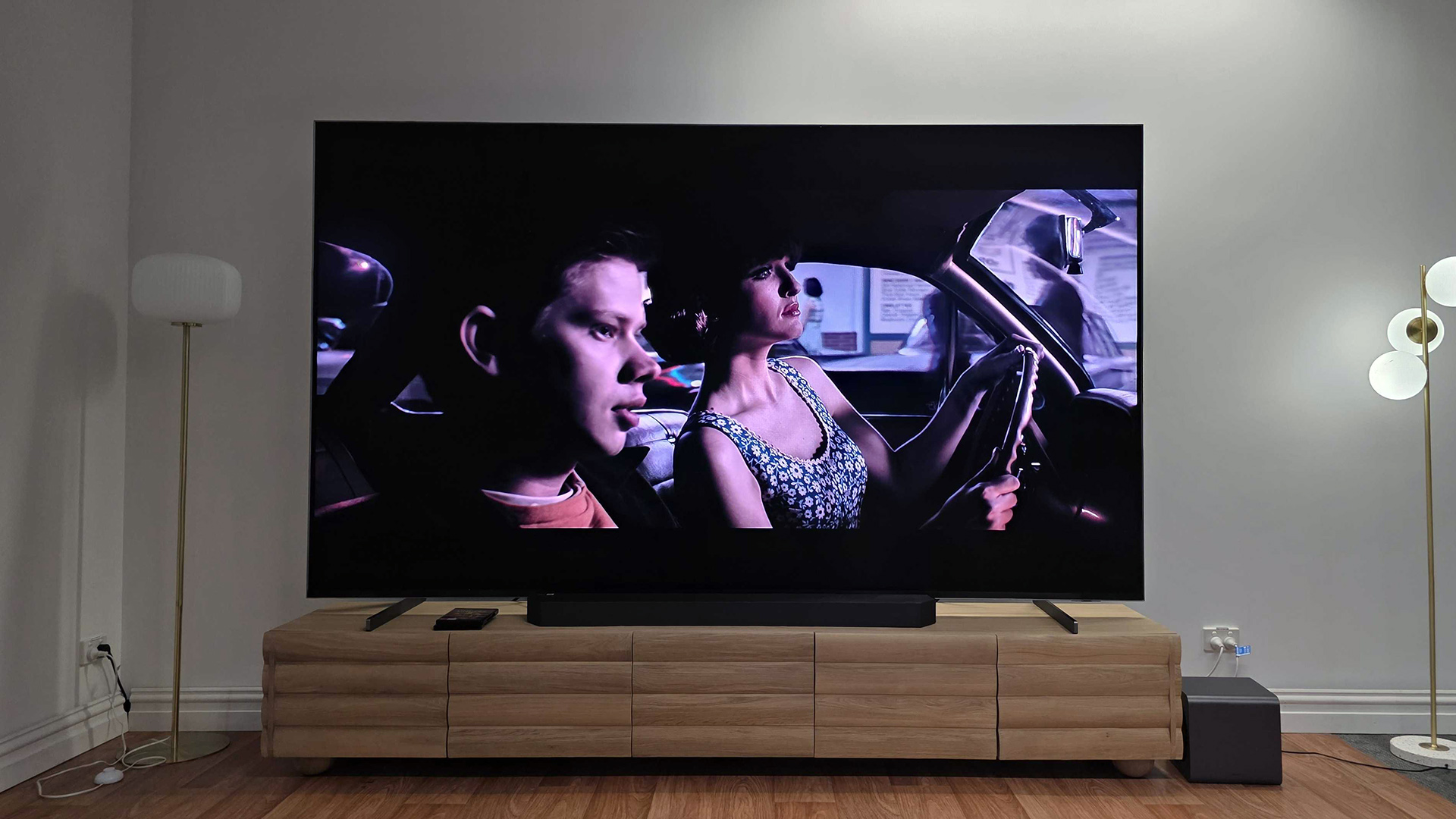
Next, I referred to my 4K copy of “Zodiac”, as its dark opening proved somewhat problematic on my home TV. While the overall darkness of the scene caused my own Mini LED TV’s backlighting system to overcompensate, resulting in significant light blooming, that was not the case on the MR95F. Here, the scene was as inky black as director David Fincher intended, with the light from characters’ faces exhibiting no light bleed at all.
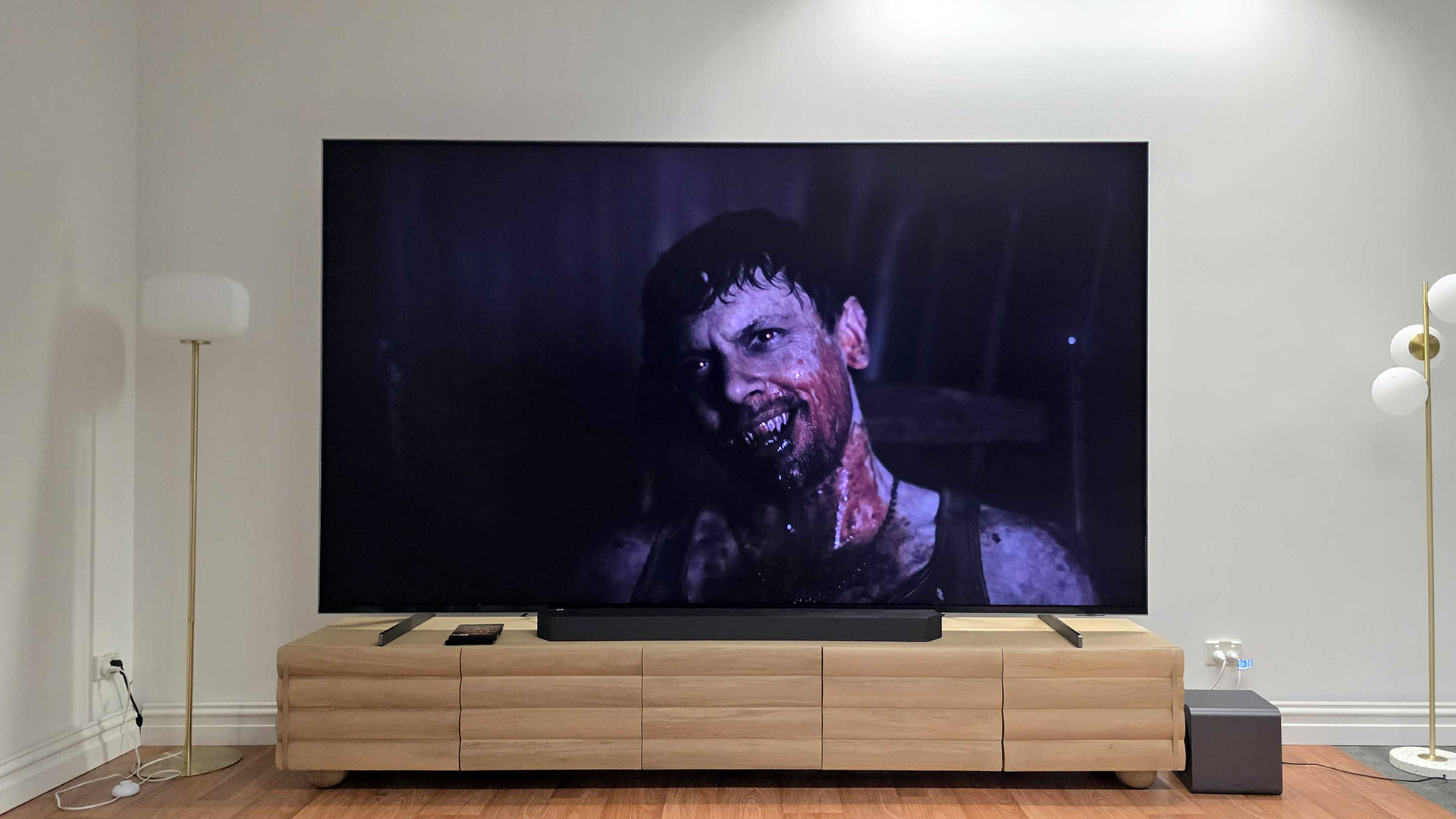
That’s not to say that the MR95F has completely overcome light blooming — in booting up a 4K copy of “Sinners” on a connected Xbox Series X console, the TV somehow ended up switching to Game Mode, resulting in an instance of light blooming that was far more horrifying than any of the film’s vampires. Thankfully, turning off Game Mode brought the film back to how it was intended to look, though it goes to show that light blooming is still possible with the wrong settings.
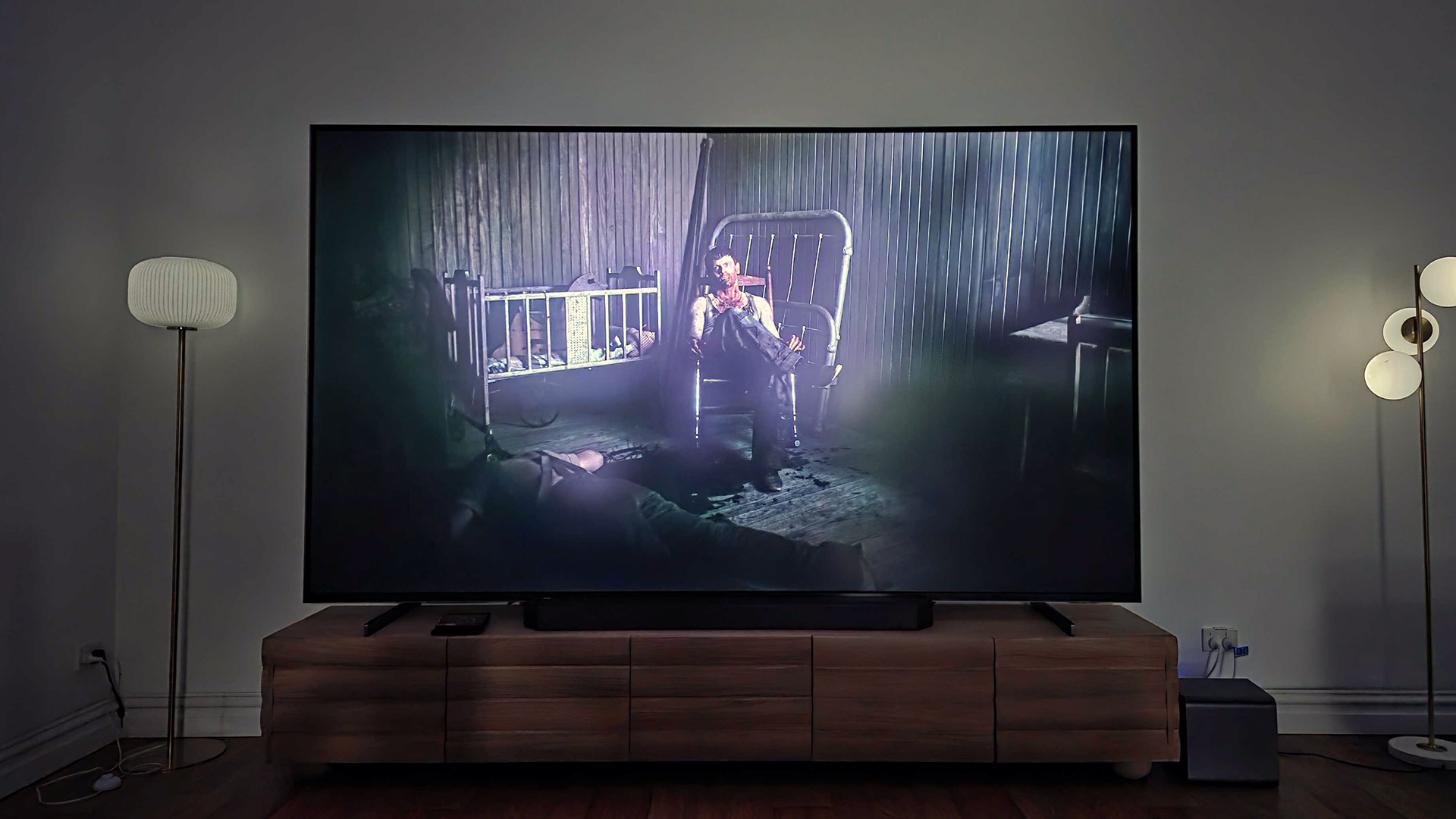
At the end of the day, Micro RGB technology still uses LED backlights, and though they’re now microscopic in size, they’re still transmissive and not self-emissive like the pixels on an OLED TV. So, while Micro RGB TVs can’t control light at the individual-pixel level like OLED can, the gap between the two technologies has gotten so minuscule that it barely matters anymore.
I can’t wait to see this TV in smaller sizes
After spending the day testing Samsung’s 115-inch Micro RGB TV, I came away with two main takeaways: firstly, that I might be able to afford the MR95F if I sold one of my kidneys, and secondly, that I can’t wait for it to be released in smaller, more living room-friendly sizes.
Thankfully, Samsung confirmed to me that it will be adding 65-inch, 75-inch and 85-inch models to the MR95 series this year, along with the 130-inch behemoth I mentioned earlier. Once that happens, I expect Samsung’s Micro RGB TVs to seriously shake up the television market, as well as our best TVs of 2026 list. And while pricing and availability for these sizes has yet to be announced, I’m confident that I should be able to hang on to both of my kidneys at the very least.

Follow Tom’s Guide on Google News and add us as a preferred source to get our up-to-date news, analysis, and reviews in your feeds.
More from Tom’s Guide
First Appeared on
Source link






