


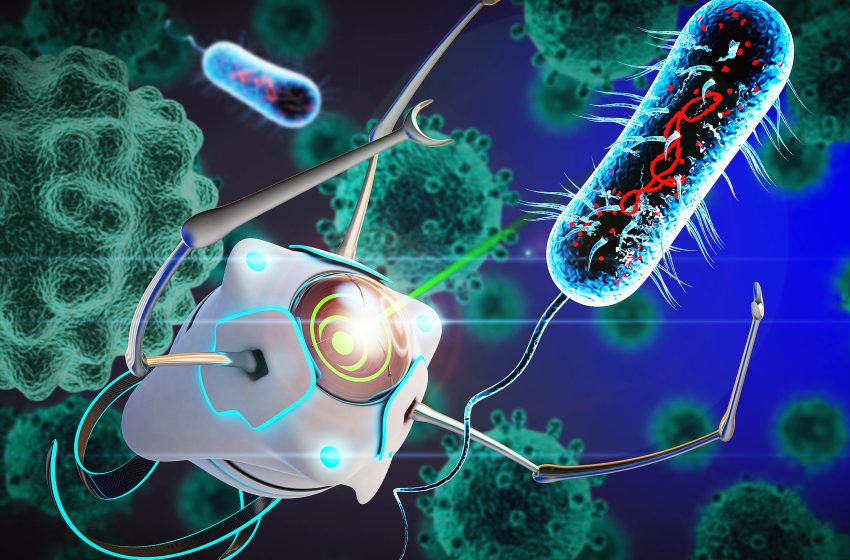
Scientists are building “intelligent” DNA robots to kill cancer cells
DNA is best known as the molecule that carries genetic information, but scientists are starting to treat it as something very different – a building material for robots.
In labs around the world, researchers have already folded DNA into moving parts that can grab, bend, and respond to signals.
The idea sounds futuristic, but it is quickly becoming a real engineering challenge rather than a distant concept.
The big question now is not whether DNA can form working machines – it is whether those machines can be controlled, scaled, and built reliably enough to do useful work in medicine, manufacturing, and beyond.
Nano robots from DNA
That shift from concept to engineering is already underway. In recent years, scientists have built a range of simple DNA devices – tiny clamps, walkers, gears, and even hand-like structures that can open and close on command.
Drawing those advances together, a research team from Peking University (PKU), including engineer Lifeng Zhou, argues that DNA is already behaving like hardware at the molecular scale.
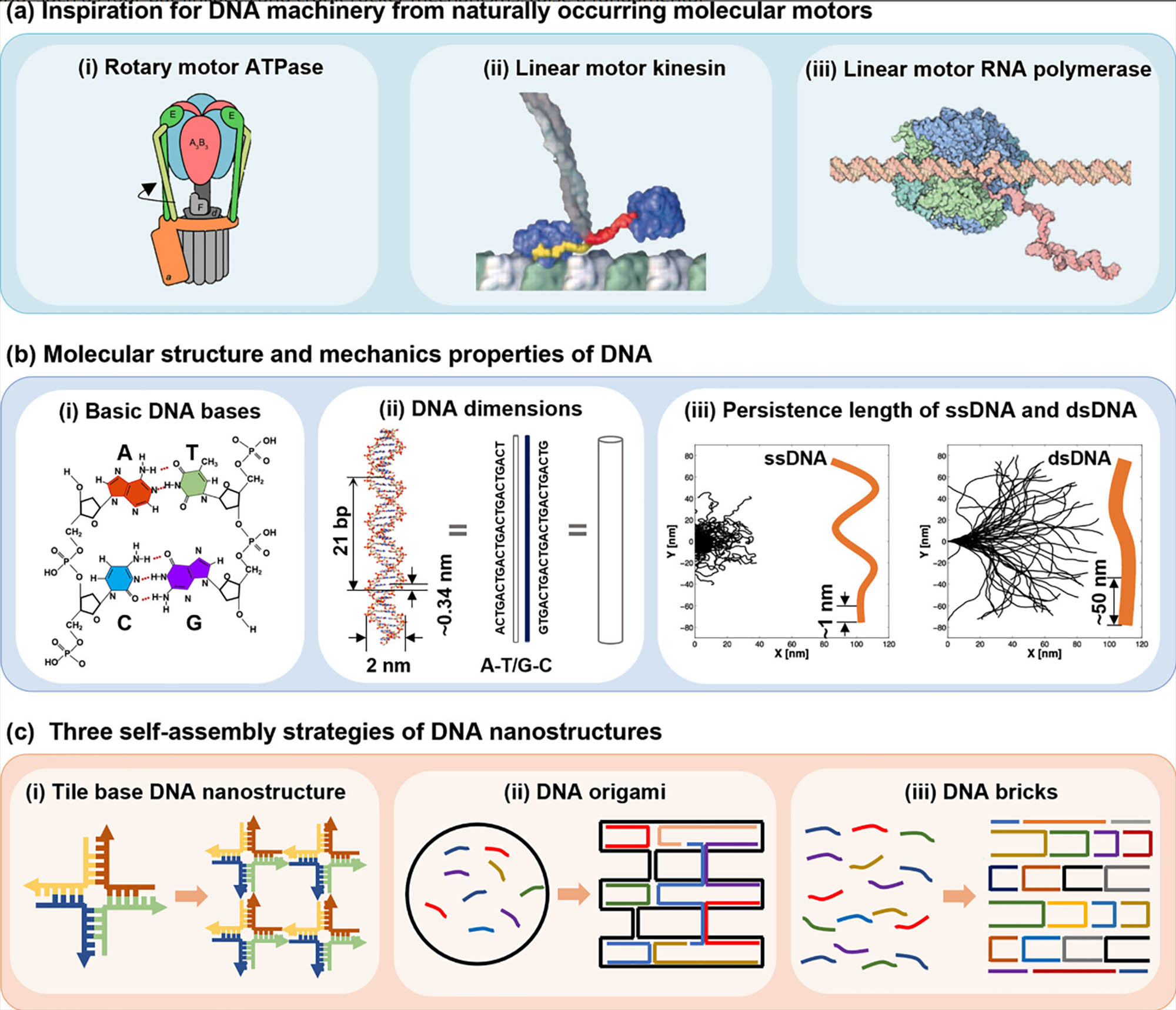
In these designs, stiff, double-stranded sections provide structure, while single strands add flexibility, allowing parts to bend, hinge, and move. Together, those properties give researchers a practical design toolkit.
But turning that toolkit into reliable machines is still a work in progress, especially when it comes to controlling how these tiny systems behave once they are built.
How DNA parts move
Movement begins when researchers assign different jobs to different pieces of the molecule, then assemble them into a planned shape.
Using DNA origami, a way to fold DNA into set shapes, short strands bend one longer strand into moving structures.
A 2015 design joined rigid bundles and flexible hinges to create nanoscale joints that swung like doors or extended like sliders.
Those parts matter because motion at this scale cannot rely on gears and motors alone, it must be written into structure.
Giving DNA robots direction
Control became the next hurdle, since a tiny machine that cannot stop, start, or choose a path is not much use.
One answer is DNA strand displacement, a swap reaction where an incoming strand kicks another loose and triggers a set motion.
Electric fields, magnetic fields, and light can also steer these devices, but they usually move whole structures more easily than separate joints.
That trade-off leaves the field balancing precision against speed, a tension that shows up again in medicine, manufacturing, and computing.
DNA robots head to medicine
Medicine keeps pulling these machines forward because the body already runs on molecules, and DNA does not appear foreign there.
In one 2024 nanogripper, four flexible fingers captured SARS-CoV-2 in saliva within 30 minutes and matched standard lab-test sensitivity.
Another DNA robot carried a clotting drug to tumor blood vessels in mice and exposed it only after reaching the target.
Results like these hint at autonomous drug delivery, though blood chemistry, immune defenses, and enzymatic breakdown still limit real-world use.
Tiny factories built from DNA
Beyond medicine, DNA structures work as templates that place other materials exactly where engineers want them.
That matters because these templates can place nanoparticles with sub-nanometer precision, where a tiny error can spoil a device.
Using DNA guides, researchers have already arranged nanoparticles and light sources in ordered patterns, opening a route toward optical devices.
The same precision could support molecular electronics and optical components, but only if production becomes far more consistent.
DNA stores more than genes
Information is another frontier, because DNA can store instructions, react to inputs, and hold dense records in very little space.
Simple DNA circuits already perform logic, but they run slowly because each step depends on molecules finding one another in solution.
A 2024 method printed chemical marks onto prepared DNA and encoded images without writing every base from scratch.
That approach trims one major bottleneck, though reading and rewriting molecular files still cost too much for everyday machines.
When molecules push back
The biggest problem shows up as these machines get smaller. At that scale, constant molecular motion starts pushing them around.
Scientists call this Brownian motion – the nonstop jostling from surrounding molecules – and it makes every tiny part wobble.
A design that looks perfect on a computer can bend, drift, or lose its shape once it’s built in the real world.
That’s why many DNA robots still work more like lab demos than dependable tools, and why better control is so important.
Designing DNA machines better
Design software has improved quickly, yet building a moving DNA machine still often means guessing, simulating, testing, and starting over.
Newer systems can draft shapes from higher-level goals, while graph-based learning can predict how complex assemblies are likely to settle.
Standard parts libraries could also help, letting teams reuse proven hinges and frames instead of reinventing the same components.
Without that shared toolkit, the field risks producing clever demonstrations faster than it develops dependable engineering practices.
Scaling DNA robots for the real world
Making a single DNA machine is no longer the main challenge. The real hurdle now is producing millions of them reliably and at low cost.
Researchers are turning to fermentation in E. coli to generate long DNA strands at scale – a far more practical approach than building each structure by hand.
To make that work, manufacturing will need to look more like a modern production line, with automated mixing, precise temperature control, and imaging systems that can catch failed batches early before costs spiral.
“The robots of tomorrow won’t just be made of metal and plastic,” wrote the research team. That shift is already changing how scientists think about the field.
DNA robotics is starting to look less like a science-fiction detour and more like a real engineering discipline, with defined components, controls, and performance targets.
What happens next will depend on building sturdier designs, improving manufacturing consistency, and adding smarter feedback systems. For DNA nanorobots to be useful, they’ll need to survive far beyond the controlled conditions of a lab.
The study is published in SmartBot.
—–
Like what you read? Subscribe to our newsletter for engaging articles, exclusive content, and the latest updates.
Check us out on EarthSnap, a free app brought to you by Eric Ralls and Earth.com.
—–
First Appeared on
Source link






