


Scottie Scheffler’s golf strategy: Why the PGA Tour star focuses on the micro
PONTE VEDRA BEACH, Fla. — Scottie Scheffler just explained everything about his dominance in a small, offhand comment.
He’s never liked questions about past success or making sense of results. It’s the most common denominator topic to elicit a curt reply. And on the Tuesday before the Players Championship, he didn’t love a question about managing expectations when his season hadn’t started as he’d hoped.
“Your expectations of me are living week by week,” Scheffler said. “My expectation of myself is almost more shot by shot.”
He went on for another five minutes with fascinating detail about his approach game the past few weeks, about judging wind on firm greens at Bay Hill compared to taking as much spin as possible off a shot at Pebble Beach. If you want a deeper understanding of why Scheffler feels his iron play “disappointed” the last few weeks, go read or watch that answer.
But in that brief aside, Scheffler finally articulated what he’s been trying to tell us for four years and what’s been his superpower all this time.
Scottie Scheffler is never playing golf against the rest of the field. And he’s not even really playing 72 holes against the course. He’s truly just playing against the best version of himself at all times, and the only metrics he lives by are the shot he just hit and the shot he’s about to hit.
It’s the type of line that can sound like self-help speak. Just be present. Stay in the moment. But it’s the key to unlocking Scheffler’s success. Because it’s completely accurate. Scheffler loves golf with such depth that he doesn’t play it for titles or even beating the guy next to him. It’s about trying to hit the next shot as well as he possibly can. Every round, and in turn every tournament, is really a golfer obsessing over each shot until it’s over.
It’s also why he’s known to lash out after a poor shot and then recover immediately. The obsession transitions to the next shot instantaneously.
He said he doesn’t dive much into stats, not because he doesn’t believe in them, but because he worries more about how he feels. And the two tend to line up. But there are plenty of rounds that look bad to us mortals, but he feels good about. Sometimes golf doesn’t go your way. On the other hand, Scheffler said, “There’s been certain instances in my career where I may have had a really good round, and I get off the golf course and (coach Randy Smith) will go, ‘Great job, that was awesome.’ And I’ll be like, ‘We got to go to the driving range. Like, this isn’t going to work another couple days.’”
We constantly discuss Scheffler’s comical levels of consistency across the last four years as if he’s an alien, but we’re looking at the broad picture of those results instead of the thousands of little moments that create the mosaic.
“When you look at the perspective from the media, the media is always trying to create a story. Which can be a great thing. I think that’s part of your job,” Scheffler said. “But when it comes to my golf game and my expectations of myself, my expectations all are based around what I want for me mentally on the golf course as being committed to what I can do, and controlling that aspect. And so far throughout this season, I’ve been really good in some spots and then some other spots I feel like I can improve in terms of my commitment to the shot.”
I often go back to this week a year ago. Scheffler was still in his two-month ramp-up after his hand surgery. He was playing solid but unspectacular golf, yet each week he had to answer questions about building on his epic nine-win season from 2024 or trying to become the first to win three Players at TPC Sawgrass.
“What does that have to do with what I’m trying to do this week?” Scheffler said with frustration. “I mean, not much, right? Like, do I start 1-under? Do I start at 2-under? I mean, it’s even par. It’s a new tournament.”
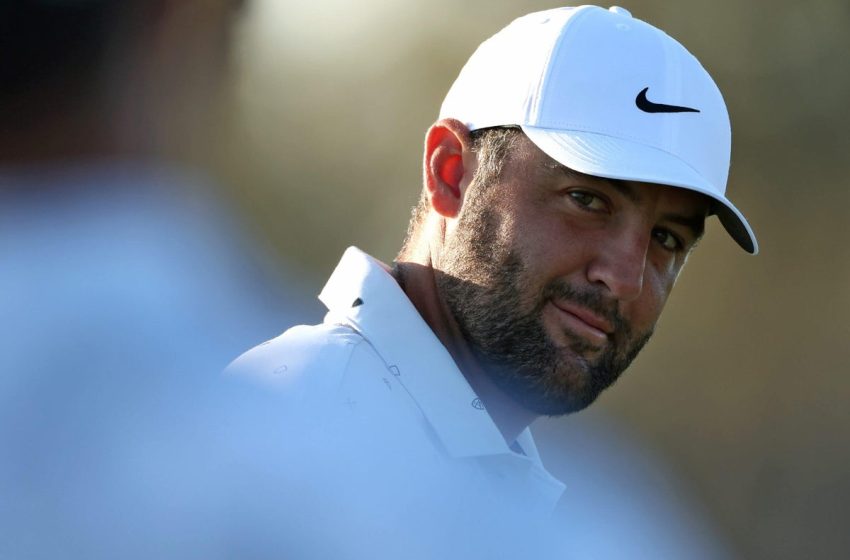
Scottie Scheffler has struggled approaching greens the last two months. (Richard Heathcote / Getty Images)
He went on: “I’ve never been a guy that sets long-term goals. Like in terms of a season, I have what I would think of as dreams and aspirations, but my goal is to be as prepared as possible when I step up on the first tee, and then I want to have a good attitude when I go out and play over each shot. And that’s how I view success.”
There is an apparent discomfort with talk of what he’s done, because it has no bearing on what he’ll do. He won 20 PGA Tour tournaments because he hit really good golf shots really often. And the second the event is over, he’s purely worried about the next shot.
It’s one of the many misunderstood elements of his famous “What’s the point?” speech at last summer’s Open Championship. “Why do I want to win the Open Championship so badly? I don’t know because, if I win, it’s going to be awesome for two minutes.”
That’s not supposed to be sad. It’s that winning tournaments isn’t where he finds meaning. He finds meaning in his family and playing the actual sport of golf.
“I’m kind of sicko,” he said that day. “I love putting in the work, I love getting to practice, I love getting to live out my dreams …
“That’s one of the beautiful things about golf, and it’s also one of the frustrating things, because you can have such great accomplishments, but the show goes on. That’s just how it is.”
First Appeared on
Source link






