


The 2026 Oscars Were for People Who Actually Watch Movies
Photo: Frazer Harrison/Getty Images
Let’s start at the end. One of the better gags of last night’s Academy Awards ceremony came at the very end of the show, even after the Best Picture winners’ speeches. For this prerecorded bit, Conan O’Brien and Jim Downey recreated one of the last scenes of One Battle After Another, in which Sean Penn’s Colonel Steven J. Lockjaw is quietly poisoned to death and unceremoniously cremated after seemingly achieving his life’s goal of becoming a member of the Christmas Adventurers Club. (For Conan, it was being named “Oscar Host for Life.”) Earlier, during the clips accompanying the Best Editing nominees, we were treated to a previous scene from the movie in which Lockjaw gets his face blown off by an assassin working for the Christmas Adventurers Club — a moment during the broadcast that made me gleefully yell out, “Spoiler alert!” And then of course there was O’Brien’s charming opening bit for the show in which he reenacted the end of Weapons: For this one, the host dressed up as Amy Madigan’s monstrous Aunt Gladys from the film, being chased by the kids she’d magically hypnotized and kidnapped. In Conan’s version, he was pursued through scenes from the various Best Picture contenders, including the climax of Hamnet. Yes, the Oscars were spoiling movies all over the place last night.
On the surface, these were just some cute bits involving memorable scenes from the year’s big films. But they were also subtle reminders of an encouraging change in mindset at Ye Olde Academie. It wasn’t too long ago that the Oscars were deemed to be on life support, an awards show for a dying art form that for some reason needed to reach out to other art forms for survival. Every year we’d get think pieces on how to “fix” the Oscars. Give out fewer awards! Handhold us through belabored explanations of what the nominated films were about! Eliminate the host! Bring on more pop stars and be more like the Grammys (which have lower ratings, but whatever)! For far too long, the Oscars seemed to worry too much about the people who weren’t seeing the movies instead of the people who were. (Let us never forget the embarrassing legacies of the Best Cheer Moment and the Fan Favorite Award.) So, it was nice to see the broadcast cavalierly “spoiling” so many endings last night, not really giving a damn if you hadn’t seen them yet. Finally, an Oscars for those of us who actually bothered to watch the films.
This philosophy was baked not just into these bits but into the very texture of the event, which (gasp) celebrated the art form it was meant to be honoring. And not just the art form as a “magic of the movies” abstraction but also the specific elements required to make sure the art form survives and thrives. O’Brien’s monologue included at least one viscerally satisfying dig at Ted Sarandos of Netflix being outraged by the idea of people gathered together in a theater: Watch his imitation of Sarandos pretending to pet a cat and screeching “Why are they all together enjoying themselves? They should be home alone, where I can monetize it!” and tell me Conan’s not putting his whole back into it.
The Oscars are at their best when they manage to be classy and ridiculous at the same time, and Conan O’Brien feels like the very personification of such an idea; he can hold those contradictory impulses together. And despite a shtick that often turns on self-deprecation, he rarely exudes genuine desperation. Look at his other bits. He did a funny one about the inevitable ad interruptions when the Oscars eventually move to YouTube. He did another about streamers’ insistence that movies should have their plots explained multiple times for the benefit of viewers who are too busy looking at their phones. Then there was the (hilarious) one about the company that converts movies to phone-friendly vertical screens, thereby cutting out like 80 percent of the image. In a couple of these, O’Brien allowed himself to be the initial butt of the joke, but the general mood was that the people who are threatening cinema — the predatory tech bros, obsequious execs, and everyone else in between — are idiots destined to lose.
Barbra Streisand onstage at the 2026 Oscars.
Photo: Rich Polk/Penske Media via Getty Images
So, too, last night’s show didn’t seem to be marked by anxiety about whether anyone cared or not. It assumed that if you were bothering to watch the Academy Awards, you cared. (Ironically, one reason for this relative serenity might well be that the show will indeed move to YouTube soon; there is no longer a pressing need to keep a bunch of nervous ABC TV suits happy.) The first Oscar for Best Casting was introduced with a refreshingly extended sequence with actors from each of the nominated films talking about the work their casting directors did. (A whole new category! After so many years of people whining about the Oscars having too many categories. And next year we’ll see a new Stunts category, which has been a long time coming.) Best Score and Best Sound were given by the cast of Bridesmaids, reunited for that picture’s 15-year anniversary. That may not sound like a big deal, but remember, it wasn’t so long ago that the Oscars honored the 50th anniversary of The Godfather by … having Diddy introduce a brief montage (set to a Kanye West song?) and then not having Robert De Niro and Al Pacino say anything. (That was the Oscars where the Best Sound award wasn’t even included in the telecast, alongside seven other categories. That was also the Oscars where we had the Slap, but I digress.)
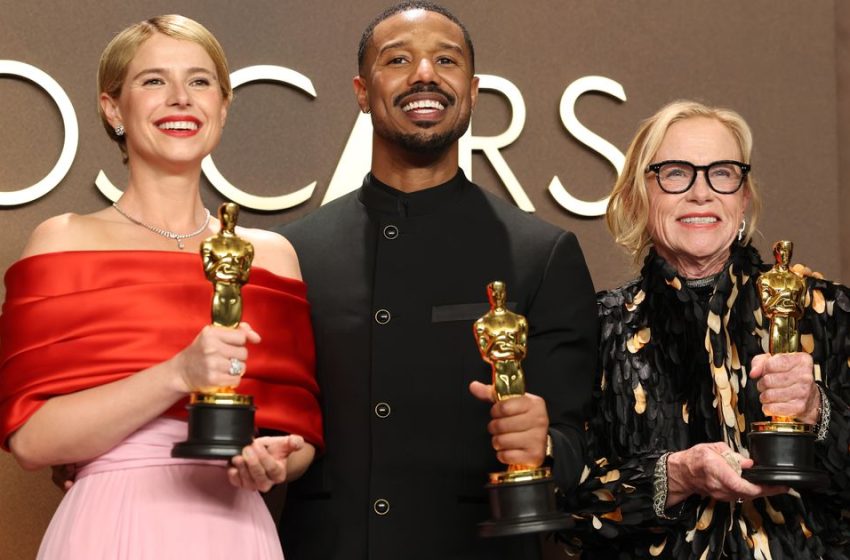
Within this context, Paul Thomas Anderson’s Best Picture speech, in which he called out the five nominees from 1975 (including, ahem, Barry Lyndon), seemed very much in keeping with the tone of the evening. This was also proof that you didn’t need a show full of surprises to keep things interesting. This was one of the more predictable Oscar ceremonies in recent memory, despite what my colleagues in the media might have told you otherwise. One Battle After Another, which had already won just about every conceivable preceding award, won the big ones. The only real suspense came from the categories that had already become too hard to call: Michael B. Jordan emerged triumphant in Best Actor and Sean Penn in Best Supporting Actor, two excellent wins in two stacked categories where any other outcome would have also felt thoroughly justified. And yet, for all its predictability, the show was entertaining because it seemed to be marked by a general sense of admiration and respect. (The one notable, and traditional, exception being the orchestra, still overzealously playing off anyone who seemed to go on a bit too long, especially in the lower-profile categories.)
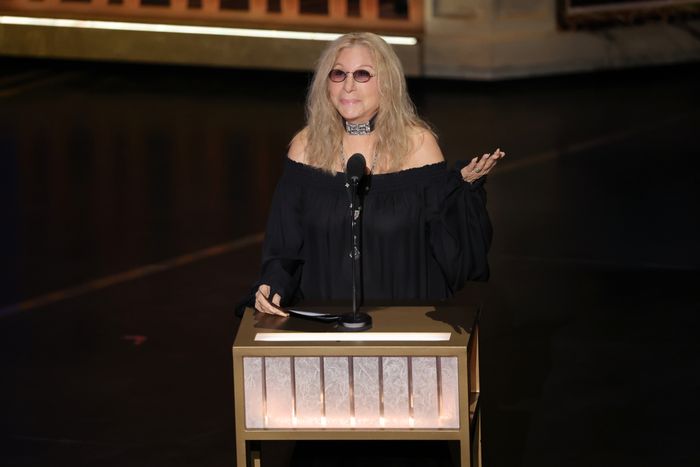
Maybe this attitude was most evident in the in-memoriam montage, which actually ran longer than usual this year and was a whole experience in itself. Its opening act served an extended memorial to Rob Reiner, with Billy Crystal going through each title in the director’s legendary run of films through the ’80s and ’90s (although he skipped right from A Few Good Men to The American President, thus leaving out Reiner’s notorious flop North, which I think would have been fun to include, especially since it inspired Roger Ebert’s most famous review). The middle section had Rachel McAdams honoring Diane Keaton and Catherine O’Hara, as well as the other actresses who left us in 2025, including Claudia Cardinale. And the finale was a spectacularly moving appearance by Barbra Streisand paying tribute to Robert Redford, with a couple of anecdotes and a brief rendition of “The Way We Were,” the title song from the 1973 period romance (and, as Streisand herself was quick to remind us, political drama) in which she co-starred with Redford. Hearing the aging singer performing one of her best-known pieces, her voice breaking but still full of depth and power, was glorious. And again, it didn’t worry about those who might not care about a bunch of old movie stars in a bunch of old movies. To really appreciate the moment, you had to have some idea of who Barbra Streisand is and was, who Robert Redford is and was, and what that song meant. In a gesture that seemed to speak to the tenor of the whole evening, Streisand’s voice brought past and present together, embodying both the passage of time and the endurance of emotion, which of course is what cinema is at its most basic level.
First Appeared on
Source link






