


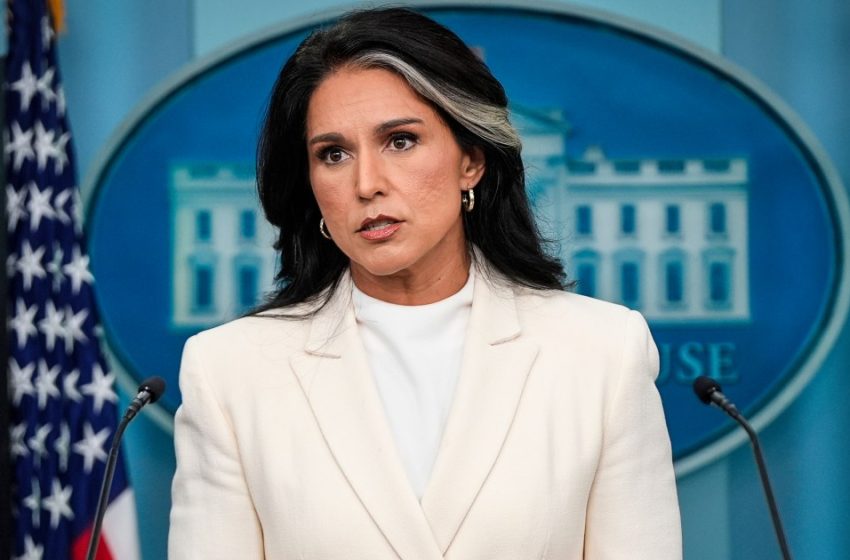
Tulsi Gabbard accused of trying to ‘bury’ whistleblower complaint
A U.S. intelligence official has alleged wrongdoing by National Intelligence Director Tulsi Gabbard in a whistleblower complaint filed last year, according to the official’s lawyer and Gabbard’s office.
Andrew Bakaj, the attorney for the intelligence official, said Monday that the complaint was filed with the intelligence community’s inspector general in May and that in June, the whistleblower asked that it be shared with lawmakers. He accused Gabbard of trying to hide the complaint from Congress.
“After nearly eight months of taking illegal actions to protect herself, the time has come for Tulsi Gabbard to comply with the law and fully release the disclosure to Congress,” Bakaj said in a statement released by Whistle Blower Aid, a nonprofit group that represents government and private-sector employees seeking to expose wrongdoing.
“The Inspector General’s independence and neutrality is non-existent when the director of national intelligence illegally inserts herself into the process,” he said.
The Wall Street Journal first reported the whistleblower complaint. The Journal reported that Gabbard’s office had not shared the complaint because it was trying to work out security guidance to safeguard the information in it.
Administration officials and the whistleblower’s lawyer have not divulged the complaint’s substance. Bakaj, the whistleblower’s lawyer, told NBC News he has not seen it.
The National Intelligence Director’s Office did not respond to a request for comment.
Gabbard’s press secretary, Olivia Coleman, acknowledged on social media that a whistleblower complaint had been filed but rejected the accusation that Gabbard had tried to stonewall Congress.
Coleman said Gabbard had shared the complaint, which she called “baseless,” with intelligence committees in Congress.
“There was absolutely NO wrongdoing by DNI Gabbard,” she wrote on X. She also said a previous inspector general concluded that the whistleblower’s allegations did not appear credible.
Coleman alleged that the whistleblower was “a politically motivated individual.”
“Director Gabbard has always and will continue to support Whistleblower’s and their right, under the law, to submit complaints to Congress, even if they are completely baseless like this one,” she wrote.
Asked about the case, the White House referred to Coleman’s social media post.
Lawmakers on congressional intelligence committees did not learn about the whistleblower’s complaint until November, after Bakaj wrote Gabbard asking why it had not been passed on to Congress as required, according to two sources with knowledge of the matter.
Former intelligence officials say that it is highly unusual for a government agency to take several months to transmit a whistleblower complaint to Congress and that spy agencies usually are able to resolve security concerns in days or weeks.
An ODNI official said there is no legal requirement for how quickly the national intelligence director must share security guidance related to a whistleblower’s complaint to an inspector general. Gabbard did not learn of her responsibility to outline security guidance for sending the complaint to Congress until October, when a newly appointed inspector general took office, the ODNI official said.
“After learning of her responsibility to produce security guidance, DNI Gabbard took immediate action to cut through the bureaucratic red tape and took every step within her power to fulfill her responsibility to provide security guidance for transmittal to Congress,” the ODNI official said.
In his statement, Bakaj accused Gabbard of jeopardizing Congress’ ability “to exercise its legally mandated oversight of the US Intelligence Community, including agency covert operations.”
The vice chair of the Senate Intelligence Committee, Democrat Mark Warner of Virginia, expected Gabbard to abide by her legal obligations to protect the rights of government whistleblowers, his spokesperson said.
“During her confirmation hearing before the Senate Intelligence Committee, Director Gabbard pledged under oath to comply with the law by protecting whistleblowers, safeguarding their anonymity, and ensuring timely, direct access to Congress,” the spokesperson said. “We expect her to honor those commitments and comply with both the letter and the spirit of the law.”
The whistleblower complaint includes elements that are described as “attorney-client privileged” and could be considered part of “executive privilege,” according to the Wall Street Journal report. That would suggest the material possibly falls under the president’s power to withhold confidential conversations from Congress or the courts.
First Appeared on
Source link






