


US scientists unlock secrets of high-temperature superconductors
Researchers in the United States have unlocked secrets of high-temperature superconductors.
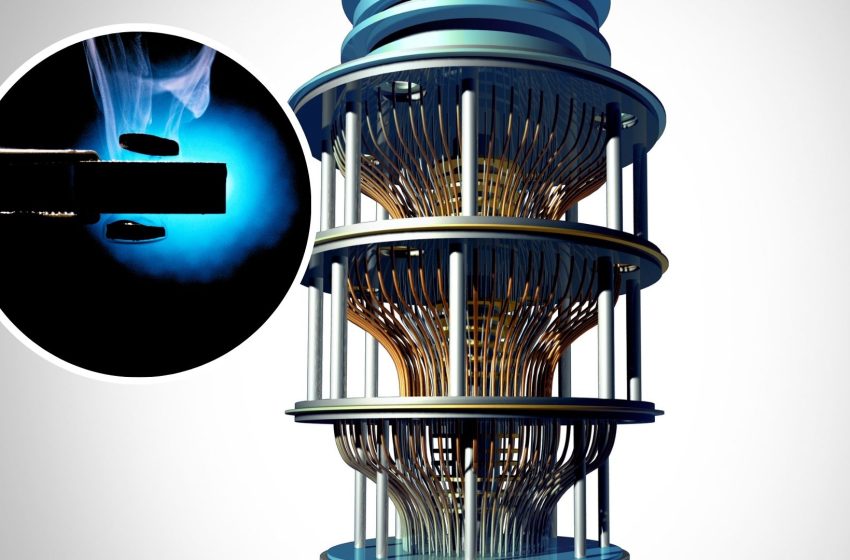
Researchers at the U.S. Department of Energy’s (DOE) Argonne National Laboratory have discovered how tiny changes in superhydride structure enable superconductivity at near room temperatures but extreme pressure — offering clues for designing more practical superconductors.
“These experiments show what the upgraded APS can do. We can now study atomic-level structures with unprecedented detail in materials under extreme pressure,” said Maddury Somayazulu, Argonne physicist.
Superconductors allow electricity to flow without resistance
Researchers revealed that superconductors allow electricity to flow without resistance, meaning no energy is lost as heat. This property makes them useful for technologies such as MRI scanners, particle accelerators, magnetic-levitation trains and some power-transmission systems.
They also highlighted that most superconductors, however, only work at extremely low temperatures — often hundreds of degrees below zero Fahrenheit. Keeping materials that cold requires complex and costly cooling systems, which limits where the superconductors can be used.
Now, researchers in the U.S. have helped take a step toward easing that limitation. They have gained new insight into a class of materials called superhydrides that can become superconducting at much higher temperatures — around 10 degrees Fahrenheit.
In the new study, Hemley and his fellow researchers explored whether changing the material’s chemistry could lower the pressure needed for superconductivity. They added a small amount of yttrium to the lanthanum superhydride to make it more stable and reduce the pressure required.
“To reach these extreme pressures, we squeezed a tiny sample between two diamonds,” said Maddury Somayazulu, a physicist at the APS. The team’s diamond-anvil device can generate pressures as high as five million atmospheres.
Forming superconducting material at high pressure and temperature
After forming the superconducting material at high pressure and temperature, the team used high-energy X-rays from the APS to study its structure (at beamlines 16-ID-B and 13-ID-D).
”We focused an intense X-ray beam onto a sample only a few micrometers thick and about ten to twenty micrometers across,” said Vitali Prakapenka, a beamline scientist and research professor at the University of Chicago. One micrometer is about 1/70th the width of a human hair.
The recent APS upgrade made these measurements possible. Its brighter, more tightly focused X-ray beam allowed researchers to study extremely small samples while changing the pressure, according to a press release.
“That beam allowed us to separate signals coming from the tiny sample itself as opposed to those coming from the surrounding materials and diamond anvils,” Prakapenka said.
The team found that small differences in how atoms are arranged in a crystalline lattice can strongly affect superconductivity. They identified two different crystal structures, each becoming superconducting at a slightly different temperature, as per the release.
“These experiments show what the upgraded APS can do,” Somayazulu said. ”We can now study atomic-level structures with unprecedented detail in materials under extreme pressure.”
Researchers also highlighted that although the pressures used in the experiments are still very high — about 1.4 million times atmospheric pressure — the researchers see this as part of a longer path forward. They are adding more elements to lower the pressure further with the goal of making these materials practical.
First Appeared on
Source link






