


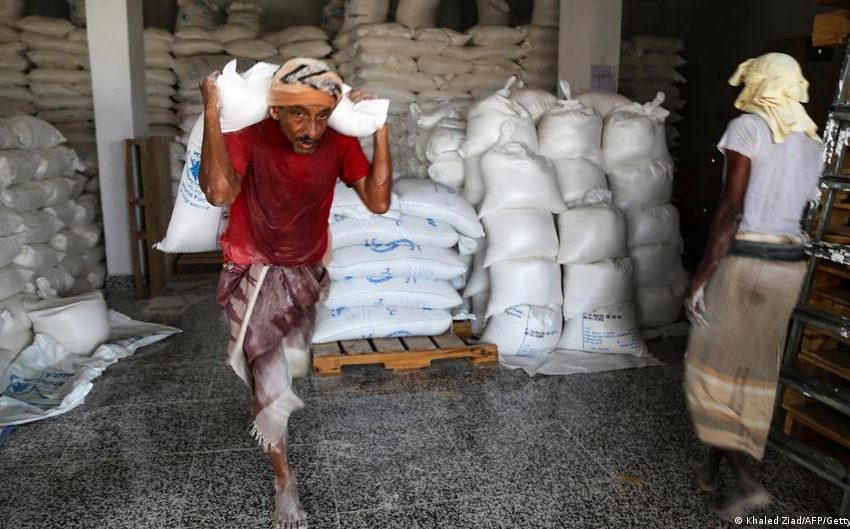
WFP stops operations definitively amid Houthi threats
The World Food Program (WFP) is shutting down its operations and terminating contracts with employees in the northern, rebel-held portion of Yemen, following restrictions and other harassment from the Houthi rebels, UN officials said on Thursday.
This is likely to exacerbate already dire humanitarian conditions in the impoverished Arab country amid a long-running civil war that first flared up in 2014.
According to UN officials with direct knowledge of the plans, the WFP’s 365 remaining staff members in northern Yemen will lose their jobs by the end of March. The move has not yet been formally announced, but UN officials spoke to news agencies about the decision on condition of anonymity on Thursday.
Why is the WFP halting operations?
The UN agency suspended work in rebel-held areas in late August, after the Iran-backed Houthis detained 38 employees in a series of raids, an official told the AFP news agency.
“These circumstances, combined with a challenging funding environment, have resulted in the need for WFP to end the contracts of 365 staff members,” he said.
These local staff constituted “all the WFP members in the areas under the control of the de-facto Houthi authorities,” he said. International staff had already been pulled out.
The Associated Press reported similar off-the-record comments on Thursday.
The Houthis had been cracking down on UN staff in areas under their control in recent years, claiming, without offering evidence, that they are foreign spies.
Earlier this week, the UN Security Council also voted to terminate a mission trying to enforce a faltering ceasefire in the war-torn western port city of Hodeida by the end of March.
“Houthi obstructionism has left the mission without a purpose, and it has to close,” Tammy Bruce of the US delegation said, as 13 of 15 Council members voted to stop the mission’s mandate on Tuesday night.
UN warns of ‘imminent risk of catastrophic hunger’
After more than 11 years of civil war, Ramesh Rajasingham, who directs humanitarian operations in Yemen, told the UN Security Council this month that more than 18 million people in Yemen could face acute food insecurity within a month.
Tens of thousands were at risk of slipping into “catastrophic hunger” and were facing famine-like conditions, he said.
The UN’s Office for the Coordination of Humanitarian Affairs (OCHA) also said this month that aid operations in Yemen in 2025 were only 25% funded. That gap, OCHA said, had contributed to forcing aid groups to scale back life-saving services across all sectors, leaving “millions of people without essential care and exposed to heightened risks.”
Recent rift in Gulf-backed anti-Houthi forces further unsettles country
After long-running unrest, Yemen broke into all-out civil war in 2014, when Houthi forces swept south from their northern strongholds, claimed much of the country, including the capital, Sanaa, and forced the internationally recognized government into exile.
Years of conflict followed, with neighboring Saudi Arabia leading the support of the ousted government and trying to reinstall them with a military campaign. However, Houthi forces have largely held their main territorial gains.
In recent weeks, the main movement has been in the far south of the country, and involved sudden infighting between two groups that had opposed the Houthis.
An uneasy alliance between the Saudi-backed government forces and a southern Yemeni independence movement backed by the United Arab Emirates, which held cities including the southern port of Aden, has collapsed altogether. Saudi-backed forces claimed control of major settlements held by the Southern Transitional Council and the UAE withdrew forces from Yemen.
Precisely what this will mean for the Houthis is not clear, although many analysts see it as potentially helpful to them that their erstwhile opponents have been fighting among themselves.
Edited by: Sean Sinico
First Appeared on
Source link






