


Woman Gets 36 Ultrasounds After Doctors Insist She’s Having a Miscarriage. 8 Months Later, Gives Birth to ‘Miracle’ Baby (Exclusive)
NEED TO KNOW
-
The day after Allison Wilcox learned she was pregnant, she began experiencing alarming, heavy bleeding
-
Despite seeking multiple medical opinions over the next 10 weeks, all indications pointed to miscarriage
-
Nevertheless, the former Colorado elementary school teacher held onto the belief that her baby was still fighting – and against all odds, she was right
When Allison Wilcox discovered she was pregnant in January 2023, joy quickly gave way to fear when she started bleeding heavily the day after her first positive test.
An internal exam performed by her doctor indicated signs of a miscarriage at just five weeks, leaving her and her husband heartbroken.
What followed, however, was not a clear ending, but the beginning of a long and emotionally exhausting pregnancy marked by uncertainty, conflicting medical opinions and repeated warnings that her pregnancy was “not viable.”
“My pregnancy was quite the rollercoaster from the very beginning,” Wilcox, 33, tells PEOPLE exclusively.
After hearing the word “miscarriage,” the elementary school teacher and her husband spent the following week grieving – leaning on family and friends as they prepared to let go of the pregnancy they had only just begun to imagine. Then a week later, severe lower back pain raised new concerns.
A family member who was a physician urged Wilcox to go to the emergency room to rule out an ectopic pregnancy. Although the ultrasound showed no such condition, doctors told Wilcox she wasn’t pregnant at all. In fact, she recalls the ER doctor stating that “at this point, miscarriage is the best outcome.”
Allison Wilcox
A few days later, while on the way to a follow-up appointment with an obstetrician (OB), Wilcox called her sister in tears, shaken by a vivid dream in which doctors suddenly found the baby on an ultrasound. To her shock, that’s exactly what happened.
Wilcox’s human chorionic gonadotropin (hCG) — a hormone produced primarily by the placenta during pregnancy — levels had miraculously risen from 197 to 707, and an ultrasound revealed a yolk sac – but still no heartbeat – something she says her doctors called “normal” at the time.
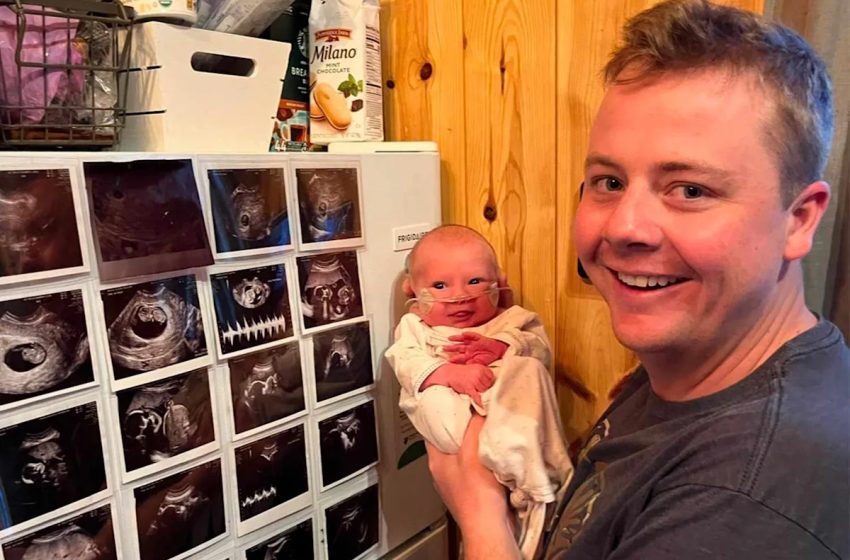
“It felt like the most amazing miracle,” Wilcox recalls. “We called everyone, celebrated and taped the tiny ultrasound photo to our fridge.”

Allison Wilcox
That hope, however, was short-lived. Just 48 hours later, Wilcox received lab results while teaching her third graders.
Her hCG had barely increased, and her progesterone had dropped below what is considered viable; she was also still bleeding. Her OB called that afternoon to tell her the pregnancy would not survive.
“It felt like a miracle had been dangled in front of us and then ripped away,” Wilcox shares.
Refusing to accept the diagnosis, Wilcox sought additional opinions across Colorado, undergoing a total of 36 ultrasounds, but after reviewing her labs and scans, multiple doctors came to the same conclusion: that she was suffering a miscarriage.
At roughly seven and a half weeks, a new OB confirmed there was still no heartbeat and said the baby was measuring smaller than expected. She offered Wilcox three options: schedule a surgery, take medication or wait for the miscarriage to occur naturally. Choosing to remain hopeful, she decided to wait.
“Throughout the entire process, all medical professionals offered a pretty limited explanation of what was happening,” Wilcox reveals. “Everything was so painful at the time that I didn’t ask very many questions; I was just drowning in my own grief and trying to get from one moment to the next.”
The next day, Wilcox returned to her hometown OB, where a high-risk sonographer carefully reviewed her case and, despite uncertainty, told the couple she was “not ready to throw in the towel.”
“This sonographer – who we now refer to as ‘Auntie Beth’ – was incredible and checked on our baby every week and really tried to reassure us,” Wilcox says.
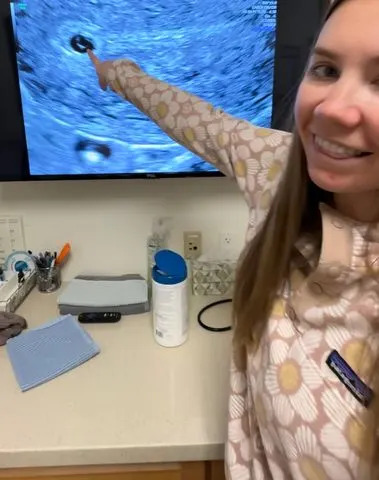
At eight and a half weeks, Wilcox heard her baby’s heartbeat for the first time. And although the yolk sac appeared unusually large – a potential warning sign – the heartbeat marked a major milestone.
Allison Wilcox
By 10 weeks, her scans finally started to look normal. However, in February 2023, the school where Wilcox worked went into lockdown during an elaborate school-shooting hoax. She spent two hours crouched on the classroom floor, shielding her 22 students.
When the building was finally cleared, and she stood up, she says blood started “gushing” down her legs. Believing she had lost the baby, Wilcox and her husband rushed to the hospital – only to find it was also on lockdown.
“We ended up having to go to a public restroom so I could change because I was covered in blood, and my husband held my hand while we passed what we both were sure was our baby,” she recalls.
It was later determined to have been a massive blood clot from a severe subchorionic hemorrhage — bleeding between the uterine wall and the chorionic membrane. In the ER that day, they learned the baby still had a heartbeat.
Allison Wilcox
Luckily, between 10 and 20 weeks, the pregnancy stabilized, but it was then revealed during an anatomy scan that her daughter had a single umbilical artery and fused kidneys, leading to frequent monitoring and long drives to different specialists.
“There wasn’t a day for the rest of my pregnancy that I wasn’t terrified of losing her,” she admits. “It always felt like I was waiting for the ‘other shoe to drop.’ “
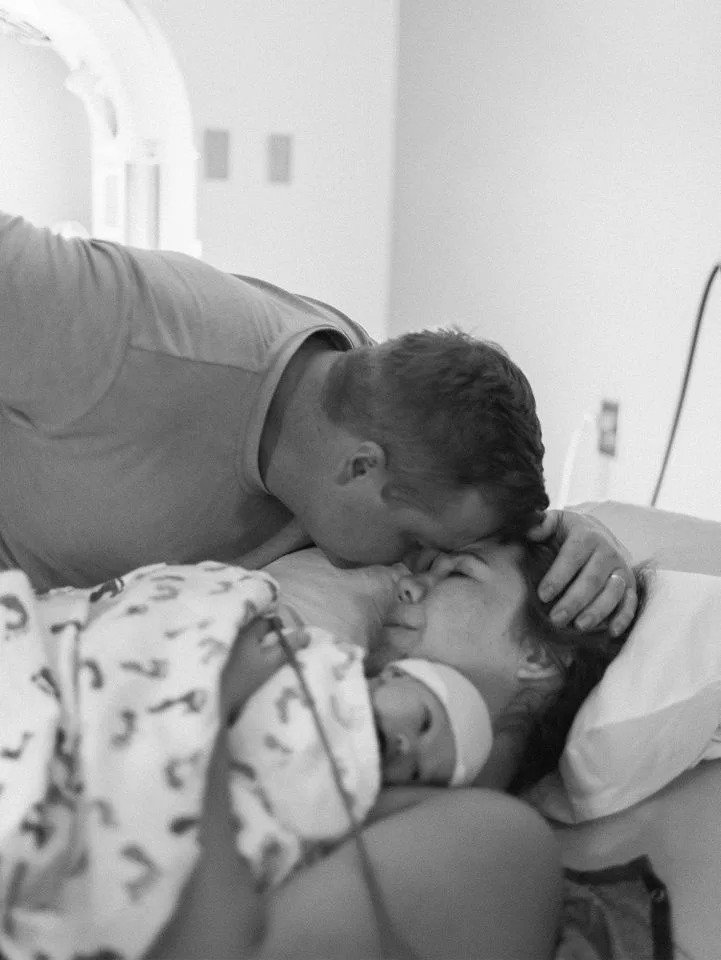
At 39 weeks, the expecting mom was induced due to concerns about her daughter’s placental function. Nevertheless, her daughter was delivered without complications in September 2023.
However, the difficulty didn’t stop there, as Wilcox says the little one “ended up having severe genetic sleep-disordered breathing (SDB),” which “caused her to stop breathing in her sleep as a newborn several times.” Studies conducted when her daughter was 10 months old indicated that she had 120 apneic episodes an hour in her sleep, so she “now has to sleep with oxygen every night.”
“I was able to catch it and advocate for her to get further testing for months, even though doctors initially really dismissed me as just being an anxious new mom and dealing with some post-traumatic stress from the pregnancy,” she shares.
“I really don’t think we would’ve been able to come to those conclusions, at least this soon in her life, had I not learned from my pregnancy how fragile life can be and the need to advocate for yourself in the medical realm.”
Allison Wilcox
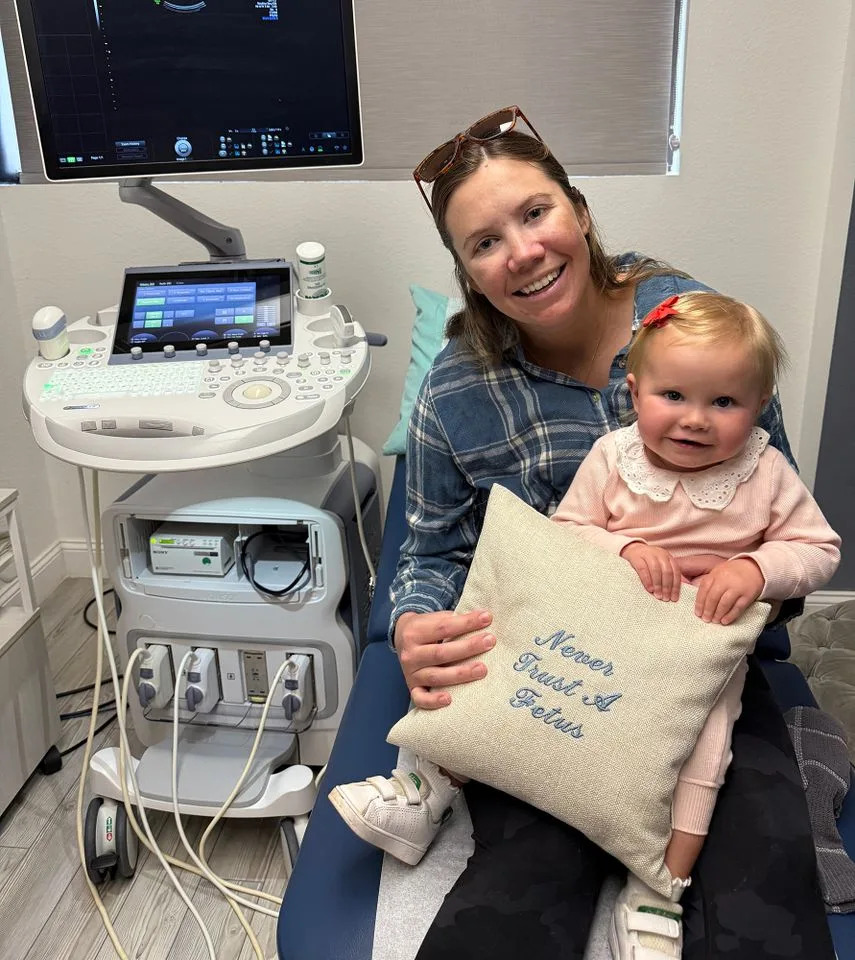
Today, Wilcox says her 2-and-a-half-year-old daughter is spirited and fearless, despite having “a few more doctor’s appointments than the average kid.” She is also now an “amazing” big sister.
The delivery brought a profound sense of relief and validation after months of fear and uncertainty. “When they put her on my chest, it was like I took a breath for the first time in nine months,” Wilcox tells PEOPLE.
Read the original article on People
First Appeared on
Source link






